HomeCategory

News

National Highways’ Lower Thames Crossing has today (4 February 2025) revealed a new target to reduce its construction carbon emissions by 70%; an ambition made possible thanks to the project’s Delivery Partners’ and suppliers’ commitment to making the new crossing the greenest road ever built in the UK.

The improved new target has been published in the project’s second annual sustainability report, which details the legacy the project aims to leave for the local community, environment, and the UK’s construction industry.

Lower Thames Crossing projected image
Image: National Highways

The Lower Thames Crossing is a proposed new road and tunnel under the Thames designed to tackle congestion and unlock economic growth by almost doubling road capacity across the Thames east of London and creating a reliable route that better links the north and the midlands with the ports of the south-east.

The project is a carbon pathfinder project that is aiming to set new standards for building infrastructure by pioneering and scaling up approaches to low-carbon construction. By working closely with its three Delivery Partners and supply chain the project has halved its predicted construction carbon footprint, and it became the first major project in the UK to make it a legally binding limit when it submitted it in its application for Development Consent in October 2022.

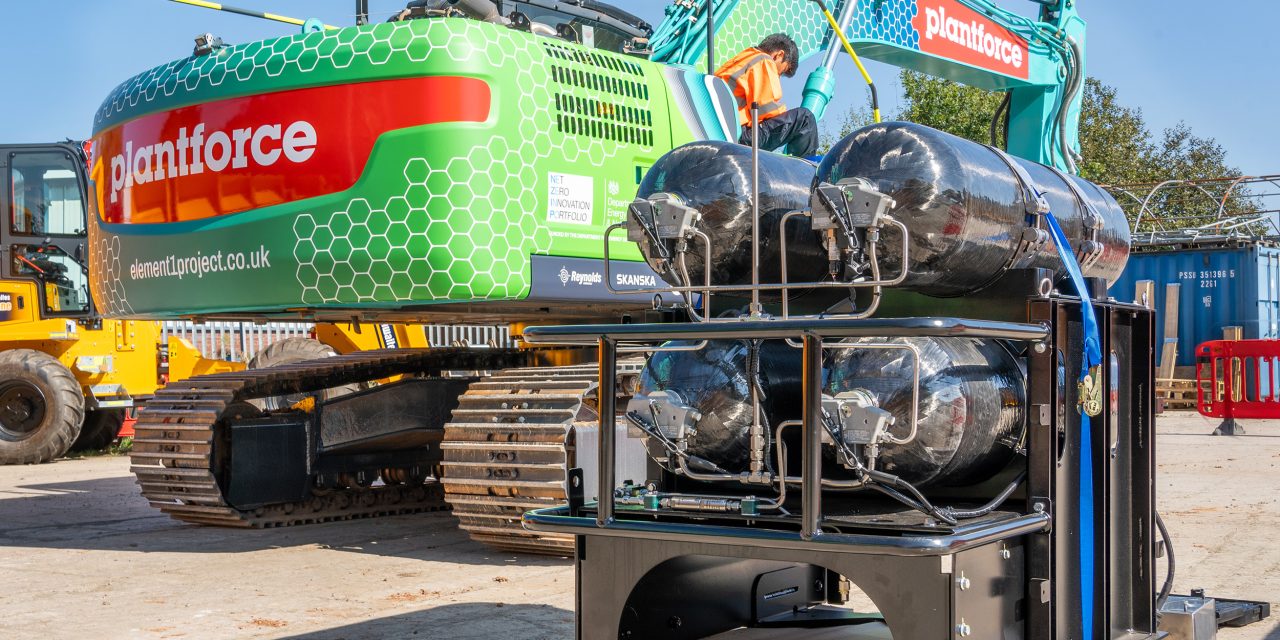
The project has now identified ways to potentially reduce that footprint further, and has set itself an ambitious new target of less than 840,000 tonnes in total – a cut of around 70% against its original prediction. This would be achieved by taking a forensic approach to reducing carbon as the design of the new road is refined, and committing to only using low-carbon steel and concrete. It also includes removing all diesel from its construction sites by 2027, by accelerating the large-scale use of electric vehicles and plant, and using hydrogen to power its heavy construction machinery – a first for a major project in the UK. The award of the contract for the supply of hydrogen is expected to take place later this year.

The project is also in the final stages of running a low-carbon footbridge contest to find a sustainable design for a bridge over the A127, which could also be used across the wider road network.

Katharina Ferguson, Supply Chain Development Director, Lower Thames Crossing said: “The Lower Thames Crossing will not only tackle congestion and unlock economic growth in the UK, with our partners and suppliers we will create a new blueprint for how we build low-carbon infrastructure and leave a legacy of jobs, skills and green spaces for the local community. With millions invested in local projects and a new community woodland at Hole Farm on track to open next year, we’re already making a difference, well before work on the new road gets underway.”

The plans to make the Lower Thames Crossing the greenest road ever built in the UK include building a tunnel rather than a bridge to avoid protected wetlands and marshes, and seven green bridges that would provide safe crossing points for people and wildlife.  The project is planting at least 1 million additional trees, creating a new community woodland at Hole Farm and new public parks in Thurrock and Gravesham. The project will also promote active travel by creating or improving almost 40 miles of pathways for walkers, cyclists and horse riders, 3 miles of path for every mile of road.

The project’s latest sustainability report highlights recent successes such as:

  • The team is ready to start construction as soon as the green light is given by government, with detailed design work to reduce local impacts well underway.
  • Local communities are already benefitting from the Lower Thames Crossing’s £250,000 Community Fund. An active travel scheme at Cyclopark in Gravesend was one of 55 local charities or not-for-profit organisations to receive money from the fund.
  • Prisoners on day release and local people seeking employment were the first to take part in the project’s Skills Hub pilot programme – designed to develop local skills and supply chains and address industry skills gaps.
  • Work got underway on the community facilities at the new Hole Farm community woodland near Brentwood, due to open in 2025 – around 80,000 trees have been planted so far, using low-carbon construction methods.

Subject to planning permission and funding, construction is expected to take six-years. The Secretary of State for Transport recently announced that the deadline for a decision on the Lower Thames Crossing’s planning application has been extended to 23 May 2025.

Introduction

The Engineering Construction Industry (ECI) in Great Britain is undergoing a period of significant transformation, characterised by changing workforce demographics and mounting recruitment challenges. The Engineering Construction Industry Training Board (ECITB) has published its 2024 Workforce Census, offering a detailed analysis of these trends. This article explores the key findings of the census, focusing on workforce growth, demographic changes, and the pressing issue of skilled labour shortages.

Workforce Growth and Sectoral Changes

Expanding Workforce

Construction workers silhouetted against an orange sky
Image by wal_172619 from Pixabay

Between 2021 and 2024, the ECI workforce grew from 83,600 to 94,680 employees, reflecting a 13.2% increase. Forecasts predict an additional 11.7% growth by 2027, underscoring the sector’s resilience and expansion.

Shifts in Sectoral Employment

  • Nuclear Sector: The nuclear industry has become the largest employer, accounting for 39.2% of the workforce in 2024, surpassing the oil and gas sector. This highlights its increasing importance within Britain’s energy strategy.
  • Renewables Sector: The renewables sector has made significant strides, nearly doubling its share of the workforce to 6.2%, driven by growth in offshore wind and biomass projects.

Geographic Distribution of the Workforce

  • England: England hosts 70.8% of the ECI workforce, with prominent hubs in the North West, Humber Estuary, and the Reading-London corridor.
  • Scotland: Scotland accounts for 17% of the workforce, concentrated in the Central Belt and Aberdeen regions.
  • Offshore Workers: Offshore projects employ 9.9% of the workforce, underlining their critical role within the industry.

Demographic Trends

Ageing Workforce

An ageing workforce remains a key concern, with 14.7% of employees aged over 60, up from 11.6% in 2021. Workers under 30 comprise just 16.8% of the workforce. Roles such as platers, welders, and pipefitters are particularly affected, raising alarm about skill gaps as retirements loom.

Gender Representation

The proportion of women in the workforce has risen to 16.9%, up from 13.8% in 2021. Despite this progress, significant gender disparities remain across certain roles and regions, necessitating further action to improve inclusivity.

Ethnic Diversity

While workforce diversity has improved, representation remains below that of the economically active UK population. Regional disparities are evident, with London showing higher levels of diversity compared to other areas.

Recruitment Challenges

Increasing Hiring Difficulties

In 2024, 71% of employers reported recruitment difficulties, a marked rise from 53% in 2021. Key challenges include:

  • Skill Shortages: A lack of candidates with the required skills and experience.
  • Expectation Mismatches: Misalignment between employer expectations and candidate preferences.
  • Geographic Barriers: Challenges in attracting talent to specific locations, with some workers reluctant to relocate.

Roles in Critical Shortage

Certain positions are particularly difficult to fill, including:

  • Pipefitters
  • Welders
  • Commissioning Engineers
  • Project Managers

These shortages highlight the urgent need for targeted training and workforce development programmes.

Strategic Recommendations

To address these challenges and secure the future of the ECI, the ECITB report outlines the following strategies:

  1. Succession Planning: Developing plans to transfer knowledge from retiring employees to younger workers.
  2. Upskilling Initiatives: Investing in training programmes to address skill shortages in high-demand roles.
  3. Diversity and Inclusion: Implementing policies to improve gender and ethnic diversity within the industry.
  4. Mobility Incentives: Encouraging workforce mobility with relocation support and other incentives.

Conclusion

The 2024 ECITB Workforce Census provides vital insights into the state of the Engineering Construction Industry in Great Britain. Addressing the skilled labour shortage is crucial to ensuring the sector’s continued growth and the successful delivery of future projects. Collaboration between industry leaders, educational institutions, and government bodies will be essential in building a skilled, diverse, and resilient workforce capable of meeting the sector’s evolving demands.

The Labour Government, under the leadership of Prime Minister Keir Starmer, has outlined a transformative plan to address the housing crisis in the UK. Angela Rayner, Deputy Prime Minister and Secretary of State for Levelling Up, Housing and Communities, has committed to delivering the “biggest boost to affordable housing in a generation,” with ambitious reforms targeting both policy and implementation.

Boosting Affordable and Social Housing

Angela Rayner has pledged to deliver 1.5 million new homes within five years, focusing on affordable and social housing. Key initiatives include:

  • Reinstating Mandatory Housing Targets: Following their abolition under the Conservative government, Labour has reintroduced these targets, aiming to increase housing stock across the country.
  • Prioritising Social Housing: Labour plans to significantly boost council housing and social homes, ensuring long-term stability for local authorities and housing associations.
  • Flexibility in Funding: By reforming the Affordable Housing Programme, Labour aims to unlock government grants and redirect resources to high-demand projects, enabling faster delivery of homes.

Planning System Reforms

To streamline development, Labour’s policy introduces:

  • Simplified Approval Processes: Brownfield land development will be fast-tracked, with a default “yes” to applications that meet planning standards.
  • Targeted Green Belt Development: Some grey belt areas, such as disused car parks, will be repurposed under strict guidelines, ensuring 50% affordable housing and access to essential services like schools and healthcare.
  • Updated Housing Needs Assessments: Calculations for land allocation will use modern data, replacing outdated metrics from 2014.

Accountability for Developers

Labour plans to hold developers accountable for their obligations to build affordable housing. Measures include:

  • Enhanced Oversight: A “Take Back Control Unit” will assist local authorities in negotiating with developers under Section 106 agreements.
  • Transparency in Viability Assessments: Standardised national guidelines will ensure developers cannot evade commitments without legitimate cause.

Balancing Aesthetics and Practicality

Labour has moved away from the Conservatives’ emphasis on “beauty” in new builds, focusing instead on “exemplary” standards for design and functionality. This approach aims to prioritise liveability and sustainability over subjective aesthetic criteria.

Addressing Private Sector Challenges

Labour’s housing strategy also includes reforms for the private rented sector, such as improving tenant protections and ensuring better regulation of leasehold arrangements. These measures are designed to tackle rising rents and insecure housing conditions.

The Long-Term Impact

Labour’s comprehensive housing strategy seeks to address the housing emergency by ensuring a stable, long-term plan. Key stakeholders, including the Chartered Institute for Housing and the National Housing Federation, have endorsed the proposals as a significant step towards resolving the crisis. With 5 million households projected to face unaffordable housing without intervention, Labour’s reforms aim to restore hope for millions across the UK.

The UK’s commitment to reducing carbon emissions in the construction sector has taken a monumental step forward with the opening of the country’s largest ultra-low carbon cement plant in Wrexham. This innovative facility, built by Material Evolution is set to revolutionise the industry by providing a sustainable alternative to traditional cement production, aligning with the government’s ambitious net-zero targets.

The Role of Ultra-Low Carbon Cement in Sustainable Construction

Cement production accounts for a significant proportion of global CO₂ emissions. The advent of ultra-low carbon cement aims to address this by incorporating alternative materials and advanced technologies. The new plant in Wrexham employs a cutting-edge process to replace a substantial percentage of clinker—a primary contributor to cement’s carbon footprint—with industrial by-products and locally sourced materials.

Material Evolution's new ultra-low cement plant in Wrexham
Image: Material Evolution

Key Features of the Plant:

  • Advanced Manufacturing Techniques: Utilises innovative methods to reduce energy consumption and emissions.
  • Circular Economy Integration: Incorporates waste materials from other industries, reducing landfill dependency.
  • State-of-the-Art Monitoring: Implements real-time carbon tracking and optimisation systems.

Strategic Location and Economic Impact

The plant’s establishment in Wrexham is strategically significant. Its proximity to major construction hubs in the UK ensures streamlined supply chains, reducing transportation-related emissions. Furthermore, the facility is expected to generate numerous local employment opportunities, bolstering the regional economy.

Innovations Driving Change

The plant’s technology portfolio includes:

  1. Alternative Fuels: Reduces reliance on fossil fuels by integrating renewable energy sources.
  2. Carbon Capture Utilisation and Storage (CCUS): Pioneers methods to trap and repurpose emissions.
  3. Digital Twin Systems: Enables predictive maintenance and optimised energy efficiency.

Environmental and Industry Impact

Carbon Footprint Reduction

The plant is projected to cut CO₂ emissions by up to 70% compared to conventional cement facilities, significantly contributing to the UK’s decarbonisation goals.

Industry Leadership

This development positions the UK as a leader in green construction technologies, fostering collaborations across Europe and beyond.

Future Prospects

The Wrexham plant is a blueprint for the future of sustainable construction. It not only aligns with global environmental goals but also sets a precedent for industrial innovation in other high-emission sectors. As the demand for eco-friendly construction materials grows, this facility is expected to catalyse further advancements in sustainable building practices.

Following ongoing concerns since the Grenfell Tower tragedy, a parliamentary committee has intensified its focus on cladding remediation efforts across the UK. This investigation targets the efficacy, cost, and delivery speed of current remediation programmes, aiming to hold accountable both governmental bodies and stakeholders involved in addressing hazardous cladding.

The inquiry will re-evaluate the deadlines initially set for remediation, especially as the target completion date of June 2020 has long passed. Scrutiny of these timelines seeks to identify delays and any process gaps hindering the removal of dangerous materials.

Given the allocation of £5.1 billion from the government, with an additional £1 billion pledged in the Autumn Budget, the committee’s oversight will encompass how these funds are managed to avoid waste or misuse. This aims to ensure responsible and efficient use of taxpayer resources in supporting safer housing.

Examining the broader government strategy for risk prevention, the committee will question measures taken to prevent future safety hazards. The inquiry will also review changes in building regulations and the influence of industry bodies on policy standards.

With a multi-billion-pound budget dedicated to remediation, challenges remain regarding the equitable distribution of costs between the government and private developers. The committee intends to review agreements with property owners and assess developers’ roles in sharing financial responsibility, especially as remediation expenses continue to grow.

The upcoming sessions will serve as a critical examination of the UK’s progress in cladding remediation, with a focus on transparency, accountability, and the ultimate goal of safeguarding residents.

The UK construction industry has been grappling with an alarming increase in the number of insolvencies amongst contractors and sub-contractors. Data released by the Government’s Insolvency Service reveals that there have been 2,514 cases of insolvency within the sector, underscoring significant financial pressures and operational challenges facing many firms.

Economic Headwinds and Market Pressures

The construction industry has been affected by a convergence of economic pressures in recent years. Rising material costs, supply chain disruptions, labour shortages, and inflationary pressures have all placed immense strain on contractors and sub-contractors. Many companies, already operating on thin profit margins, have been unable to absorb these increased costs. Additionally, late payments from clients and increasing project delays have compounded financial vulnerabilities, pushing many businesses into unsustainable debt.

Termination graphic
Image by Gerd Altmann from Pixabay

Impact of Rising Material and Labour Costs

The cost of materials has risen substantially since 2020, largely due to supply chain disruptions caused by Brexit, the COVID-19 pandemic, and the Russia-Ukraine conflict. The price of key materials, such as steel, cement, and timber, has surged, forcing contractors to bear escalating project expenses. Sub-contractors, who often operate on fixed-price contracts, are particularly affected, as they have little flexibility to adjust prices mid-project.

Labour shortages have also been a notable factor, with fewer skilled workers available in the market. Many contractors have had to offer higher wages to retain and attract workers, putting additional strain on project budgets. The resulting increases in operational costs have left many firms in precarious financial positions, unable to meet financial obligations as they arise.

Cash Flow Constraints and Late Payments

Cash flow remains one of the most pressing issues in the construction sector, with contractors frequently experiencing delayed payments from clients. This delay can trickle down through the supply chain, leaving sub-contractors without timely payments for completed work. A recent survey by the Federation of Master Builders (FMB) revealed that over 60% of construction businesses in the UK have reported issues with late payments from clients.

Late payments disrupt cash flow and limit the ability of companies to invest in necessary resources and manage day-to-day operational costs. For smaller contractors and sub-contractors, who often rely on steady cash flow to fund ongoing projects, these delays can be particularly debilitating. When cash flow becomes insufficient to cover rising costs, insolvency can quickly become a reality.

Energy Prices and Operational Costs

Rising energy costs have also contributed to the insolvency rates within the construction sector. With many projects requiring substantial energy consumption for machinery, lighting, and other operational necessities, increased energy prices have eaten into already-tight profit margins.

The government’s initiatives to reduce carbon emissions and promote sustainable construction practices, while essential for the long-term health of the industry, have in the short term introduced additional costs and regulatory requirements. Smaller firms, especially, struggle to adapt to these changing requirements due to the limited capital to invest in energy-efficient technologies.

The Broader Economic Environment

The broader economic environment has exacerbated these challenges. High inflation rates and rising interest rates have affected the availability of affordable financing, making it more challenging for contractors to access loans for growth or even to maintain liquidity. As a result, many firms have been forced to operate without sufficient financial cushioning, leaving them vulnerable to even minor cash flow disruptions.

Government Response and Industry Support

The government has introduced some initiatives to support struggling businesses, including the Construction Playbook, which encourages best practices in procurement, project management, and risk allocation. However, many industry leaders argue that more targeted financial support is necessary to address the root causes of insolvency. Measures to enforce timely payments, reduce the burden of compliance for smaller firms, and address material price volatility could be beneficial in stabilising the industry.

The Construction Leadership Council (CLC) has called for further action, urging the government to address supply chain issues and provide support for companies transitioning to greener construction practices. Increased awareness and understanding of construction sector challenges amongst policymakers could help improve the longevity and resilience of firms, particularly those that play vital roles in regional economies.

The high rate of insolvencies among contractors and sub-contractors in the UK construction industry reflects significant structural issues exacerbated by economic pressures. Addressing these challenges will require both government intervention and industry collaboration to mitigate risks, encourage prompt payments, and manage escalating costs. Without targeted support, the industry faces continued financial strain, potentially leading to more insolvencies and greater uncertainty for the construction sector’s future stability.

The UK government has renewed its commitment to unlocking brownfield sites for development, aiming to address the nation’s housing shortage through the regeneration of previously used land. Brownfield sites, typically former industrial or commercial areas, offer significant opportunities for redevelopment while helping to preserve the country’s green spaces.

In a recent announcement, the government pledged an additional £68 million to support the development of brownfield sites across the country. This funding will be distributed amongst 54 local authorities, with each council receiving tailored financial support to prepare and unlock brownfield land for new housing projects.

The £68 million is part of the wider Brownfield Land Release Fund 2 (BLRF2) initiative, which aims to encourage the transformation of derelict land into vibrant residential communities. The government estimates that this latest round of funding will enable the construction of around 6,000 new homes, contributing to the broader national target of delivering affordable housing.

This new £68 million commitment builds on the £1.8 billion investment announced in 2023 for brownfield site regeneration. The broader funding aims to prioritise areas where the demand for housing is most urgent, particularly in urban regions with limited available land. Of the total, £550 million had already been earmarked specifically for brownfield sites, highlighting the government’s focus on reusing previously developed land.

Old industrial site being prepared for development
Image by Dimitris Vetsikas from Pixabay

The combined funding from these initiatives is expected to support councils in addressing the key challenges posed by brownfield redevelopment, including site contamination, planning hurdles, and infrastructure improvements.

Redeveloping brownfield land offers a sustainable solution to the UK’s housing needs. These sites, often located in urban or semi-urban areas, benefit from proximity to existing infrastructure, such as public transport, utilities, and services, which can reduce the cost and complexity of development. This approach also helps protect the green belt and rural areas, ensuring that new housing is built in places where it is most needed.

Moreover, regenerating brownfield land can breathe new life into neglected areas. Redevelopment projects can revitalise local economies, create jobs, and improve the quality of life for residents by transforming derelict land into thriving communities.

Despite the many benefits, developing brownfield sites presents its own set of challenges. Many brownfield sites require significant remediation work to make them suitable for housing, particularly those with a legacy of industrial contamination. This can make development more expensive than building on greenfield sites.

The government’s financial support is therefore critical in helping local authorities overcome these hurdles. The £68 million fund will be used to prepare sites by clearing and decontaminating the land, making it viable for housing projects. Additionally, the funding will assist councils in navigating planning processes and ensuring that necessary infrastructure is in place to support new developments.

The government’s strategy to focus on brownfield development aligns with its broader goals for sustainability and urban regeneration. By prioritising the reuse of previously developed land, the UK can reduce its environmental footprint, limit urban sprawl, and ensure that new housing is built in locations with existing infrastructure.

Unlocking brownfield sites is also a key component of the government’s long-term housing strategy, which aims to address the shortage of affordable homes while maintaining the integrity of the countryside.

With the government’s additional £68 million investment in brownfield development, the potential to transform derelict sites into much-needed housing has gained further momentum. Distributed amongst 54 local authorities, this funding will enable the construction of thousands of new homes while preserving green spaces and promoting sustainable urban growth.

By continuing to support brownfield regeneration, the government is taking significant steps towards meeting its housing targets, revitalising communities, and ensuring a sustainable and responsible approach to development across the UK.

The UK Ready Mixed Concrete sector stands to gain significantly from the establishment of the British Concrete Transport Association (BCTA), a new not-for-profit association. The BCTA, which brings together industry experts, is poised to address crucial issues within this specialist sector, enhancing its overall performance.

The BCTA has assembled a team of familiar and highly respected industry figures, each with unique expertise. Their collective goal is to elevate industry standards through their advice, guidance, and integrity and to shape the sector’s future through collaborative effort.

BCTA Logo

Lindsey Rudd, the current Acting BCTA Chair, who previously served as the Group Sales Director of TVS Interfleet and Director of McPhee Mixers, believes that now is an opportune moment to establish a new trade organisation. Lindsey believes the new organisation can continue and amplify the work initiated during his time as Chair of the Concrete Division of the British Aggregates Association (BAA).

“Having seen firsthand some of the issues that affect the industry, especially around Concrete delivery, concrete transport and the daily challenges that drivers and operators continue to face, bringing together a group of outstanding people willing to influence change for the right reasons, and address those problems that need adequate solution

“Establishing the new association will take time but establishing a group who genuinely care about doing the right thing presents an opportunity to improve and then maintain standards for everyone.

“Leading the charge of the BCTA are Lisa Fleming, MD of Logico and previous Chair of the BAA Transport Committee, and James Dawes, MD of Dawes Highway Safety and previous CSR Officer at the BAA. Their tireless work over the past few weeks and their willingness to sacrifice their time is a testament to their dedication to our cause.

“They will be supported by Scott Bell (JMW Solicitors), Gavin Brain (EMPI Awards), Jonathan Barker (Ready Mix Group), Mark Brooks (Blue Rinse), Dan Cowan (DEK Group), Jamie Clarke (Specialist Transport Consultant) and Jonathan Goldsmith (Watery News).Each brings ingredients to create a unique blend of the experts needed to influence change, with continuous and prodigious discussions to further add to the group in progress.

“Through this combined expertise, we believe established strategic partnerships will bring positive improvements to the critical issues surrounding transport, skills, health and safety, and the environment.

“While we may not yet have the resources or member numbers of the more established industry associations, we can provide an opportunity for everyone to have a voice in an industry through shared values.

“As we continue to work in the background and prepare for some exciting announcements, the team continues to prioritise pressing industry issues and has already started work on proactive solutions.

“It is an ambitious strategy, but the support we’ve gained shows that our joint commitment will give the industry an alternative, effective and real solution to shape the sector for many years.”

If you’d like to know more about the British Concrete Transport Association, please email [email protected] or visit www.britishconcrete.org


Hyde are working with the London Borough of Croydon to build 126 affordable homes close to Waddon railway station. The new homes, which will include 56 for affordable rent and 70 for shared ownership are due to be ready in autumn 2025.

The homes will surround a green space for the community to enjoy, which will also include natural play equipment and allotments for residents. There’ll also be EV charging and a public art installation.

Hyde’s Development and Sales Director, Steven Morrice, said: “We’ve been committed to this scheme for a number of years, which was unfortunately delayed after the original contractor became insolvent. It’s great to see the progress being made on these much-needed affordable homes.”

This is Hyde’s first project with contractor Formation Design & Build, which began building the two low-rise blocks of apartments, duplexes and town houses in January 2024.

Formation Design & Build CEO, Sean O’Brien, said: “We’re pleased to be working with Hyde to deliver these sustainable, energy-efficient and high quality homes. This development will have a really positive impact on the local community.”

Steven Morrice added: “This is a great example of what we can achieve when we work closely with the Greater London Authority and local authorities.

“Thanks to our strategic partnership with the GLA, all the homes will be affordable, rather than the 30% originally approved via planning. These partnerships are vital, if we are to deliver the thousands of genuinely affordable homes needed across Greater London.”

QBE Europe’s surprise announcement that it was no longer providing bonds over £1.5m allegedly sent a shock wave through the construction industry, or did it really?

QBE attribute the decision to increased volatility within the industry driven by Brexit, the pandemic and political unrest that has disrupted supply chains. Over the past 2 years or so, on average, a construction company goes into administration every week, including some big players such as Buckingham, Henry and Readie, leaving insurers to pick up the pieces.

A spokesperson for QBE Europe said: “Following a review, we have decided to cease writing new construction-bond business from our London office.”

“This decision does not impact in any way our construction bond MGA for SMEs.”

“As always, we will continue to monitor developments in the sector and periodically review our market position.”

Construction site
Photo by Etienne Girardet on Unsplash

Nationwide Sureties Ltd, a specialist Bond provider and a major supplier of construction bonds for the UK Construction Industry responded to the news and wanted to reassure everyone that it is business as usual.

A spokesperson said: “Although this news was surprising, Nationwide Sureties Ltd will continue to provide a full range of Construction Guarantee Bonds including Performance, Advance Payment, Retention Bonds, Section Agreements for Roads, Sewers, HMRC, Environment Agency and many more, along with all other forms of Construction Bonds.”

“Since 1999, Nationwide Sureties has provided well over £600 million worth of bonds and guarantees and can see no reason why QBE Europe’s decision will have any effect on our ability to place your business. We will utilise every avenue available to us that we have nurtured over the course of our 25 years in the surety market to ensure that all our Contractors and Sub-Contractors have capacity available to them for their Bonding needs”

“We have clients ranging from small independent businesses through to major blue-chip companies who have all successfully relied on our expertise in finding the right solution for each requirement.”

“Over the past 25 years, Nationwide Sureties Ltd  has steadily grown, experienced all the ups and downs of the markets through the financial crashes and unprecedented inflation, Covid, Brexit and many of the other financial fluctuations, to become a major provider of bonds within the industry, and that growth will continue for many years to come. We will continue to support our 1000 plus clients and welcome any new ones with our one-on-one personal service.”

If you wish to discuss with Nationwide Sureties Ltd, please contact them through their website www.nationwidesureties.co.uk, by telephone on 0151 931 5599 or by email at [email protected].