HomeCategory

News

In a landmark move for the UK construction sector, UK Construction Week London and Futurebuild will come together from 12–14 May 2026, creating a new national platform for the built environment at Excel London.

The collaborative co-location will form the UK’s Built Environment super event, designed to reflect the full scale, complexity and ambition of an industry facing unprecedented change.

Futurebuild and UK Construction Week London to unite in 2026
Image: UK Construction Week London

Together, the events will bring 25,000 built environment professionals, 600+ exhibitors and 700+ speakers across 14 dedicated stages under one roof – making it the largest and most comprehensive construction event in the UK calendar.

Two distinct shows. One connected destination

While collaborating closely, UK Construction Week London and Futurebuild will retain their own powerful identities, communities and curated content, ensuring clarity of purpose alongside the benefits of scale and connection.

  • Futurebuildwill remain the UK’s leading event for sustainability, Net Zero and innovation in the built environment. It will continue to deliver highly respected CPD-accredited content, connecting architects, designers, local authorities and developers with ideas and solutions driving low-carbon construction, circular materials and large-scale retrofit. This leadership is anchored by The National Retrofit Conference, a flagship forum for policymakers, housing providers and Net Zero leaders.
  • UK Construction Week Londonwill continue to champion the practical delivery of construction projects, bringing a hands-on, solutions-led focus to the industry. The event connects contractors, housebuilders, trades and engineers with the tools, systems and skills needed on site, supported by live demonstrations, immersive features and CPD-accredited content grounded in real-world delivery.

Expanding the materials and finishes offer

Alongside Futurebuild and UK Construction Week London, The Stone & Surfaces Show will also take place at Excel London, adding a specialist focus on natural stone, surfaces, finishes and materials. Its inclusion strengthens the event’s materials and interiors offer, creating new opportunities for crossover between design, specification and installation.

The power of coming together

This collaboration responds directly to the industry’s call for greater cohesion, clearer leadership and more connected experiences, at a time when meeting net zero targets, modernising skills and decarbonising the built environment have never been more urgent.

By bringing together Futurebuild’s sustainability leadership and systems-level thinking, UK Construction Week London’s scale and delivery focus, and The Stone & Surfaces Show’s specialist materials expertise, the co-located event creates a 360-degree experience — from vision and innovation through to specification, materials and on-site implementation.

Martin Hurn, Event Director, Futurebuild, commented: “This is about creating one connected platform that reflects how the industry actually works – from vision to specification to delivery.

“Futurebuild will continue to lead on sustainability and long-term systems thinking, and collaborating with UK Construction Week London enables us to extend that influence into the practical, on-site world, turning ideas into real impact across the supply chain.”

Sam Patel, Divisional Director, UK Construction Week London, added:

“UK Construction Week London has always championed scale, experience and solutions that matter to those delivering projects on the ground. Collaborating with Futurebuild and The Stone & Surfaces Show unlocks new depth and strategic value, creating a destination that is richer, more relevant and more valuable to every part of the built environment.”

Commercial scale. Strategic reach. Connected opportunity

For exhibitors, the co-location delivers a step change in commercial opportunity, bringing together specifiers, consultants and sustainability leaders with contractors, housebuilders, engineers and delivery partners.

Benefits include:
●    Expanded reach and cross-sector visibility
●    Increased dwell time and more connected visitor journeys
●    Stronger alignment between specification, materials and delivery
●    Higher-quality leads across fast-growth markets such as retrofit, digital construction, offsite and sustainable materials

One destination. One vision. One future

The UK Built Environment Super Event will serve as the new national platform for innovation, skills and sustainable delivery, showcasing solutions across:

  •  Retrofit and Net Zero systems
    ●    HVAC, heating and building services
    ●    Circular and low-impact materials
    ●    Offsite and modern construction methods
    ●    Tools, plant and equipment
    ●    Digital construction, ConTech and AI
    ●    Stone, surfaces and finishes

This is where the future of the built environment connects.

Heat pumps are widely promoted as a cornerstone of the UK’s low-carbon future, offering the promise of efficient, environmentally friendly heating. Yet, as adoption grows, the reality of why heat pumps succeed in certain situations — and why they sometimes fail to deliver on expectations — is nuanced. Understanding the strengths and limitations of this technology is crucial for homeowners, landlords and policymakers alike.

Heat Pumps: When they deliver cheap heat – and when they don’t
Image: E.ON

At their core, heat pumps work by moving heat from one place to another rather than generating it by burning fuel. This fundamental difference gives them a theoretical advantage: a well-designed system can produce three to four units of heat for every unit of electricity it consumes, substantially outperforming traditional gas boilers in terms of energy efficiency. In addition to heating, many heat pumps also provide cooling in the summer, adding year-round functionality that conventional boilers can’t match. Relying on electricity rather than fossil fuels also means fewer direct carbon emissions at the point of use, aligning with broader climate goals and reducing dependence on volatile gas markets.

These benefits are most pronounced in the right circumstances. Well-insulated buildings with a modern building fabric and good thermal retention provide the ideal context for a heat pump to thrive. In such properties, a heat pump can operate consistently and efficiently, spreading low-grade heat evenly and maintaining comfortable indoor temperatures without excessive cycling or supplemental heating. Upgrading to underfloor heating or larger radiators — which deliver heat effectively at the lower flow temperatures typical of heat pumps — can further enhance comfort and performance,

Yet many UK homes, particularly older stock, were built for high-temperature gas boilers and often lack the insulation and airtightness that heat pumps need to perform well. Poor insulation undermines the cost and carbon benefits by letting heat escape faster than the system can replenish it, forcing the pump to run longer and harder and reducing overall efficiency. This mismatch between technology and building fabric helps explain why households sometimes report higher running costs despite heat pumps’ theoretical efficiency advantage — especially in an environment where electricity prices remain significantly higher than gas.

The financial picture complicates matters further. The upfront cost of a heat pump installation far exceeds that of a conventional gas boiler. Typical air-source systems can cost several thousands of pounds, while ground-source versions — which draw heat from the ground rather than the air — can be considerably more expensive still. Even with government incentives like the UK’s Boiler Upgrade Scheme, which provides grants of up to around £7,500, many households find the initial investment prohibitive, particularly when insulation or heating distribution upgrades are also needed. Critics argue that subsidies disproportionately benefit wealthier households who can afford the upfront costs, limiting the technology’s reach among those who could benefit most from lower energy bills.

Cold weather performance is another area where heat pumps can fall short of expectations. Air-source heat pumps rely on extracting heat from the outside air, a process that becomes more challenging as temperatures drop. Although modern units can function in sub-zero conditions, their efficiency declines — and in very cold spells, some systems may require supplemental electrical heating elements to maintain comfort, eroding the cost benefits. This limitation is less of an issue in milder climates but becomes evident in regions with prolonged cold periods, where heat pumps struggle to match the instantaneous heat output of fossil fuel systems.

Installation quality and system design also play a pivotal role in outcomes. Heat pumps must be sized correctly and integrated into the broader heating system with care. Errors in design — such as incorrect sizing, poor placement, or failing to account for a property’s heat loss — can lead to underperformance, increased energy consumption and even dissatisfaction among owners. Unlike gas boilers, which often provide rapid bursts of heat, heat pumps deliver warmth at a slower, steadier rate. As some homeowners have noted, this “low and slow” approach feels unfamiliar and can be misinterpreted as inadequate heating if expectations aren’t properly managed.

Despite these challenges, many installations do succeed, particularly when broader retrofit strategies are adopted. Combining heat pumps with improvements to insulation, airtightness and heating distribution can unlock long-term savings and comfort gains. Some community buildings and churches, for example, are embracing heat pumps as part of wider sustainability initiatives, reflecting both practical and ethical motivations for low-carbon heating.

In summary, heat pumps can deliver energy-efficient, low-carbon heating and cooling, but their success depends on a combination of good building fabric, careful system design, realistic expectations and supportive policy. In poorly insulated homes or cold climates with high electricity prices, they may struggle to live up to the promise of cheap heat and instead lead to higher bills and dissatisfaction. As the UK pushes toward ambitious climate targets, aligning heat pump deployment with insulation upgrades and clearer communication about costs and performance will be essential to maximise their potential.

The £56bn New Hospital Programme, which includes the remediation and replacement of hospitals built with Reinforced Aerated Autoclaved Concrete (RAAC), is set to miss its original 2030 deadline, with some projects now expected to overrun by several years.

According to a new report from the National Audit Office (NAO), RAAC hospital remediation projects are likely to be delayed by between two and three years. While this represents a significant setback for estates identified as critical safety priorities, the watchdog says the programme is now on a firmer footing following a major reset under the current government.

The NAO states that the final hospitals within the programme are now expected to be completed in the 2045–46 period, more than a decade later than initially pledged. However, it adds that improved governance and clearer delivery plans have increased confidence among contractors and the wider supply chain.

The report highlights that the programme reset has improved certainty for construction partners, but warns that delivery remains finely balanced. With tight schedules and limited alternatives available, the next five years will need to see minimal errors, delays or cost increases if further slippage is to be avoided. The NAO notes that overly ambitious timetables were a key factor behind earlier delays to RAAC hospital projects.

Despite these risks, industry interest remains strong. Around 20 contractors and 16 firms have been shortlisted to participate in the programme, including major players such as Bam, McLaren and Morgan Sindall.

Andy Morrison, who directed the NAO report, said: “The programme to upgrade and build new hospitals is now on a more realistic timetable. The final hospitals to be completed will be in 2046.

“However, despite being priorities, hospitals built with Reinforced Aerated Autoclaved Concrete (RAAC) are now not expected to be replaced until 2032-33.

“Standardised hospital designs plan to have single rooms and be digitally enabled, offering potential savings and a stronger market for contractors. But these benefits depend on robust programme oversight.

“Staff will also need to buy-in to operational changes for hospitals to achieve efficiencies and improvements in patient care.”

The New Hospital Programme was originally announced by then prime minister Boris Johnson in 2019, with a headline commitment to deliver 40 new hospitals by 2030. It later emerged that this figure included refurbishments and extensions to existing hospitals, rather than 40 entirely new builds, prompting criticism over how the pledge had been presented.

Further scrutiny revealed that, under the original plans, funding for the programme would have been exhausted by March 2025, leaving later projects without confirmed financial backing.

Under the revised approach, HM Treasury will now fund hospital construction in five-year investment waves. Each wave is expected to increase by £15bn, reaching an average annual spend of £3bn per year from 2030 onwards. While this model provides longer-term certainty, it also means the overall programme completion date has moved to more than 10 years beyond the original target.

Secretary of state for health and social care Wes Streeting was highly critical of the programme’s condition when he took office, saying: “I was shocked by what I found on entering the Department of Health and Social Care (DHSC). The programme was hugely delayed, by several years more than had already been revealed by the National Audit Office. Most shocking of all, the funding for the programme was due to run out in March of this year, with no provision for future years whatsoever. The money simply was not there. The programme was built on the shaky foundation of false hope and without the confirmed funding these building projects could not be delivered, let alone delivering them all in the next 5 years.

“If I was shocked by the state of this programme, patients ought to be furious. Not only because the promises made to them were never going to be kept. They also desperately need new buildings and new hospitals.”

While the NAO acknowledges that the reset has improved the programme’s credibility, it warns that sustained political focus, tight cost control and strong oversight will be essential if the government is to deliver safer, modern hospitals and address the ongoing risks posed by RAAC across the NHS estate.

The Health and Safety Executive (HSE) has launched a major consultation on proposed changes to the Control of Asbestos Regulations 2012, prompting warnings that UK businesses may soon face tighter compliance requirements and increased liability risks.

According to law firm Clarke Willmott, the consultation signals the potential for tougher expectations around asbestos management. The HSE is seeking feedback on three key proposals aimed at improving safety standards and strengthening protections for workers and building occupants.

Three Proposed Changes to Asbestos Regulations

The consultation focuses on gathering views on reforms in three key areas:

  • Improving independence in the four-stage clearance process
  • Raising the standard and accuracy of asbestos surveys
  • Providing clearer guidance on asbestos management duties

The changes are designed to reduce exposure risks and ensure more consistent compliance. With HSE estimating that around 5,000 people die each year from asbestos-related diseases, the regulator says improvements are essential for protecting both workers and the public.

Bridget Sanger of Clarke Willmott warned that while no legal changes have yet been implemented, the direction of travel is clear. She said: “While these proposals are not yet law, they indicate that compliance expectations may rise in the future. Businesses should take this consultation seriously and consider how the changes could affect their operations. It’s also a chance to think about practical challenges, influence guidance, and ensure that asbestos management processes are robust.”

Sanger urged firms to review internal procedures sooner rather than later: “Duty holders should review their asbestos management procedures, ensuring that surveys are up to date, clearance processes are independent and staff understand their responsibilities. It’s also important to clarify what counts as notifiable non-licensed work to avoid mistakes. Acting now can reduce the risk of fines, prosecution, or reputational damage, while ensuring a commitment to keeping people safe.”

Asbestos Still a Serious Risk in the UK

Despite asbestos being banned in the UK since 1999, it remains widespread in buildings constructed or refurbished before the ban.

New research published last month by High Speed Training highlights that the risks are far from historical. The training provider found that a significant number of employers and workers do not treat asbestos with the seriousness required.

According to the findings:

  • 26% of tradespeople who encountered asbestos did not follow safe removal guidelines
  • Another 26% said their employers instructed them to ignore those guidelines
  • 35% did not believe asbestos is hazardous
  • 36% viewed it as merely a “problem of the past”

Dr Richard Anderson, head of learning and development at High Speed Training, said the research underscores a major gap in awareness and compliance.

He said: “Whilst asbestos has been banned in the UK since 1999, it is still present in many buildings in the UK – with some reports stating it’s present in 1.5 million – and it can take as long as 30 years or more for symptoms of related diseases to appear, which really indicates the need for better awareness for tradespeople, their families, and the general public.

“Asbestos removal regulations are in place to make sure that the risk of exposure to harmful fibres is limited, and it’s imperative that guidelines are followed by a trained professional. It is never something that you should attempt to do yourself, whether you are a tradesperson or a member of the general public. There can be serious risks to your health if asbestos is disturbed and fibres are released into the air.”

The consultation provides an important opportunity for organisations to influence the future regulatory landscape while assessing their current level of compliance.

With the expected increase in enforcement and the ongoing risks highlighted by recent research, businesses that proactively strengthen their asbestos management procedures will be better positioned to meet rising standards and protect their workforce.

In light of the sudden failure of Assent Building Control and its associated companies, the Health and Safety Executive (HSE) has moved swiftly to issue emergency guidance for higher-risk construction schemes. The collapse of Assent has created a regulatory and operational challenge for projects underway across the UK — and in this article we outline exactly what you as a developer, contractor or building owner must do now, how the guidance affects you, and what best practice steps you should adopt.

Why the Assent Collapse Matters for Building Control and Safety

The company Assent Building Control (alongside its subsidiaries) reportedly handled more than 30,000 projects a year and was registered as a building control approver under the Building Safety Regulator (BSR.)

When it ceased trading, this triggered disruption for both higher-risk buildings (HRBs) and non-HRB schemes:

  • The collapse left at least ten high-rise schemes in limbo at Gateway 2 stage.
  • The BSR has taken on responsibility for higher-risk schemes previously held by Assent, while non-HRB schemes revert to local authority unless a new registered building control approver (RBCA) is appointed.

The risk is that delays in building control approval, reallocation of oversight and confusion over responsibilities may lead to increased cost, programme disruption or – critically – compromised fire and structural safety. In this volatile environment, the HSE’s emergency guidance is effectively a regulatory “stop-work and reassess” directive for impacted sites.

Key Requirements of HSE’s Emergency Guidance

Immediate cessation and reassessment of higher-risk building projects

For projects classified as higher-risk buildings (HRBs) under the Building Safety Act regime, the guidance states that work must stop and cannot restart until approval to restart is obtained from the BSR.

Non-HRB projects: appointment of a new RBCA within 7 days

For non-higher-risk building works:

  • The developer/owner must appoint an alternative registered building control approver (RBCA) within seven days of the cancellation notice issued by Assent (or its subsidiaries.)
  • That new RBCA must submit a new “initial notice” to the local authority within seven days of the appointment.
  • If no new initial notice is submitted within the required timeframe, the project defaults to the local authority for control.

Responsibilities for principal contractors, developers and duty-holders

Under the guidance, key duty-holders must:

  • Verify whether their project is HRB or non-HRB.
  • Confirm whether Assent or its subsidiaries were acting as RBCA for their scheme.
  • Secure documentation (cancellation notice, project status, initial notices, etc).
  • Liaise with the BSR (for HRBs) or the relevant local authority (for non-HRBs) to secure continuity of building control.
  • Review risk assessments, fire-safety documentation and building-control condition compliance as part of the hand-over.

What It Means For Project Timelines and Cost Control

Programme disruption and potential cost increase

The immediate halting of higher-risk projects until approval is secured will inevitably delay programmes. With at least ten high-rise schemes already identified as affected, the ripple effect across construction supply-chains is clear.
Delays may incur additional contractor standing time, remobilisation costs or more expensive design/approval routes via the BSR.

Risk of insurance/contractual implications

Projects governed by contract conditions (eg. JCT, NEC) must consider:

  • Whether the cessation constitutes a change event or employer’s risk.
  • The potential liability for stand-down, latent defects or remobilisation.
  • Insurance cover may be challenged if building-control arrangements are seen as materially disrupted.

Impact on remediation and regulatory compliance

For HRBs especially, time is not on your side: legislative deadlines (for example under the Building Safety Act) must still be met. Failure to timely re-submit or continue may also draw enforcement action from the HSE or the BSR.

Best Practice Steps for Developers, Contractors and Duty-holders

Here is a practical checklist to navigate the disruption:

  1. Identify all schemes where Assent/its subsidiaries acted as RBCA.
  2. Categorise each project as HRB vs non-HRB by reference to the Building Safety Act definitions.
  3. Secure all cancellation notices and project documentation from Assent/RBCA.
  4. For HRBs – contact the BSR immediately, submit new application for building-control approval, and implement hold on site work until approval is confirmed.
  5. For non-HRBs – appoint a replacement RBCA within seven days and ensure a new initial notice is submitted to the local authority within seven days.
  6. Communicate with your supply-chain and finance teams to model cost/risk exposure from delays or remobilisation.
  7. Review contracts and insurance policies to determine the effect of the disruption and safeguard your position.
  8. Update your site safety file, fire-safety strategy and condition surveys to reflect any change in building-control oversight.
  9. Engage with your accounting adviser (such as CMA Accountancy) for financial implications, including cash-flow, cost overruns and contingencies.
  10. Monitor regulatory updates from both the HSE and the BSR — further guidance may follow as the sector responds.

Why This Guidance Signals Broader Industry Risks

The abrupt failure of Assent not only poses immediate project-specific disruption but also catalyses concern over sector resilience, capacity in building control and regulatory integrity. Some key issues emerging:

  • The collapse raises questions over oversight of building-control companies, their financial resilience and their role in higher-risk building projects.
  • With a heavy workload transferring to the BSR and local authorities, resource bottlenecks may develop, further exacerbating delays.
  • Developers and contractors must now build contingency planning for building-control failure, not simply design/construction risk.
  • From a fire-safety, health & safety and regulatory compliance perspective, the event is a reminder that duty-holders cannot rely solely on third-party approvers but must maintain oversight of control arrangements themselves.

While this guidance originates in the high-rise/residential sectors, its lessons extend into the logistics and haulage sector and for fleet operators in a number of ways:

  • Companies with in-house premises, multi-storey logistics hubs or multi-tenant industrial buildings must check whether their building-control approver has changed or is at risk.
  • If buildings are under construction or extension, the collapse of an approver firm may delay occupation, affecting logistics roll-out, warehousing availability and contractor mobilisation.
  • Insurance and bond providers (such as those engaged by haulage firms expanding depots) will treat this as a warning sign: due diligence must include verifying the stability of the building-control supply-chain.
  • Smaller businesses should consult firms such as CMA Accountancy to assess the financial impact of any delay or change in building-control approval on cash-flow, project finance and contractual commitments.

The HSE’s emergency guidance issued after the Assent collapse is a wake-up call for the construction sector – and for developers, contractors and duty-holders it demands immediate action. By taking a systematic approach — identifying affected projects, categorising them correctly, engaging with the appropriate regulator and updating contracts/insurance — stakeholders can mitigate delay, liability and cost. The collapse of a building-control firm may seem niche, but its consequences are wide-ranging and underline the importance of robust risk-management across all stages of the build-process.

Leading hydrogen technology company ULEMCo has announced the launch of HyConstruct, an industry wide collaborative R&D project aimed at significantly reducing CO2 emissions from heavy-duty off-highway equipment used on construction sites. The company and its partners – GeoPura, Plantforce, BAM and BRE – will work to develop and demonstrate an advanced control system to increase the proportion of energy coming from the company’s globally innovative hydrogen dual-fuel technology, and to accelerate the decarbonisation of the UK construction sector.

The year-long project, which begins this month, is supported by funding from the Advanced Propulsion Centre (APC) via its Advanced Route to Market Demonstrator 4 (ARMD4) programme. HyConstruct will develop and demonstrate the cutting-edge control system designed to substantially increase the hydrogen substitution rate in heavy machinery, and ultimately make investment in the transition to low-carbon in construction more commercially viable.

HyConstruct Targets Real-World Carbon Cuts on Construction Sites
Image: ULEMCo

HyConstruct builds directly on the success of the recent DESNZ-funded Element1 project, which established hydrogen dual-fuel as a practical and viable ‘stepping-stone’ technology toward 100% hydrogen-powered construction equipment, enabling displacement rates of diesel with hydrogen that delivered significant CO2 reduction and demonstrated the full hydrogen supply chain approach to zero-carbon fuel on site.

HyConstruct will focus on applying advanced control algorithms and AI to the dual-fuel engine control system, that will increase the machine’s capability to use even more hydrogen. This will enable hydrogen consumption to be boosted to a level where the scale of use on site further improves the business case for wholesale plant upgrades and be competitive to diesel supply costs.

The advanced control system will be validated on real-world plant at a working construction site managed by consortium partner BAM, including upgrading Kobelco excavators previously enabled under Element1 with the new control system. And for the first time ever, a heavy-duty articulated dumper truck (ADT) supplied by Plantforce; essential pieces of equipment on construction sites that are notoriously difficult to decarbonise.

Hydrogen supply and logistics partner GeoPura will supply low-carbon hydrogen, off grid refuelling capability and zero emission power for the project via its HPU technology, enabling the safe and practical use of hydrogen-powered construction equipment, and creating a commercial foundation for large-scale hydrogen deployment in the sector. BRE will be responsible for learning capture and industry dissemination. The project will further test onsite refuelling and hydrogen supply options to ensure the whole-site feasibility of dual-fuel plant upgrades.

“Decarbonising construction plant is essential to support the UK’s net-zero goals, particularly as new energy infrastructure and construction investment is planned to drive economic growth”, said Amanda Lyne, Managing Director of ULEMCo. “Converting existing equipment to run on clean hydrogen points the way to saving the carbon from these machines now, as well as saving the embedded emissions from the actual construction phase itself.”

Alistair Gemmel, Chief Business Development Officer at GeoPura added: “HyConstruct is a significant next step in developing technology that demonstrates that zero-carbon fuels can power heavy machinery without disrupting productivity. By supplying and managing the hydrogen used on site, we’re helping the consortium prove how hydrogen can be safely and efficiently integrated into construction operations, which will ultimately bring the construction sector closer to being both commercially and environmentally sustainable.”

As an APC ARMD project, the upgraded hydrogen-enabled machines are expected to be available for display at the CENEX Expo in 2026, showcasing the UK’s leadership in sustainable off-highway transport solutions.

Earlier this month, ULEMCo announced the first commercial sale of its HyTANKa® mobile hydrogen refuelling bowser.

Dynamic field service planning solution FLS VISITOUR has won the Best Decarbonisation Approach at a prestigious UK housing Awards.

Technology leader FLS – FAST LEAN SMART won a Housing Executive Award for innovation and efficiency for its focus on tangible environmental benefits and resident communication.

The inaugural Awards, which were held at Bolton Wanderers FC Stadium, celebrated FLS’ solutions to support the critical reduction of carbon emissions in line with the UK’s Net Zero goals.

FLS VISITOUR wins Best Approach to Decarbonisation at UK Housing Awards
(L-R) Winners of Housing Executive’s Best Decarbonisation Approach Award, Lee Hawkes, Senior Sales and Partnerships Manager, FLS – FAST LEAN SMART with Gareth Gathern, Head of Operations for category sponsors Cyd Innovation and Chris Welsh, UK Sales Director, FLS – FAST LEAN SMART

Across the UK housing sector, FLS VISITOUR enables DLOs and contractors to cut travel distances and emissions. AI-enhanced, algorithm-driven planning reduces wasted travel, helping field teams – from repairs and maintenance operatives to compliance inspectors and housing officers – reach appointments faster while lowering fuel use and carbon output.

FLS VISITOUR minimises no-access rates and is operative-friendly thanks to intelligent real-time optimisation, including same day and rapid response.

Typical results include a 30–50% cut in driving distances, boosting capacity by more than one extra appointment per shift, with SLA adherence rates as high as 99.5%.

Comments from the Judges included:

“The Judges were particularly impressed with FLS’ innovative scheduling and planning approach, which drives efficiencies and delivers a massive reduction in carbon emissions.

“Although the technology is there to help their customer with efficiencies and reducing their carbon footprint, there are also benefits to the tenant with real time information.

“This is an innovative technology where the customer is also engaged with their self-service portal.”

Jeremy Squire, UK Managing Director at FLS – FAST LEAN SMART, added: “The FLS team is proud to have won this prestigious Award which is testament to the innovation delivered by our development and consultancy teams, as well as the critical carbon reduction efforts and results that our users have achieved.

“With the recent addition of Wates Property Services, our customers provide repairs and maintenance services to two million properties across the UK and Europe. FLS is committed to supporting the housing and wider sectors to achieve efficiency through optimisation, with reducing driving distances and minimising wasted materials presenting a huge opportunity to address carbon footprints.

“It’s fantastic to be working with so many partners across so many sectors, which together are all helping us to realise this success, with our best-of-breed dynamic scheduling unlocking huge net zero value.”

FLS VISITOUR’s groundbreaking dispatching delivers lightning-fast route optimisation, which is continually updating in the background to provide the most efficient routing for all field service teams.

FLS VISITOUR also supports tenant satisfaction measures (TSMs) and Awaab’s Law response with intelligent features such as predictive, traffic-based driving times to ensure reliable service. The software designs valuable new ways of working such as reduced depot visits and allows planning teams to factor EV charging breaks into schedules.

GTG Training has announced that it will be delivering construction courses from its state-of-the-art training centre in Glasgow.

This move comes in response to the growing demand in the industry to meet workforce needs.

The Glasgow training centre will provide high-quality education and hands-on experience for individuals pursuing careers in construction. With the industry’s recent growth, such training initiatives are vital for ensuring there is a well-equipped workforce to handle future challenges.

Construction growth focusses on private housing, infrastructure and repair and maintenance. The new courses offered at GTG will cover a wide range of skills and disciplines – including Lifting Operations, Plant Operator, Site Safety Plus, Working at Height, Vocational Qualifications and Construction Health and Safety.

GTG Glasgow deliver accredited construction courses to meet 2028 demand
Image: GTG Glasgow

The courses are aimed at those who are looking to gain employment in the construction industry or who want to upskill or refresh their current training. Whether it’s working with heavy machinery, working at height or even refreshing health and safety knowledge, there’s a large selection of construction courses to choose from.

The team at Glasgow training centre recently delivered the first NPORS Appointed Person course – a five-day course that teaches delegates to safely and effectively plan lifts, as well as the legislation and regulatory requirements for being an ‘appointed person’ for planning lifts.

While working with an experienced team of instructors at their industry-leading facilities, delegates can be safe in the knowledge that they are getting the best learning experience, as GTG Training has been accredited by NPORS and are now a CPCS test centre in partnership with CAT Solutions, two leading awarding bodies in the construction industry.

Pauline Bryan, GTG Operations Manager, said: “The addition of construction courses significantly enhances our training offering and is just the beginning of our commitment to the industry. We are also planning to expand our training facilities to accommodate more hands-on, practical courses, ensuring that our students are well-prepared for the demands of the sector.”

From Plant Operator and Construction Health and Safety to Senior Management qualifications, GTG has a range of courses and qualifications available to suit individual needs in their training centres in Glasgow, Edinburgh and Wolverhampton.

With years of practical experience and an in-depth knowledge of industry standards, GTG’s expert trainers are dedicated to providing a high standard of practical, hands-on training and theoretical learning, as well as on-site assessment.

The High Speed 2 (HS2) project, envisioned as a transformative high-speed rail network linking London to Birmingham and beyond, is undergoing a significant overhaul. The Department for Transport (DfT) has embarked on renegotiating contracts with major contractors to address persistent issues of cost overruns, delays, and poor management. This initiative follows sharp criticism from the Public Accounts Committee (PAC) and other stakeholders, who have called for a fundamental reset of the project to ensure it delivers value for money and meets its objectives.

Contract Renegotiation: Scope and Stakeholders

The renegotiation process targets the main works civils, stations, and systems supplier contracts, involving four major civil engineering joint ventures:

  • Align JV: Comprising Bouygues, McAlpine, and VolkerFitzpatrick
  • Balfour Beatty Vinci JV
  • Eiffage Kier Ferrovial Bam JV
  • Skanska Costain Strabag JV

These contracts, critical to the construction of the railway from London to Birmingham, have been criticized for their structure. According to reports, they lack sufficient incentives for timely completion, offer limited penalties for underperformance, and allow contractors to continually renegotiate scope and value, resulting in poor value for money. The renegotiations aim to address these shortcomings by pricing risks accurately, verifying historic expenditures, aligning the baseline schedule, and securing the supply chain’s commitment to new terms.

In February 2025, the Public Accounts Committee published a report titled “HS2: Update following the Northern leg cancellation,” which sharply criticized the project’s management. The report opens with a damning statement: “The High Speed Two (HS2) programme has become a casebook example of how not to run a major project.” It highlighted significant cost discrepancies, with the DfT estimating Phase 1 costs at £45-54 billion, while HS2 Ltd projected £54-66 billion. The PAC’s investigation suggested that the total cost, including inflation, could exceed £80 billion.

The report also pointed to specific failures, such as the lack of a concrete plan for the redevelopment of Euston station, which includes the Network Rail station, the underground station, and surrounding commercial and housing developments. Additionally, a bat tunnel, intended to mitigate environmental impact, escalated costs to approximately £100 million, doubling the cost of that section of the railway. The PAC questioned the balance between environmental considerations and financial efficiency.

Sir Geoffrey Clifton-Brown MP, Chair of the PAC, was unequivocal in his assessment: “The Department for Transport has failed to manage HS2 properly, and as a result, billions of pounds are likely to have been wasted through delays and overspends.” He called for a reset within the DfT, emphasizing the need for skilled staff to oversee the project and restore the department’s reputation. He expressed hope that future examinations would show improvement.

Table: Key Issues Highlighted by the PAC


The HS2 project has faced ongoing scrutiny for its escalating costs and management issues. Former HS2 Ltd chair Jon Thompson noted that the original contract structures were a primary reason for cost increases, as they provided little incentive for efficiency and minimal ability to penalize poor performance. Transport Secretary Heidi Alexander, in December 2024, acknowledged external factors like Covid and high inflation but also criticized the project’s management, citing cost underestimation and low productivity.

The Guardian reported on 22 October 2024 that contractors had taken advantage of poorly structured contracts, with Transport Secretary Louise Haigh describing the project’s delivery as “dire”. Additionally, a Construction News article from 14 March 2025 quoted a Balfour Beatty executive expressing scepticism about achieving significant savings through renegotiation, highlighting the challenge of aligning contractor and taxpayer.

The HS2 programme is undergoing a “fundamental reset,” as described by HS2 chief executive Mark Wild in December 2024. Speaking to the PAC, Wild confirmed there would be no re-procurement of existing contracts but emphasized immediate efforts to “bear down on costs,” particularly in the main works civils elements. HS2 chief financial officer Alan Foster noted that contractors recognize the need for better-aligned incentives, stating, “There’s a recognition that we need to find a better alignment of incentives between the taxpayer and the delivery of the works.”

The reset includes shifting more risk to the supply chain to enhance accountability. The DfT and HS2 Ltd are working to ensure that new contract terms are sustainable and deliver value for money. Official documents from GOV.UK indicate that recent contract awards for rail systems were approved by the Investment, Portfolio and Delivery Committee (IPDC) and subjected to rigorous Treasury and Cabinet Office oversight, with a focus on long-term affordability through the 2025 Spending Review.

However, the PAC remains unconvinced that contractors have sufficient incentives to agree to significant changes, warning that financial pressures could be passed down to smaller enterprises in the supply chain, which may struggle to absorb them. The committee has called for regular progress updates on renegotiations and a clear plan if favourable terms cannot be secured by the 2025 summer recess.

The renegotiation of HS2 contracts represents a pivotal moment for the project, aiming to address deep-seated issues of cost, efficiency, and accountability. While the DfT and HS2 Ltd are committed to a comprehensive reset, scepticism persists about the feasibility of achieving significant savings. The success of these efforts will be closely monitored by stakeholders, parliament, and the public, who are eager to see HS2 deliver on its promise of transforming UK rail connectivity. For more information on HS2 Ltd, visit https://www.hs2.org.uk/about-us/.

The UK construction industry is currently facing significant challenges due to escalating cement costs and the imposition of tariffs. These factors are reshaping the industry’s landscape, affecting project costs, timelines, and overall economic viability. This article delves into the causes of rising cement prices, the influence of tariffs, and the broader implications for the construction sector.

Several key factors have contributed to the surge in cement prices:

  • Decarbonisation Efforts: The global push towards reducing carbon emissions has led to increased operational expenses for cement manufacturers. The World Cement Association (WCA) reports that while the industry has reduced per-ton emissions by 23% since 1990, the costs associated with decarbonisation have transitioned from operational to selling imperatives, thereby elevating cement prices. citeturn0search2
  • Energy Prices: Cement production is energy-intensive, making it susceptible to fluctuations in energy costs. Recent calls from the UK steel industry for capped energy prices highlight the broader impact of energy costs on heavy industries, including cement manufacturing.
  • Supply Chain Disruptions: The COVID-19 pandemic and geopolitical tensions have disrupted global supply chains, leading to shortages of raw materials and increased transportation costs. These disruptions have further inflated cement prices.

The escalation in cement costs has several repercussions:

  • Increased Project Costs: With cement being a fundamental component in construction, rising prices directly inflate overall project expenses. This surge can lead to budget overruns and may deter investment in new projects.
  • Project Delays: Higher costs can result in funding shortfalls, causing delays in project initiation and completion.
  • Profit Margin Erosion: Contractors and developers may experience reduced profit margins as they grapple with increased material costs, potentially leading to financial distress.

Recent geopolitical developments have led to the imposition of tariffs on various construction materials:

  • US Tariffs on Steel and Derivative Products: The United States has implemented a 25% tariff on steel imports, affecting UK suppliers and their US customers. This move has significant implications for the global construction industry, influencing material availability and pricing.
  • Potential Cement Tariffs: Discussions around imposing tariffs on cement imports from countries like Canada, Mexico, and Europe have raised concerns about further price increases. Such measures could exacerbate the existing challenges posed by rising cement costs.

The introduction of tariffs has several effects:

  • Material Shortages: Tariffs can disrupt the supply of essential materials, leading to shortages and project delays.
  • Cost Inflation: Additional duties increase the cost of imported materials, further inflating construction expenses.
  • Market Restructuring: Smaller companies may struggle to absorb increased costs, potentially leading to industry consolidation as larger firms with greater financial resources dominate the market.

To navigate the challenges posed by escalating cement costs and tariffs, the construction industry can consider several strategies:

Exploring and utilising alternative materials can reduce reliance on traditional cement:

  • Sustainable Cement Alternatives: Companies like Material Evolution are developing low-carbon cement using innovative processes, achieving up to an 85% reduction in emissions. While these alternatives may currently come at a higher cost, scaling production could lead to price parity with traditional cement in the future.
  • Use of Recycled Materials: Incorporating recycled materials into construction projects can reduce the demand for new cement and lower overall costs.

Implementing advanced technologies can enhance efficiency and reduce costs:

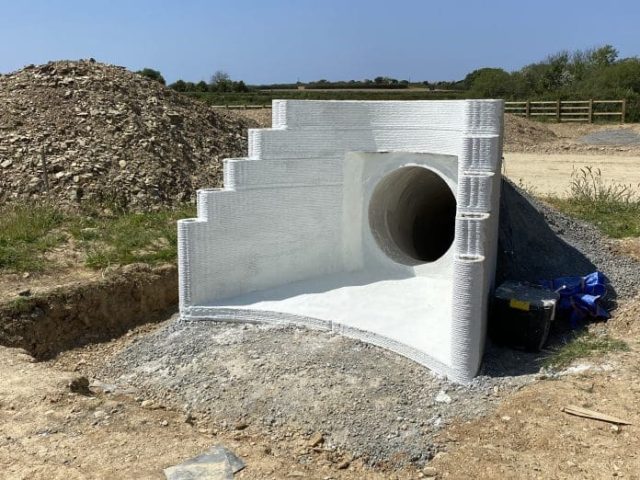
  • 3D Printing: Utilising 3D printing technology in construction can minimise material waste and reduce reliance on traditional building materials.
  • Modular Construction: Prefabricated modular construction techniques can streamline processes, reduce material usage, and lower costs.

Engaging with policymakers to address industry challenges is crucial:

  • Energy Price Caps: Advocating for capped energy prices for heavy industries can help stabilise production costs. The UK steel industry’s call for such measures underscores the importance of government intervention in mitigating energy-related expenses.
  • Support for Decarbonisation: Seeking government incentives and support for decarbonisation efforts can alleviate the financial burden on manufacturers and promote sustainable practices.

The UK construction industry is at a pivotal juncture, confronting rising cement costs and the implications of tariffs. These challenges necessitate a multifaceted approach, combining the adoption of alternative materials, technological innovation, and proactive policy engagement. By embracing these strategies, the industry can navigate the current landscape and build a resilient future.