HomeCategory

Construction Materials

3D printed concrete is rapidly moving from experimental technology to a practical solution for the UK construction and infrastructure sectors. As the industry faces mounting pressure to improve productivity, reduce carbon emissions and address labour shortages, additive manufacturing is emerging as a viable method for delivering buildings and infrastructure components faster and more efficiently.

The technology, often referred to as 3D concrete printing (3DCP), uses robotic systems to deposit layers of concrete according to a digital design. Unlike traditional construction methods, which rely heavily on formwork, 3D printing creates structures directly from computer models, reducing material waste and enabling complex geometries that would otherwise be costly or impossible to achieve.

3D printed concrete in UK infrastructure and construction
Image: Costain

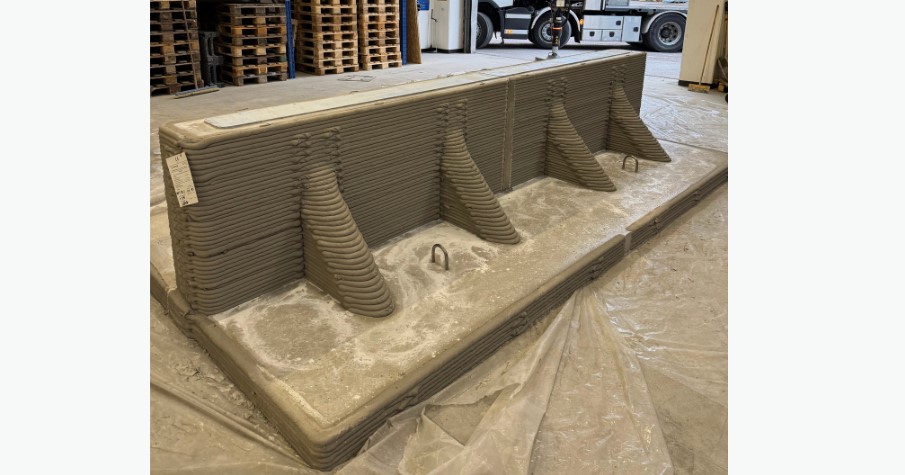
The UK’s interest in 3D printed concrete has accelerated significantly over the past five years. Early adoption was largely focused on housing and demonstration projects, but the technology is now finding applications across infrastructure, utilities and civil engineering. One of the most notable developments came in 2026 when Costain deployed 3D printed concrete components on a major carbon capture project on Teesside. Working alongside A E Yates and Hyperion Robotics, the company used 90 low-carbon printed concrete pipe supports for a CO₂ pipeline within the East Coast Cluster network. According to project data, the printed components reduced concrete and steel consumption by 40 per cent and cut embodied carbon by up to 50 per cent compared with conventional precast alternatives.

The appeal of 3D printed concrete lies in its potential to address several longstanding challenges in construction. Industry suppliers report that automated printing can reduce project costs by around 30 per cent, accelerate delivery times by as much as 50 per cent and significantly reduce material waste. By placing concrete only where it is structurally required, the process supports both efficiency and sustainability objectives.

Housing remains one of the most promising applications. Harcourt Technologies (HTL), the exclusive distributor of COBOD’s 3D construction printing technology in the UK and Ireland, has been actively promoting the technology for affordable housing developments. The company states that 3D concrete printing can help facilitate “the rapid delivery of high-quality, affordable, and sustainable housing reliably and consistently.”

Industry collaboration has also played a crucial role in advancing the technology. Major materials suppliers have invested in developing printable concrete mixes that use conventional ready-mix materials rather than specialist mortars. CEMEX and COBOD jointly developed a system that enables standard concrete to be used in 3D printing applications, reducing costs and improving scalability. According to the companies, the innovation allows contractors to utilise locally sourced materials while achieving significant time savings compared with traditional methods.

Despite the progress, challenges remain before 3D printed concrete becomes mainstream across the UK. Regulatory compliance, quality assurance and structural standards continue to evolve. The construction industry is traditionally cautious about adopting new methods, particularly where long-term performance and safety are concerned. However, efforts to develop standardised approaches are helping to overcome these barriers. Harcourt Technologies, working with engineering consultancy Cundall, has been involved in projects aimed at establishing standards and protocols for 3D construction printing across Ireland and the UK.

Labour shortages are another factor driving interest. The UK construction sector faces a growing skills gap, particularly in trades associated with traditional building methods. Automated concrete printing can reduce the amount of manual labour required on site while improving consistency and productivity. Rather than replacing workers entirely, the technology is expected to shift demand towards digital design, robotics operation and advanced manufacturing skills.

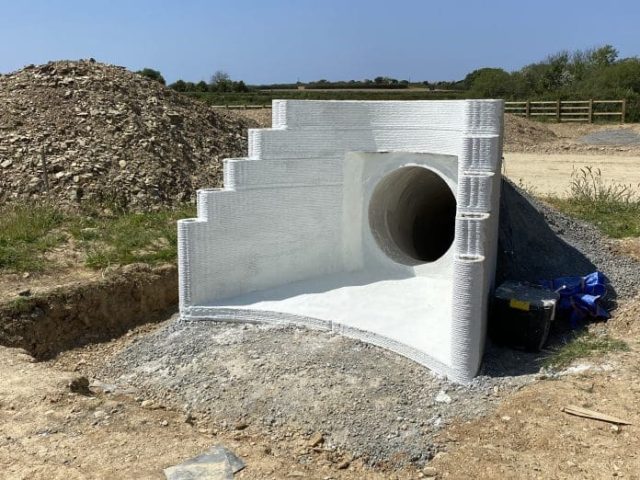
Infrastructure applications may ultimately prove more transformative than housing. Printed concrete components such as pipe supports, retaining structures, foundations and utility assets can be manufactured off-site and delivered ready for installation. This approach aligns closely with the industry’s broader move towards modern methods of construction and off-site manufacturing. The success of recent infrastructure projects suggests that 3D printed concrete could become a valuable tool for delivering low-carbon assets while reducing programme times and site disruption.

Looking ahead, the outlook for 3D printed concrete in the UK is increasingly positive. As standards mature, equipment becomes more widely available and contractors gain confidence through real-world projects, adoption is likely to expand. While the technology will not replace conventional construction entirely, it is becoming an important addition to the industry’s toolkit.

For a sector under pressure to build more sustainably, more quickly and with fewer resources, 3D printed concrete represents one of the most significant construction innovations of the past decade. The transition from pilot projects to operational infrastructure schemes indicates that the technology is no longer a future concept but an emerging reality within the UK’s built environment.

The £56bn New Hospital Programme, which includes the remediation and replacement of hospitals built with Reinforced Aerated Autoclaved Concrete (RAAC), is set to miss its original 2030 deadline, with some projects now expected to overrun by several years.

According to a new report from the National Audit Office (NAO), RAAC hospital remediation projects are likely to be delayed by between two and three years. While this represents a significant setback for estates identified as critical safety priorities, the watchdog says the programme is now on a firmer footing following a major reset under the current government.

The NAO states that the final hospitals within the programme are now expected to be completed in the 2045–46 period, more than a decade later than initially pledged. However, it adds that improved governance and clearer delivery plans have increased confidence among contractors and the wider supply chain.

The report highlights that the programme reset has improved certainty for construction partners, but warns that delivery remains finely balanced. With tight schedules and limited alternatives available, the next five years will need to see minimal errors, delays or cost increases if further slippage is to be avoided. The NAO notes that overly ambitious timetables were a key factor behind earlier delays to RAAC hospital projects.

Despite these risks, industry interest remains strong. Around 20 contractors and 16 firms have been shortlisted to participate in the programme, including major players such as Bam, McLaren and Morgan Sindall.

Andy Morrison, who directed the NAO report, said: “The programme to upgrade and build new hospitals is now on a more realistic timetable. The final hospitals to be completed will be in 2046.

“However, despite being priorities, hospitals built with Reinforced Aerated Autoclaved Concrete (RAAC) are now not expected to be replaced until 2032-33.

“Standardised hospital designs plan to have single rooms and be digitally enabled, offering potential savings and a stronger market for contractors. But these benefits depend on robust programme oversight.

“Staff will also need to buy-in to operational changes for hospitals to achieve efficiencies and improvements in patient care.”

The New Hospital Programme was originally announced by then prime minister Boris Johnson in 2019, with a headline commitment to deliver 40 new hospitals by 2030. It later emerged that this figure included refurbishments and extensions to existing hospitals, rather than 40 entirely new builds, prompting criticism over how the pledge had been presented.

Further scrutiny revealed that, under the original plans, funding for the programme would have been exhausted by March 2025, leaving later projects without confirmed financial backing.

Under the revised approach, HM Treasury will now fund hospital construction in five-year investment waves. Each wave is expected to increase by £15bn, reaching an average annual spend of £3bn per year from 2030 onwards. While this model provides longer-term certainty, it also means the overall programme completion date has moved to more than 10 years beyond the original target.

Secretary of state for health and social care Wes Streeting was highly critical of the programme’s condition when he took office, saying: “I was shocked by what I found on entering the Department of Health and Social Care (DHSC). The programme was hugely delayed, by several years more than had already been revealed by the National Audit Office. Most shocking of all, the funding for the programme was due to run out in March of this year, with no provision for future years whatsoever. The money simply was not there. The programme was built on the shaky foundation of false hope and without the confirmed funding these building projects could not be delivered, let alone delivering them all in the next 5 years.

“If I was shocked by the state of this programme, patients ought to be furious. Not only because the promises made to them were never going to be kept. They also desperately need new buildings and new hospitals.”

While the NAO acknowledges that the reset has improved the programme’s credibility, it warns that sustained political focus, tight cost control and strong oversight will be essential if the government is to deliver safer, modern hospitals and address the ongoing risks posed by RAAC across the NHS estate.

More than seven years after the tragic Grenfell Tower fire, the UK government has taken decisive action to accelerate the removal of unsafe cladding from buildings across England. In a significant update to the Remediation Acceleration Plan, announced on 17 July 2025, new legal deadlines have been set for landlords to complete remediation works, backed by severe penalties for non-compliance. This move aims to address the ongoing crisis that has left thousands of residents living in unsafe conditions for far too long.

Key Deadlines and Penalties

The updated plan introduces strict timelines for landlords to ensure the safety of their buildings. For buildings over 18 metres in height, all remediation work must be completed by the end of 2029. For buildings between 11 and 18 metres, the deadline is set for the end of 2031. Failure to meet these deadlines without a reasonable excuse will result in criminal prosecution, with potential penalties including unlimited fines and imprisonment. This marks a significant escalation in the government’s approach, aiming to hold landlords accountable and ensure that residents are no longer left in limbo.

Building Height Remediation Deadline Penalties for Non-Compliance
Over 18 metres End of 2029 Criminal prosecution, unlimited fines, imprisonment
11–18 metres End of 2031 Criminal prosecution, unlimited fines, imprisonment

Legislative Framework

To enforce these deadlines, the government plans to introduce a new Remediation Bill, which will make the duty to remediate a legal requirement. This legislation will also grant powers to bodies such as Homes England and local authorities to step in and carry out remediation works if landlords fail to act, ensuring that progress is made even in cases of non-compliance. The bill is expected to be brought forward as soon as parliamentary time allows, underscoring the urgency of the situation.

Funding and Support

Recognising the financial burden on social landlords, the government has committed over £1 billion to support remediation efforts in the social housing sector. This funding aims to level the playing field, giving social landlords equal access to government funding schemes as their private sector counterparts. The Cladding Safety Scheme has been expanded to include buildings under 11 metres in exceptional cases, further broadening the scope of support. Additionally, the Building Safety Levy, set to take effect in October 2026, is expected to raise £3.4 billion over ten years to fund remediation efforts. Exemptions for affordable, supported, and small-scale housing, along with discounts for previously used land, will help balance safety and affordability.

Progress and Challenges

Despite these measures, the pace of remediation has been criticised as too slow. As of June 2025, only 44% of the 2,800 social housing buildings identified with unsafe cladding in England had begun remediation works. This statistic underscores the urgency of the government’s new approach and the need for accelerated action. The plan also includes measures to identify all buildings over 11 metres with unsafe cladding, with a National Remediation System to track progress and ensure transparency. Over £5 million has been allocated to Metro Mayors to develop Local Remediation Acceleration Plans, further supporting regional efforts.

Voices from the Top

Housing Secretary Angela Rayner emphasised the importance of this plan, stating: “More than seven years on from the Grenfell tragedy, thousands of people have been left living in homes across this country with dangerous cladding. The pace of remediation has been far too slow for far too long. We are taking decisive action to right this wrong and make homes safe. Our Remediation Acceleration Plan will ensure those responsible for making buildings safe deliver the change residents need and deserve.”

Building Safety and Fire Minister Alex Norris added: “We are determined to make buildings safe and protect residents. Since publishing our Remediation Acceleration Plan, we’ve made strong progress, and this update goes further to drive accountability and remove barriers to speed up remediation. There is now a clear pathway to remediate every building with unsafe cladding. We expect everyone to play their part in giving residents and leaseholders the peace of mind that they deserve.”

Impact on Stakeholders

This updated plan has wide-ranging implications for various stakeholders:

  • Landlords and Developers: Faced with legal obligations and potential penalties, landlords and developers must prioritise remediation works to avoid legal repercussions. The Developer Debt Collection programme, involving 53 major developers, aims to recover £700 million for taxpayer-funded remediation, with £120 million expected in 2025/26.
  • Leaseholders and Residents: The plan offers hope for safer living conditions, though the timelines may still seem distant for those currently residing in affected buildings. Continued support to reduce reliance on measures like Waking Watch is also part of the plan.
  • Social Housing Providers: With dedicated funding, social housing providers are better equipped to address safety issues, but the scale of the problem requires efficient allocation and utilisation of resources.

Addressing Criticisms

While the government’s plan has been welcomed for its ambition, campaigners from groups like End Our Cladding Scandal have called it “extremely disappointing” and “performative,” citing uncertainties for leaseholders and the need for more immediate action. The long timelines, particularly for medium-rise buildings, may leave some residents feeling vulnerable. The government has responded by emphasizing enforcement, with over 50 local authorities already taking action against 483 buildings and plans to strengthen the Building Safety Regulator’s capacity.

A Path Forward

The government’s latest update to the Remediation Acceleration Plan represents a critical step forward in addressing the unsafe cladding crisis. By setting legal deadlines, introducing robust enforcement mechanisms, and providing substantial funding, the plan aims to ensure that all buildings with unsafe cladding are remediated within specified timeframes. While challenges remain, particularly in accelerating progress and addressing leaseholder concerns, this decisive action signals a commitment to learning from past tragedies and prioritising the safety of residents across England.

The UK construction industry is currently facing significant challenges due to escalating cement costs and the imposition of tariffs. These factors are reshaping the industry’s landscape, affecting project costs, timelines, and overall economic viability. This article delves into the causes of rising cement prices, the influence of tariffs, and the broader implications for the construction sector.

Several key factors have contributed to the surge in cement prices:

  • Decarbonisation Efforts: The global push towards reducing carbon emissions has led to increased operational expenses for cement manufacturers. The World Cement Association (WCA) reports that while the industry has reduced per-ton emissions by 23% since 1990, the costs associated with decarbonisation have transitioned from operational to selling imperatives, thereby elevating cement prices. citeturn0search2
  • Energy Prices: Cement production is energy-intensive, making it susceptible to fluctuations in energy costs. Recent calls from the UK steel industry for capped energy prices highlight the broader impact of energy costs on heavy industries, including cement manufacturing.
  • Supply Chain Disruptions: The COVID-19 pandemic and geopolitical tensions have disrupted global supply chains, leading to shortages of raw materials and increased transportation costs. These disruptions have further inflated cement prices.

The escalation in cement costs has several repercussions:

  • Increased Project Costs: With cement being a fundamental component in construction, rising prices directly inflate overall project expenses. This surge can lead to budget overruns and may deter investment in new projects.
  • Project Delays: Higher costs can result in funding shortfalls, causing delays in project initiation and completion.
  • Profit Margin Erosion: Contractors and developers may experience reduced profit margins as they grapple with increased material costs, potentially leading to financial distress.

Recent geopolitical developments have led to the imposition of tariffs on various construction materials:

  • US Tariffs on Steel and Derivative Products: The United States has implemented a 25% tariff on steel imports, affecting UK suppliers and their US customers. This move has significant implications for the global construction industry, influencing material availability and pricing.
  • Potential Cement Tariffs: Discussions around imposing tariffs on cement imports from countries like Canada, Mexico, and Europe have raised concerns about further price increases. Such measures could exacerbate the existing challenges posed by rising cement costs.

The introduction of tariffs has several effects:

  • Material Shortages: Tariffs can disrupt the supply of essential materials, leading to shortages and project delays.
  • Cost Inflation: Additional duties increase the cost of imported materials, further inflating construction expenses.
  • Market Restructuring: Smaller companies may struggle to absorb increased costs, potentially leading to industry consolidation as larger firms with greater financial resources dominate the market.

To navigate the challenges posed by escalating cement costs and tariffs, the construction industry can consider several strategies:

Exploring and utilising alternative materials can reduce reliance on traditional cement:

  • Sustainable Cement Alternatives: Companies like Material Evolution are developing low-carbon cement using innovative processes, achieving up to an 85% reduction in emissions. While these alternatives may currently come at a higher cost, scaling production could lead to price parity with traditional cement in the future.
  • Use of Recycled Materials: Incorporating recycled materials into construction projects can reduce the demand for new cement and lower overall costs.

Implementing advanced technologies can enhance efficiency and reduce costs:

  • 3D Printing: Utilising 3D printing technology in construction can minimise material waste and reduce reliance on traditional building materials.
  • Modular Construction: Prefabricated modular construction techniques can streamline processes, reduce material usage, and lower costs.

Engaging with policymakers to address industry challenges is crucial:

  • Energy Price Caps: Advocating for capped energy prices for heavy industries can help stabilise production costs. The UK steel industry’s call for such measures underscores the importance of government intervention in mitigating energy-related expenses.
  • Support for Decarbonisation: Seeking government incentives and support for decarbonisation efforts can alleviate the financial burden on manufacturers and promote sustainable practices.

The UK construction industry is at a pivotal juncture, confronting rising cement costs and the implications of tariffs. These challenges necessitate a multifaceted approach, combining the adoption of alternative materials, technological innovation, and proactive policy engagement. By embracing these strategies, the industry can navigate the current landscape and build a resilient future.

The UK government faces significant challenges as it aims to tackle both the housing crisis and the urgent need to cut carbon emissions. A dual focus on increasing the number of affordable homes and reducing environmental impact requires new approaches in construction, with timber emerging as a promising material to help achieve these objectives. Timber’s lower carbon footprint, cost-effectiveness, and renewability make it ideal for meeting government targets on both house building and emissions reduction.

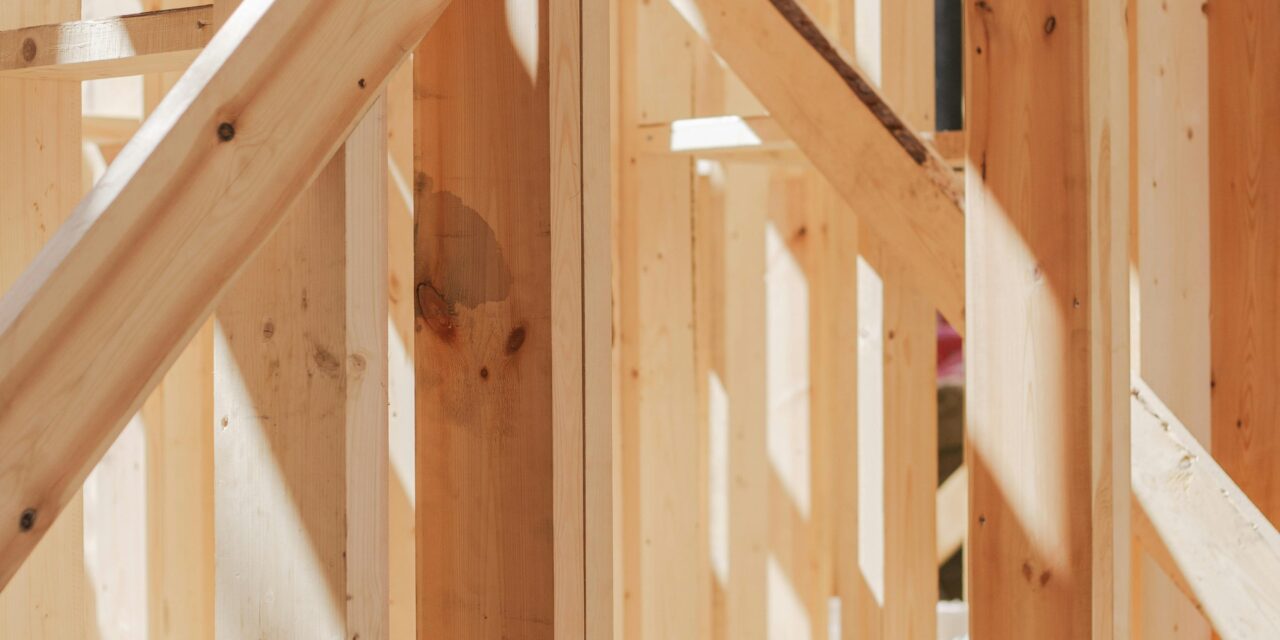
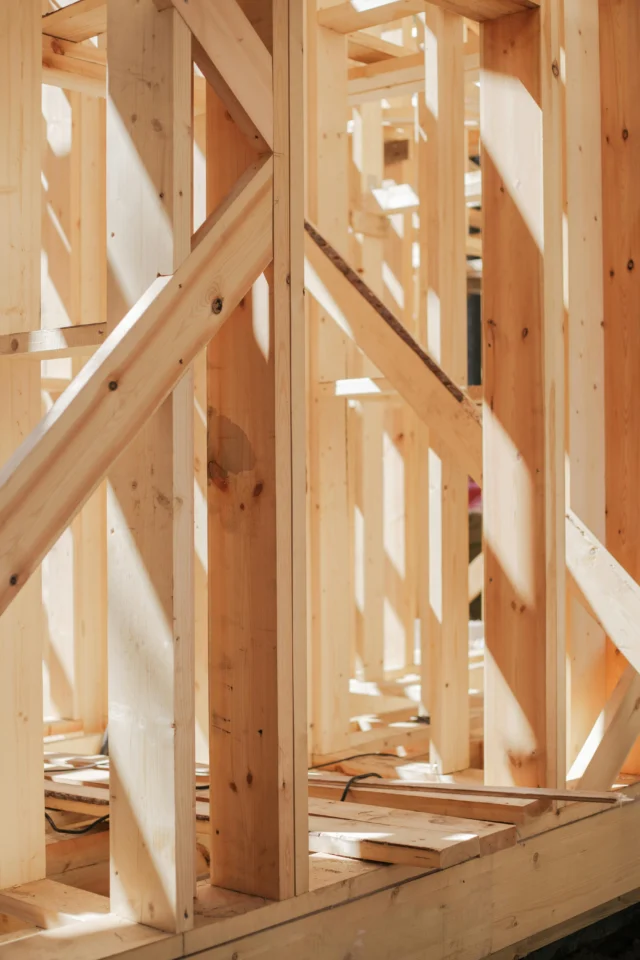
Timber Frame Construction
Photo by Ron Lach : https://www.pexels.com/photo/construction-of-framework-of-house-with-softwood-materials-8817834/

Timber’s Potential in Housebuilding:

Speed and Efficiency

Timber, particularly when used in modular and prefabricated construction, offers remarkable efficiency. Prefabricated timber panels can be manufactured offsite and assembled quickly, reducing construction times by up to 30%. This increase in speed means more homes can be built within a shorter timeframe, helping to address the urgent demand for new housing. Compared to traditional brick-and-mortar construction, which requires longer build times and higher labour costs, timber allows for quicker project turnover and increased capacity within the housing sector.

Affordability

One of the government’s primary objectives is to make homes more affordable for first-time buyers and lower-income households. The affordability of timber construction stems largely from its production and assembly efficiencies. A timber frame costs, on average, around 10-15% less than a traditional brick structure. With streamlined building processes and reduced site time, labour costs also decrease. Additionally, timber offers improved thermal performance, reducing the energy needs of buildings and lowering long-term costs for occupants.

Reducing Supply Chain Pressures

Timber is a widely available material, and while the UK imports much of its structural timber, it can also rely on sustainable forest management and domestic suppliers to maintain a steady supply. By scaling up timber sourcing and manufacturing capacity within the UK, the construction industry can avoid some of the cost and availability issues associated with materials like steel and concrete. This reduction in reliance on imports also helps keep construction costs stable, ultimately contributing to more affordable homes.

Environmental Impact:

Carbon Storage

Trees absorb carbon dioxide as they grow, effectively locking it within their structure. When timber is used in construction, this stored carbon remains sequestered, reducing the building’s carbon footprint. This stands in contrast to materials such as concrete and steel, which release significant emissions during production. Each cubic metre of timber can store up to one tonne of CO₂, meaning that if more homes are built from timber, the UK could make substantial progress toward its emissions reduction targets.

Reduced Emissions in Production

The production of timber requires far less energy compared to concrete and steel. According to a study by the University of Cambridge, switching from traditional materials to timber for new buildings could reduce the construction sector’s emissions by approximately 30%. When used at scale, timber construction could be a critical factor in reducing the carbon output of the building industry, which currently accounts for nearly 40% of global emissions.

Renewable Resource

Timber is one of the few renewable construction materials. Through sustainable forest management, trees can be replanted and regrown, providing a long-term supply that regenerates over time. Using certified timber from sustainably managed forests ensures that the demand for wood does not lead to deforestation. With robust regulatory frameworks, the UK could further increase its use of timber while supporting global reforestation efforts, creating a cycle that is both sustainable and economically beneficial.

In recent years, innovations like cross-laminated timber (CLT) have advanced the use of wood in large-scale projects. CLT is stronger and more durable than traditional wood products, making it suitable for multi-storey buildings and more complex structures. British developers are already beginning to use these techniques to great success, with projects like Dalston Works in London, one of the largest timber structures in Europe, setting a benchmark for eco-friendly, affordable housing.

To accelerate timber’s adoption, the government could introduce policies that incentivise sustainable timber construction. Reducing VAT on timber homes or providing grants for modular construction projects could encourage developers to choose timber over traditional materials. In addition, creating a national timber industry strategy could strengthen the domestic supply chain, reducing reliance on imports and stabilising timber prices.

The UK government’s recent pledge to achieve net-zero emissions by 2050 adds a compelling reason for embracing timber in construction. By developing a supportive policy environment, the government can help meet housing demand while taking meaningful action on climate change.

Despite timber’s advantages, there are challenges to address. Public perception regarding fire safety is a concern, especially in multi-storey buildings. However, advancements in fireproofing, combined with strict building regulations, can ensure that timber structures are safe. Timber is engineered to char on the surface in the event of a fire, forming a protective layer that slows down combustion, unlike materials that can collapse or emit toxic fumes. Through effective regulation and the use of innovative materials, these risks can be managed while promoting sustainable practices.

The Path Forward: Achieving Government Targets

The UK government’s dual targets of building more homes and achieving emissions reductions align well with timber construction’s capabilities. By increasing the use of timber, the government can make significant strides towards:

  • Increasing the supply of affordable housing: Timber’s efficiency and cost-effectiveness enable faster project delivery and more affordable homes.
  • Lowering carbon emissions: Timber’s carbon storage capacity and low-energy production make it a sustainable choice aligned with net-zero targets.
  • Supporting a green economy: Sustainable timber sourcing can create new jobs in forestry and manufacturing while stimulating investment in the domestic timber industry.

Incorporating timber into mainstream housing policy presents a practical solution to the UK’s housing and environmental crises. As more developers and policymakers recognise its potential, timber could play a vital role in building a sustainable, affordable future for Britain’s housing sector.

Adding nitrogen to concrete could significantly reduce global levels of potentially harmful nitrogen oxides (NOx) created by the construction industry in developing towns and cities, a new study reveals.

Researchers believe that concrete nitrogenation could contribute to a reduction in NOx emissions by 3.4-6.9 megatonnes (Mt) – representing 6-13% of industry-related emissions in 2021.

By 2050 the process could reduce NOx by a total of 131-384 Mt. It could represent the equivalent to 75-260 years potentially lost to premature death and reduced quality of life, estimated in terms of disability-adjusted life years (DALY).

NOx are highly reactive toxic air pollutants which can contribute to acid rain, ozone layer depletion and pose significant health threats – particularly in relation to respiratory disease – contributing to air pollution-related mortality.

Publishing their findings today (14/06/2023) in Nature Cities, an international group of researchers note that commercialising nitrogenation is likely to provides better economic and environmental prospects than similar processes relating to carbon dioxide (CO2).

Co-author Dr Yuli Shan, from the University of Birmingham, commented “Cities around the world, particularly those in the global south, are experiencing extensive urban renewal, expansion, and modernisation – all inevitably creating atmospheric pollution.

“Between 1970 and 2018, global NOx emissions nearly doubled from 70 Mt to 120 Mt. Addressing and managing these emissions is crucial for enhancing urban health, fostering sustainable industrial growth, and ensuring environmental well-being.

The first author, Ms. Ning Zhang from the Leibniz Institute of Ecological Urban & Regional Development added “There is significant potential for concrete in capturing NOx. Applying this technology holds promise for rapidly urbanising and emerging industrial regions, as it can generate substantial economic value and curtail industrial NOx pollution in these areas.

“The proposed nitrogenated concrete material presents a promising integrated solution for mitigating air pollution and managing construction waste in industrialised regions.”

The researchers note that China, Europe, and the United States are key players with the greatest capacity to contribute in this area – representing a mix of emerging and established industrial nations promoting circular economies and addressing atmospheric environmental concerns.

They also recommend setting up an emissions trading system like the one already created for CO2 – creating a more precise and widely accepted quantification of the advantages associated with NOx sequestration.

Although significant environmental and economic benefits are possible, practical application of the processes faces challenges related to transporting large volumes of materials and gases. The experts recommend using established industrial and commercial concrete carbonation systems to help optimise the logistics network and enhance feasibility of concrete nitrogenation.

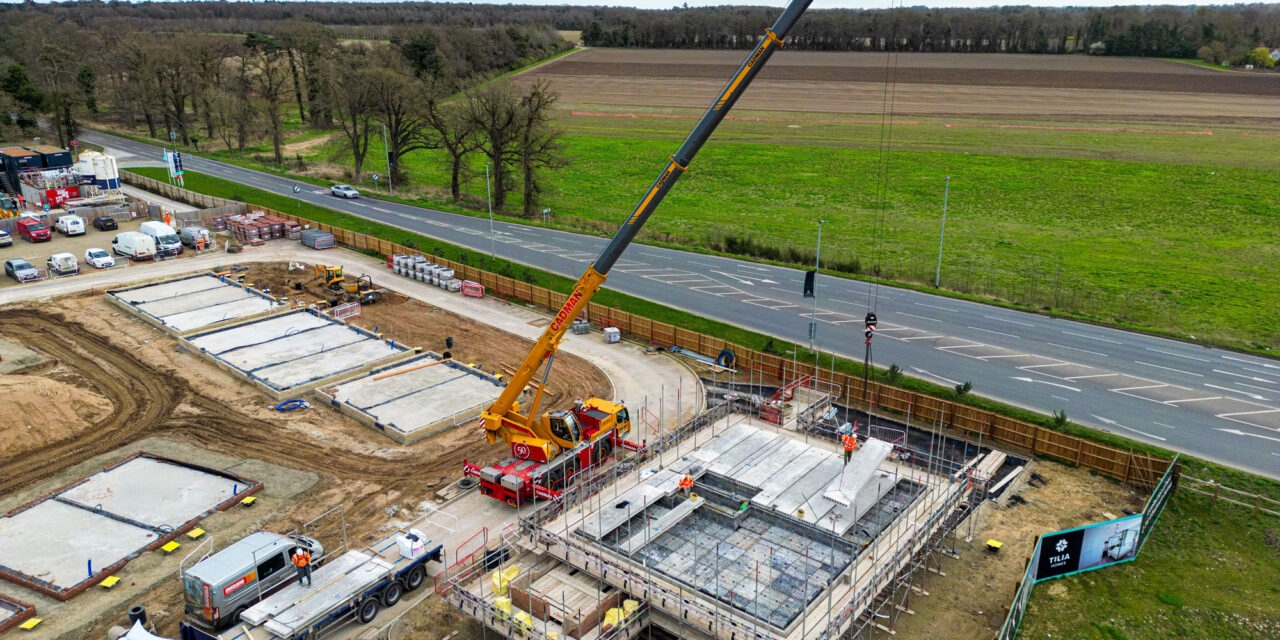
Milbank Concrete Products, a leading precast concrete company based in Essex, is proud to announce a ground-breaking achievement in sustainable construction. The company has successfully completed the UK’s first-ever delivery and installation of precast concrete hollowcore floors using 100% renewable Hydrotreated Vegetable Oil (HVO) second generation biofuel.

The installation of over 190m2 of hollowcore flooring and 3 flights of precast stairs, on behalf of Tilia Homes located within their Sovereign Gate development in Thetford, marks the UK’s first-ever precast concrete installation using 100% HVO fuel throughout the entire process, from delivery to installation.

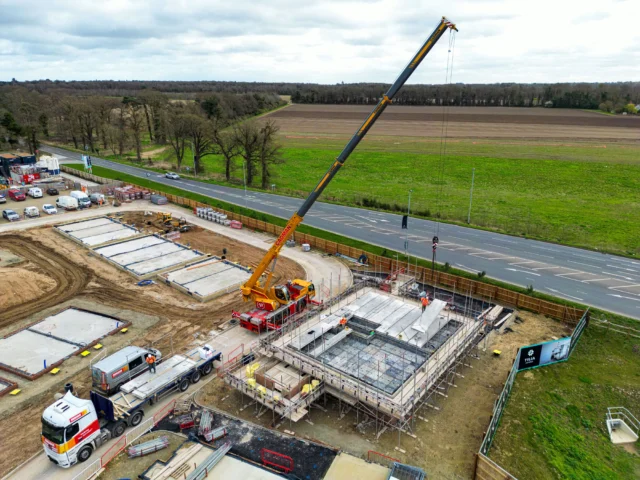
Tilia Homes HVO Installation.
Image: Milbank Concrete Products

The delivery lorry (in partnership with Woodland Logistics), the mobile crane (in partnership with Cadman Cranes), and the site team installation van all ran on HVO fuel, a renewable fuel alternative to regular diesel. This innovative approach reduces the project’s installation carbon emissions by over 90% and sets a new standard for environmentally responsible construction practices.

Hollowcore floors are a popular choice for housebuilders across the country. Prefabricated concrete slabs known for their strength, durability, and lightweight design are lowered into position via a crane, usually found seated on masonry walls or steel frames. Manufactured with strategically placed voids, these slabs offer excellent fire resistance, sound insulation, and thermal performance. They are a popular choice for and large residential projects, multi-story buildings and commercial spaces.

Ben Sharp, Tilia Home’s Senior Site Manager at the Sovereign Gate project, said – “Tilia Homes is committed to preventing environmental harm. This installation marks a pivotal moment within the construction industry, and we are delighted to be able to work with Milbank whose values align so closely with ours. This installation truly demonstrated the value of responsible construction and contributed towards an important reduction in our emissions at this project.”

And the savings weren’t just limited to site works. Milbank Concrete Products has made significant investments at its manufacturing facility in Essex with an aim of lowering its scope 1 & 2 emissions, with solar panels powering 50% of factory operations, fully electric forklift trucks, and a carbon neutral wood pellet boiler to cure its concrete beds. Since 2018, the business has successfully reduced its CO2 emissions by over 55%, with plans for net-zero by 2030, 20 years ahead of government targets.

Lee Cowen
Lee Cowen.
Image Milbank Concrete Products

Lee Cowen, Managing Director of Milbank Concrete Products, said – “Our aim is to be the most sustainable supplier of precast concrete products. While we have achieved significant milestones in recent years, our commitment to sustainability remains unwavering, and I am beyond proud to be part of such a passionate team that’s making all of this possible. We understand the impact our industry has on the environment and we’re leaving no stone unturned in making changes for the better. This is the first of many installations delivered and installed with 100% renewable biofuel, and I look forward to supporting new and existing customers with many more.”

HVO fuel is a form of renewable diesel created from recycled sustainable vegetable oils. Unlike traditional diesel fuel derived from crude oil, HVO fuel offers significantly reduced greenhouse gas emissions. In fact, studies show HVO can achieve greenhouse gas reductions of over 90% compared to standard diesel, while producing little to no smoke.

There are several compelling reasons to choose HVO fuel over traditional diesel:

  • Reduced Carbon Footprint: HVO fuel offers substantial reductions in CO2 emissions, contributing to a greener construction process.
  • Sustainable Source: Derived from plant-based materials, HVO is a renewable resource unlike the finite reserves of crude oil.
  • Performance: HVO fuel performs similarly to traditional diesel in terms of power and efficiency, allowing for seamless integration into existing construction equipment.
  • Air Quality: Unlike regular diesel, HVO fuel burns almost smoke/fumeless. This provides a significant improvement for machinery operators on site.

The construction industry is a significant contributor to global greenhouse gas emissions. By adopting innovative solutions like 100% HVO fuel installations, Milbank Concrete Products is demonstrating a strong commitment to environmental stewardship. This approach paves the way for a more sustainable future in construction, minimising environmental impact while delivering high-quality precast concrete solutions for its customers.

An estimated 700,000 pupils are currently receiving education in schools across England that are desperately in need of significant repairs or refurbishment.

The escalating backlog of schools requiring urgent attention was underscored in the findings of a critical parliamentary inquiry into the state of the school estate. Members of the Public Accounts Committee, who serve as watchdogs for government spending, expressed concerns that the School Rebuilding Programme has become overly preoccupied with issues related to reinforced autoclaved aerated concrete (RAAC).

According to the committee, many of the 100 schools yet to be selected for the programme are likely to be chosen based on serious RAAC issues. Consequently, other deteriorating schools are being pushed to the back of the line for funding.

Approximately 700,000 students attend the 1,200 schools under consideration for the SRP. The committee also flagged the Department for Education’s sluggish progress in compiling a comprehensive overview of asbestos presence in the school estate.

The report reveals that as of July 2023, the DfE had incomplete information on asbestos conditions in just over 4% of schools. While this marks an improvement from 7% in May 2022, it still accounts for nearly 1,000 schools. Complicating matters, both RAAC and asbestos can coexist in the same building, creating challenges for addressing these issues.

The report also highlighted that since 2011, an average of 11 teachers or former teachers have succumbed to asbestos-related conditions each year, according to data from the Health and Safety Executive.

The committee is urging the Government to devise a comprehensive package of support and best practices aimed at mitigating the adverse impact on students and teachers in schools that are in poor condition but cannot be immediately addressed.

Dame Meg Hillier MP, chair of the committee, said: “The School Rebuilding Programme was already struggling to stay on track, and DfE lacked a mechanism to direct funding to regions which need it most.

“It risks being blown further off course by concerns over RAAC, and many schools in dire need of help will not receive it as a result.

“The images of classroom ceilings collapsed onto empty school desks released in recent months are not just searing indictments of a deteriorating school estate.

“They are chilling reminders of absolute catastrophe averted through sheer luck.

“Given the poor condition of so many of these buildings, the Government’s prime challenge now is to keep the safety of children and staff absolutely paramount.”

Keeping building projects on track is a challenge for construction companies, with an estimated 90% of large-scale construction projects being delivered late, and almost two thirds of these by at least two months. Additionally, as 1 in 4 construction projects are delivered more than 250 days late, with 10% delayed by up to a year, these challenges are all too familiar across the sector; and are likely set to remain. Further, these delays can have knock-on implications, as the cost of manufacturing and transportation can change, affecting overall costs and profitability too.

A significant contribution to these delays lies in the delivery of building materials to sites. When materials are delivered late, only in parts, inaccurately, or not at all, construction projects can potentially grind to a halt, forcing companies to waste time and money on contracted labour that would use the materials. Builders merchants often play a crucial role in minimising these delays, through ensuring the timely and accurate delivery of construction materials to the correct location when they are required.

Andrew Tavener

Andrew Tavener, Head of Marketing for Fleet Solutions at Descartes Systems explains how builders merchants can take advantage of proven software solutions such as accurate delivery scheduling, route planning and customer notifications to streamline their delivery operations, which will enable them to overcome many of the challenges associated with construction site deliveries; ensuring that the delivery of building products take place on-time and in full, and deadlines are met.

Co-ordinating multiple deliveries to sites

Delivery delays can derail a project, resulting in costly overruns and missed deadlines, so keeping a project on schedule requires timely delivery of supplies and availability of contractors. However, builders merchants often need to coordinate many logistical factors with multiple stakeholders in large-scale construction projects. This includes the general contractor, subcontractors and suppliers. Coordinating deliveries with all of these stakeholders is time-consuming. If not carried out effectively, they will cause delays. This is on top of the added challenge of managing multiple deliveries of different products that construction sites need to receive daily. This can prove even more challenging on a larger site, especially one with restricted or multiple access points, or rural locations.

Delays and increased costs also arise due to material damage or loss. What’s more, changes to a project scope or schedule might result in last-minute changes in the delivery of materials, which is challenging to manage. Additionally, with inventory management being important on a construction site, to ensure that materials are available when required, and to prevent overstocking or running short, goods may potentially need to be delivered on the day they are required. Moreover, site storage may be limited too – so deliveries might need to be coordinated around the availability of the storage space required, while also considering how deliveries and the storage of construction materials affects the health and safety of employees on sites. Achieving this involves controlling the flow of delivery vehicles and ensuring that materials are unloaded, stored and handled in a safe and timely manner.

The Solutions 

An answer to this multi-faceted problem for builders merchants can be found within delivery scheduling and route optimisation software. This technology enables them to optimise the delivery of building products and materials to construction sites with several benefits. For instance, modern and proven route optimisation software allows suppliers to plan the most efficient delivery routes through analysing real-time traffic data to calculate the shortest, fastest or most economical routes for deliveries, helping to reduce delivery times, miles driven, fuel consumption and CO2 emissions. The software will also plan routes that avoid hazardous areas or roads with low bridges, improving the safety of drivers and reducing the risk of incidents and delays.

The real-time updates and alerts provided by route optimisation software helps to improve communication between planners, drivers, dispatchers, and site managers. Automated notifications from the software will help coordinate deliveries with multiple stakeholders – it can notify a construction site that a delivery is due, the expected time of arrival at the site, or any delays due to unforeseen circumstances such as roadworks or road traffic incidents. Deliveries can also be tracked in real-time through GPS tracking, allowing organisations to monitor their progress live on a map, and to make any necessary operational adjustments in real time. This provides construction teams and planners with an oversight of delivery status; and an informed ability to locate vehicles without having to telephone the driver to find out where they are. This enables builders merchants to offer a better customer service – one that enables them to be proactive in communications with construction sites about delivery times and any potential delays.

Delivery scheduling software is powerful for builders merchants because it can quickly and efficiently schedule and manage multiple deliveries, ensuring that materials are delivered to the right place at the right time. In addition, route optimisation software will help reduce delivery errors by providing clear, accurate delivery instructions to the driver. While proof of delivery functions enable goods to be checked onto and off the vehicle, ensuring no goods are missed when either loading or unloading the vehicle.

The Benefits

Implementing these technologies offers the potential to transform the delivery process and optimise operations, generating multiple benefits for builders merchants and their customers alike. Firstly, route optimisation and delivery scheduling software will increase project efficiency by facilitating on-time material delivery. Delays will be minimised and construction projects will be kept on track with accurate delivery times.

Proactive customer communication notifications reduces the risk of delays caused by incorrect orders or other issues. All parties can be kept informed about the delivery status of goods. This will ultimately lead to reduced costs by minimising late and / or inaccurate deliveries which cause project costs to increase when projects are delayed.

Optimising delivery processes will lead to improved relationships with construction firm stakeholders too. Accurate delivery times and delivery notifications contribute to better communication with customers, with a view toward building trusted relationships between the suppliers and construction site project managers. If site managers do not need to keep checking where their deliveries are, their time can be better spent managing other important aspects of their construction project. As a result, site managers will be able to manage their projects more efficiently.

The visibility of accurate delivery times and improved customer service will also allow construction teams to be more responsive to unloading materials when they are delivered. This will help reduce the time a delivery vehicle is at site, releasing it to continue with deliveries or return to base faster – and it will play a role in increasing productivity for all parties.

Conclusion 

As builders merchants face a multitude of challenges in their efforts to deliver construction materials on time and in-full to sites, delivery scheduling and route optimisation software will help logistics and planning teams to optimise their delivery processes, improve customer service and decrease delays.

From automating and calculating the most efficient delivery routes, to enhancing customer communication through real-time updates, improving communication with stakeholders, managing multiple deliveries, reducing fuel consumption and improving health and safety, builders merchants can look to these technologies to streamline and improve their own internal processes to benefit customers.

This will ultimately generate a positive result for construction site customers. Builders merchants  will be able to better plan and deliver construction materials when they are required and be in a position to proactively manage any exceptions. This all leads to a  more trusted customer relationships, an overall improved service, and hopefully, and ideally, projects that meet deadlines and cost expectations.

UK-based developer, Persimmon, has invested in Top Hat – a leading modular house builder. This strategic investment is set to revolutionise the construction industry by improving the speed, efficiency, and quality of building modular homes.

Persimmon’s investment in Top Hat will enable the modular home builder to scale its operations and increase production to meet the growing demand for affordable, high-quality homes. Top Hat’s innovative technology allows for the construction of modular homes to be carried out in a controlled environment, ensuring consistent quality while reducing construction waste.

With this investment, Persimmon is tapping into the rising popularity of modular homes, which are an excellent alternative to traditional homebuilding. Modular homes are built in a factory and assembled on-site, reducing construction time by up to 50% while also reducing the environmental impact of building. The investment also aligns with Persimmon’s commitment to sustainability and reducing carbon emissions.

Top Hat’s modular building system allows for customisation of homes, giving homeowners the freedom to design their dream home. The modular design process also ensures that the final product is structurally sound and energy-efficient, with high-performance insulation and windows, which can save homeowners money on energy bills.

With this investment, Top Hat can now accelerate its growth and will begin production from its cutting-edge 650,000 sq ft manufacturing facility in Corby, Northampton in 2024.

Jordan Rosenhaus, CEO and Founder at TopHat, said: “Today’s announcement is testament to the innovative approach that TopHat continues to take to house building and marks a step-change for the future of housing.

“It has been clear for some time that designing and building green, beautiful homes in factories is a critical part of solving the housing crisis – and today’s announcement will enable TopHat to reach the scale where the new generation of modular homes can be made available to everyone.”

Dean Finch, Group Chief Executive at Persimmon, said: “Persimmon is delighted to announce this partnership, combining the country’s most innovative modular manufacturer with the most cost-effective volume house builder.

“This investment provides Persimmon with guaranteed access to very energy-efficient volumetric modular units as well as TopHat’s innovative brick façade to use with our Space4 timber frame products.

“This will provide further build efficiencies, manage the growing challenge of labour shortages in key trades and expand our product range for customers. Combining our complementary industry-leading capabilities alongside other significant new investment makes me excited for the opportunities ahead.”