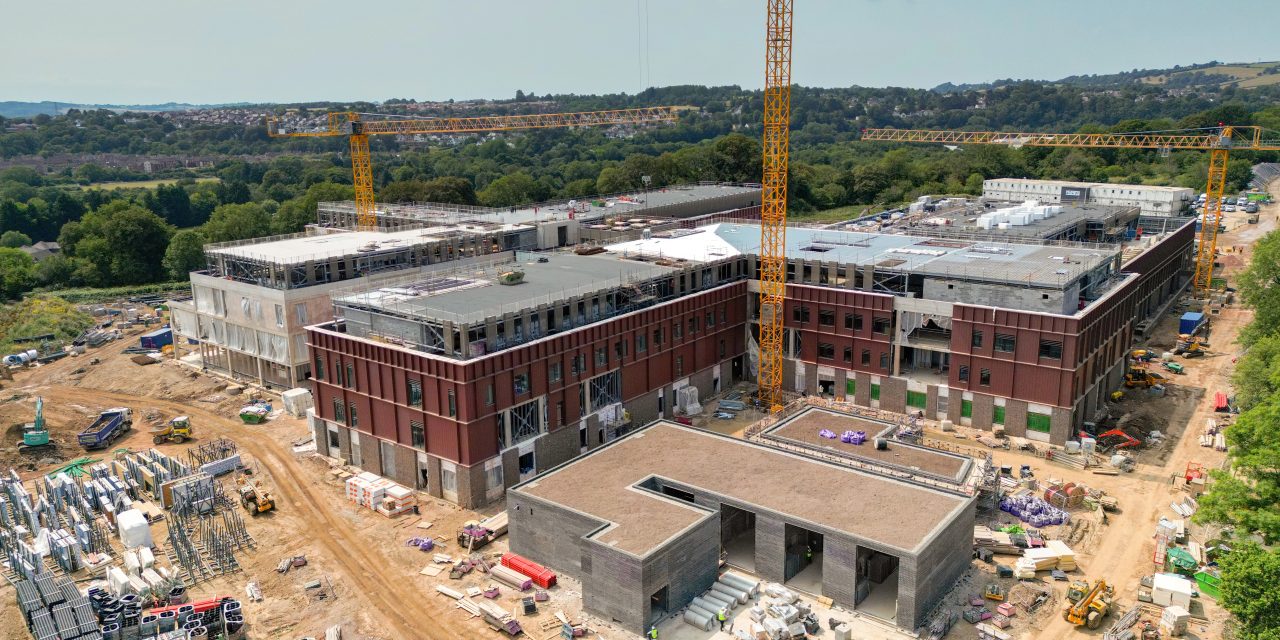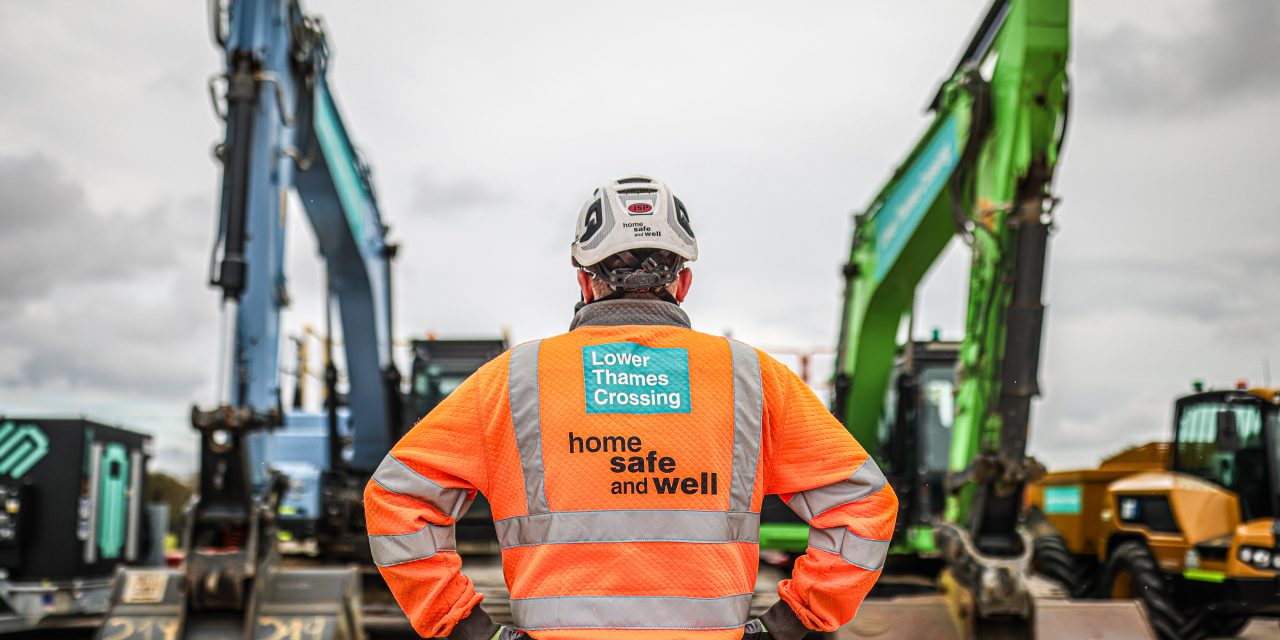
National Highways’ Lower Thames Crossing is on track to become the first major infrastructure project in the UK to be carbon neutral. The roll-out of zero-emissions construction equipment is now well under way, and it shows how the industry can build large roads without relying on diesel. Over 30 electric, hydrogen and HVO powered machines are already working across Kent and Essex.
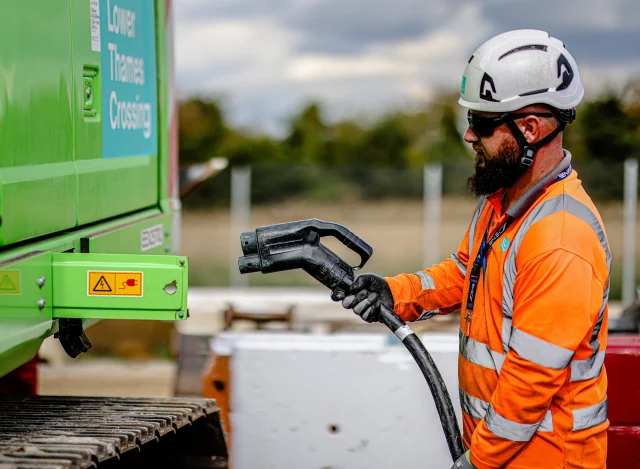
Zero-emissions machines at work across Kent and Essex
Work on the new road and tunnel under the River Thames began in early 2026. Since then, crews have used only electric, HVO and hydrogen powered equipment and machinery. HVO, or hydrotreated vegetable oil, is a renewable fuel that offers a lower-carbon alternative to conventional diesel. Together, these three technologies power everything from heavy plant to site generators without burning fossil diesel.
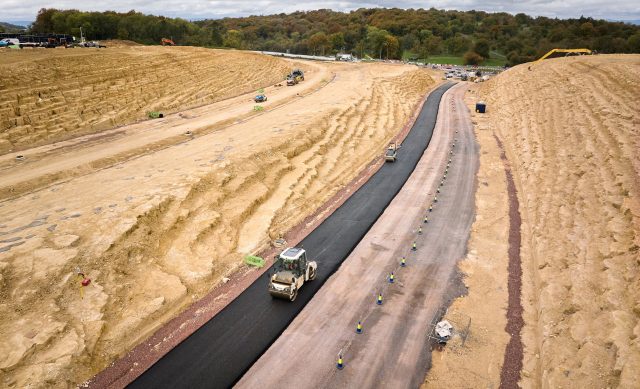
The machines currently at work include 20 tonne excavators, rollers, tractors, telehandlers and hydrogen generators. The fleet will grow to around 150 by peak construction in 2028. The Construction Equipment Association predicts this will be one of the largest deployments of zero-emissions equipment for an infrastructure project anywhere in the world.
The project has also gone further than cutting back on diesel. It has banned diesel from its construction sites since 2025, which is another first for a major British infrastructure project. That decision sends a clear signal to contractors, suppliers and other schemes that low-carbon equipment is ready for large-scale use.
Beyond the carbon savings, zero-emissions equipment can bring other benefits to people living near the sites. Electric machines typically run more quietly than diesel equivalents and produce no exhaust fumes where they operate, which helps to protect air quality in communities along the route.
Matt Palmer, Chief Executive Officer of the Lower Thames Crossing, revealed the news in the project’s 2025-26 Sustainability Report. He said: “We’re making real progress on the Lower Thames Crossing, and our ambition to make this the greenest road ever built in the UK means we’re cutting carbon on a scale that hasn’t been tried before. By putting these zero-emissions machines to work, we’re showing that the construction industry can break its reliance on diesel and these innovative low-carbon approaches can become normal practice on projects across the UK.”
His comments highlight the scale of the challenge. Heavy machinery runs for long hours over many years on a major road scheme, so construction produces a large share of the emissions. By tackling that source directly, the Lower Thames Crossing aims to prove that cleaner methods work in practice, not just on paper. If one of the UK’s largest road projects can work without diesel, other contractors will find it harder to argue that the technology is not ready.
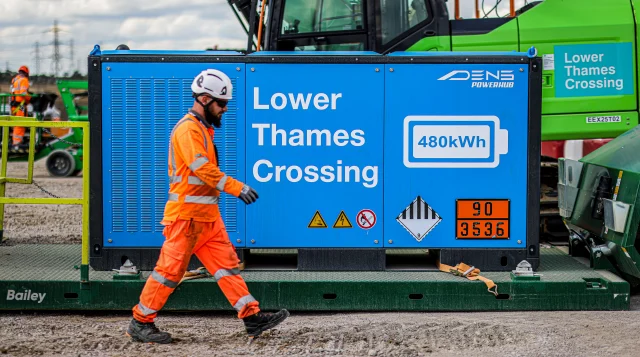
A carbon pathfinder for the wider industry
The Lower Thames Crossing acts as a carbon pathfinder project. Its purpose is to reduce its own carbon footprint and to prove that low-carbon methods can work at scale, which supports the construction industry’s transition to net zero. The project can also share what it learns about fuelling, performance and reliability with the rest of the sector.
The approach is already spreading. Organisations such as Sizewell C, Anglian Water and East West Rail have adopted the methods the project pioneered across more than £30 billion of future projects. That uptake suggests the lessons learned in Kent and Essex will shape how Britain builds for years to come.
Hydrogen, skills, nature and heritage
Alongside its progress on decarbonising construction, the 2025–26 Sustainability Report sets out progress against the project’s wider commitments to communities, local businesses and nature. Hydrogen is a key part of the story. The project secured the supply of green hydrogen from British firm GeoPura, which has since invested in a local production facility at the Port of Tilbury. Producers make green hydrogen using renewable electricity, so it gives the project a fuel with no carbon emissions where it is used. Hydrogen now powers all work at the northern tunnel portal site.
People and skills also feature strongly. The project has opened its first Skills Hub in Gravesham, where over 150 local people have received free training in construction skills. Project teams have also spoken with over 600 local businesses to help them win work on the Lower Thames Crossing.
Nature and heritage are part of the plan too. The project has completed a new nature site near the village of Thong, the first of over 3,000 acres of green space it is creating. Meanwhile, detailed archaeology digs across the local area are uncovering local history and giving communities a closer connection to the past beneath their feet.
Why the Lower Thames Crossing matters
The Lower Thames Crossing will tackle congestion at the Dartford Crossing and create a more reliable trade route connecting South East ports with the Midlands and the North. For drivers, that should mean fewer delays. For businesses, it should mean more dependable journeys for freight.
The project received planning permission in March 2025. In November 2025, it received the final part of public funding, which allowed it to start work and seek private investment to complete construction and operate the new road. The road is expected to open in the early to mid-2030s.
If the project keeps to its current path, it will leave two lasting legacies: a vital new road and a proven blueprint for zero-emissions construction.