HomeCategory

Public Works Contract

National Highways’ Lower Thames Crossing has today (4 February 2025) revealed a new target to reduce its construction carbon emissions by 70%; an ambition made possible thanks to the project’s Delivery Partners’ and suppliers’ commitment to making the new crossing the greenest road ever built in the UK.

The improved new target has been published in the project’s second annual sustainability report, which details the legacy the project aims to leave for the local community, environment, and the UK’s construction industry.

Lower Thames Crossing projected image
Image: National Highways

The Lower Thames Crossing is a proposed new road and tunnel under the Thames designed to tackle congestion and unlock economic growth by almost doubling road capacity across the Thames east of London and creating a reliable route that better links the north and the midlands with the ports of the south-east.

The project is a carbon pathfinder project that is aiming to set new standards for building infrastructure by pioneering and scaling up approaches to low-carbon construction. By working closely with its three Delivery Partners and supply chain the project has halved its predicted construction carbon footprint, and it became the first major project in the UK to make it a legally binding limit when it submitted it in its application for Development Consent in October 2022.

The project has now identified ways to potentially reduce that footprint further, and has set itself an ambitious new target of less than 840,000 tonnes in total – a cut of around 70% against its original prediction. This would be achieved by taking a forensic approach to reducing carbon as the design of the new road is refined, and committing to only using low-carbon steel and concrete. It also includes removing all diesel from its construction sites by 2027, by accelerating the large-scale use of electric vehicles and plant, and using hydrogen to power its heavy construction machinery – a first for a major project in the UK. The award of the contract for the supply of hydrogen is expected to take place later this year.

The project is also in the final stages of running a low-carbon footbridge contest to find a sustainable design for a bridge over the A127, which could also be used across the wider road network.

Katharina Ferguson, Supply Chain Development Director, Lower Thames Crossing said: “The Lower Thames Crossing will not only tackle congestion and unlock economic growth in the UK, with our partners and suppliers we will create a new blueprint for how we build low-carbon infrastructure and leave a legacy of jobs, skills and green spaces for the local community. With millions invested in local projects and a new community woodland at Hole Farm on track to open next year, we’re already making a difference, well before work on the new road gets underway.”

The plans to make the Lower Thames Crossing the greenest road ever built in the UK include building a tunnel rather than a bridge to avoid protected wetlands and marshes, and seven green bridges that would provide safe crossing points for people and wildlife.  The project is planting at least 1 million additional trees, creating a new community woodland at Hole Farm and new public parks in Thurrock and Gravesham. The project will also promote active travel by creating or improving almost 40 miles of pathways for walkers, cyclists and horse riders, 3 miles of path for every mile of road.

The project’s latest sustainability report highlights recent successes such as:

  • The team is ready to start construction as soon as the green light is given by government, with detailed design work to reduce local impacts well underway.
  • Local communities are already benefitting from the Lower Thames Crossing’s £250,000 Community Fund. An active travel scheme at Cyclopark in Gravesend was one of 55 local charities or not-for-profit organisations to receive money from the fund.
  • Prisoners on day release and local people seeking employment were the first to take part in the project’s Skills Hub pilot programme – designed to develop local skills and supply chains and address industry skills gaps.
  • Work got underway on the community facilities at the new Hole Farm community woodland near Brentwood, due to open in 2025 – around 80,000 trees have been planted so far, using low-carbon construction methods.

Subject to planning permission and funding, construction is expected to take six-years. The Secretary of State for Transport recently announced that the deadline for a decision on the Lower Thames Crossing’s planning application has been extended to 23 May 2025.


In a decisive move to bolster the United Kingdom’s infrastructure and stimulate economic growth, the government has unveiled the “Plan for Change“. This ambitious initiative aims to streamline the planning process, accelerate major infrastructure projects, and address the nation’s housing shortage, thereby laying the foundation for a more prosperous future.

Streamlining Legal Challenges to Infrastructure Projects

A significant component of the Plan for Change involves reforming the legal framework that governs challenges to major infrastructure developments. At present, projects can face up to three legal challenges, often resulting in lengthy delays and increased costs. The new plan proposes limiting such challenges to a single instance, thereby reducing the time and resources expended on legal proceedings.

Government data reveals that 58% of all major infrastructure decisions are subjected to court challenges, with each case taking an average of 18 months to resolve. Notable projects delayed by such challenges include the East Anglia wind farms, Sizewell C nuclear power station, and the A47 National Highway Project. By restricting the number of legal challenges, the government aims to expedite project timelines and alleviate pressure on the judicial system.

Image of countryside that could be a target for Plan for Change
Image by Peter H from Pixabay

Accelerating Housing Development Near Transport Hubs

Addressing the housing crisis is a central pillar of the Plan for Change. The government has set an ambitious target to deliver 1.5 million homes within the current parliamentary term. A key strategy to achieve this goal is the promotion of residential development around England’s commuter train stations. By introducing a “presumption in favour of building” and zoning schemes prioritising development near transport hubs, the plan seeks to improve access to jobs and enhance living standards.

Inspired by successful initiatives in cities such as Manchester, these planning reforms aim to reduce bureaucratic barriers and hasten the construction of new homes. Major housebuilders have welcomed these measures, recognising them as a positive step towards more efficient planning and development.

Revitalising the Oxford-Cambridge Arc

In a bid to position the UK as a global leader in innovation, the government has revived plans to develop the Oxford-Cambridge Arc, envisioned as a rival to Silicon Valley. This initiative aims to double the economic output of the region by 2035 through significant investment in research and development. The project has the potential to add £78 billion to the UK economy and has garnered support from key stakeholders, including university leaders and major firms such as AstraZeneca UK and Arm.

However, the plan faces challenges, including local opposition to new developments, housing shortages, and infrastructure requirements. The government has pledged to address these issues, with plans to construct 1.5 million homes and prioritise development to unlock the Arc’s full potential.

Expanding Airport Infrastructure to Boost Connectivity

Improving the UK’s connectivity is another focus of the Plan for Change. The government supports major airport expansions, including a third runway at Heathrow Airport and full-time use of Gatwick Airport’s second runway. These developments aim to increase airport capacity in southeast England, stimulate economic growth, and create jobs.

The proposed third runway at Heathrow involves upgrading existing infrastructure and adhering to environmental standards. At Gatwick, a £2.2 billion investment could operationalise the second runway by the end of the decade, generating substantial economic benefits. Furthermore, Luton Airport’s expansion plans await government approval, aiming to double passenger capacity with a new terminal.

Implementing the National Infrastructure Delivery Plan

The Plan for Change aligns with the objectives outlined in the National Infrastructure Delivery Plan, which details how the government will support the delivery of infrastructure projects and programmes. The plan highlights the importance of both public and private sector investment in achieving the nation’s infrastructure ambitions.

The latest National Infrastructure and Construction Pipeline outlines projected and planned investment over the next ten years, with a total value of £600 billion. This comprehensive approach underscores the government’s commitment to revitalising the UK’s infrastructure and driving long-term economic growth.

On the Plan for Change, prime minister Keir Starmer said: “For too long, blockers have had the upper hand in legal challenges – using our court processes to frustrate growth.

“We’re putting an end to this challenge culture by taking on the NIMBYs and a broken system that has slowed down our progress as a nation.

“This is the government’s Plan for Change in action – taking the brakes off Britain by reforming the planning system so it is pro-growth and pro-infrastructure.

“The current first attempt – known as the paper permission stage – will be scrapped. And primary legislation will be changed so that where a judge in an oral hearing at the High Court deems the case Totally Without Merit, it will not be possible to ask the Court of Appeal to reconsider. To ensure ongoing access to justice, a request to appeal second attempt will be allowed for other cases.”

Melanie Leech CBE, chief executive of the British Property Federation, said: “We can build great infrastructure in the UK – eventually. From power stations to bypasses, we take longer to deliver important national projects than other developed nations, and that has to change.

“If we want to grow the economy and fund vital public services, then we have to better balance environmental and community interests with the benefits of development, and do so in a clear and timely way. Reducing the scope for vexatious and unmerited legal challenges, whilst retaining a right to appeal, is a very positive step in achieving this.”

However, Roger Mortlock, CPRE chief executive, said: “The government should bring people together to tackle the climate emergency, not set them against each other with tired, divisive language.

“Campaigners bringing legal challenges only do so because they think the law is being broken. Allowing judges to block these concerns as ‘totally without merit’ is anti-democratic and, when it comes to the climate crisis, dangerously short-sighted.

“Climate change is the single biggest threat to the countryside. It’s clear we’ve got to build a clean energy grid fit for the future but the best way to achieve this is with local communities involved from the start.

“The UK could learn from countries such as Ireland and Australia, which involve communities in decision making  from the beginning, reducing the need for lengthy and expensive legal processes without eroding democracy. For everyone’s sake, we should be building consensus, not dismissing people with real ideas and solutions as ‘blockers’.”

High Speed 2 (HS2), the UK’s ambitious high-speed rail project, is undergoing a significant transformation aimed at reducing construction costs and enhancing efficiency. Under the leadership of new Chief Executive Mark Wild, appointed in December 2024, HS2 Ltd is implementing a “fundamental reset” to address financial challenges and ensure the project’s successful completion.

Current Progress and Achievements

Despite financial hurdles, HS2 has made substantial progress in its construction phase:

  • Tunnel Excavation: Approximately 70% of the planned twin-bore tunnels have been excavated, equating to 38 out of 55 miles. This includes the completion of the 10-mile Chiltern Tunnel, the project’s longest and deepest section.
  • Earthworks: 58% of earthworks for the railway’s cuttings, embankments, stations, and landscaping have been completed, representing almost 92 million cubic meters of material moved.
  • Viaducts and Bridges: Construction has commenced on 158 out of 227 viaducts and bridges, with 13 already built.

Financial Challenges and Cost Overruns

Initially estimated at £37.5 billion in 2009 prices, HS2’s projected costs have escalated significantly over the years. Recent estimates suggest that the project’s cost has surged to nearly £100 billion, driven by factors such as rising land acquisition expenses, construction delays, and increased material costs.

In response to these financial challenges, the UK government has taken steps to oversee the project’s expenditures more closely. Ministers are now directly involved in overseeing the building of the HS2 rail line to manage rising costs effectively.

Leadership’s Commitment to Cost Reduction

Mark Wild has acknowledged the project’s serious financial situation and emphasized the necessity for a comprehensive reset to deliver the railway at the lowest feasible cost. He stated, “The programme is in a very serious situation that requires a fundamental reset to enable it to be delivered to the lowest feasible cost.”

This reset involves a thorough review of construction methodologies, procurement processes, and project management strategies to identify areas where efficiencies can be achieved without compromising the project’s integrity or objectives.

Future Outlook and Strategic Planning

The fundamental reset aims to establish a more sustainable financial framework for HS2, ensuring that the project can be completed within a realistic budget while delivering the intended benefits of improved connectivity and economic growth.

The UK government remains committed to the project’s success, with plans to reinvest savings from scaled-back sections into other rail projects, including Network North, to enhance regional connectivity.

HS2’s fundamental reset represents a pivotal moment in the project’s development, focusing on cost reduction and efficiency to deliver a high-speed rail network that meets the UK’s transportation needs. With continued commitment from leadership and strategic planning, HS2 aims to overcome financial challenges and achieve its goals of enhancing connectivity and stimulating economic growth across the country.

Recent inspections have revealed welding issues affecting five National Highways bridges and four other bridges constructed by Severfield, a prominent Yorkshire based steel fabricator.

These bridges, located on key motorway routes, form part of essential infrastructure linked to the HS2 project. Deficiencies in the welds, including improper material fusion and irregular seam alignments, have raised safety concerns, prompting immediate remedial measures costing over £20m.

The Welding Deficiencies

Reports suggest the welding issues stem from deviations from agreed specifications during fabrication. This includes inadequate penetration in the weld joints, leading to reduced structural integrity. Some experts attribute the lapses to potential oversight in quality assurance processes or insufficient worker training during high-pressure project timelines. Such factors have exacerbated the problem, requiring significant follow-up interventions.

National Highways’ Response

National Highways has initiated a comprehensive review of the affected bridges. Key actions include:

  • Enhanced Inspections: Using advanced non-destructive testing techniques to assess the extent of structural vulnerabilities.
  • Interim Safety Measures: Imposing weight restrictions and rerouting traffic where necessary to mitigate risks.
  • Rectification Work: Collaborating with Severfield to reinforce the welds under stringent monitoring to meet regulatory standards.

A National Highways spokesperson said: “We are carrying out targeted inspections on a small number of bridges to rule out any potential issues.

“These bridges remain safe to use. For any abnormal load movements, we have put restrictions in place as a precaution while we assess whether any further strengthening measures may be required.”

Neither HS2 nor National Highways have disclosed which bridges have been affected by the welding defects.

Implications for Future Projects

The situation has prompted calls for stricter oversight in large-scale infrastructure projects. Experts recommend adopting stricter compliance frameworks and real-time monitoring during fabrication to avoid similar issues. Severfield and National Highways are reportedly revising their quality protocols to restore trust in their processes.

While the affected bridges remain under scrutiny, National Highways has assured stakeholders of its commitment to upholding safety and maintaining seamless transport networks.

The UK faces a pressing need to upgrade its infrastructure, from ageing transport systems and digital networks to energy grids and water management facilities. Modern, reliable infrastructure is the backbone of a thriving economy, enabling businesses to operate efficiently and communities to flourish. However, with public finances stretched thin, the government must find innovative ways to attract private sector investment. By fostering partnerships, offering incentives, and creating stable policy environments, the UK can unlock significant private capital to power its infrastructure renewal.

Public-Private Partnerships (PPPs) 

Public-Private Partnerships have long been a cornerstone of infrastructure development worldwide. These collaborations allow the private sector to finance, build, and operate projects while the government provides regulatory oversight and ensures public interest is upheld. In the UK, projects such as the Thames Tideway Tunnel and the M6 Toll Road demonstrate how PPPs can deliver large-scale infrastructure improvements. Expanding the scope of PPPs, particularly in regional areas, could address pressing issues such as urban transport and renewable energy capacity.

Green Bonds and Infrastructure Funds 

To attract investment aligned with sustainability goals, the government could expand its issuance of green bonds. These instruments appeal to environmentally conscious investors and provide funding for eco-friendly projects, such as wind farms, electric vehicle charging networks, and energy-efficient housing. Additionally, creating dedicated infrastructure funds with co-investment from public and private sources could mobilise capital while sharing risks.

Tax Incentives and Subsidies 

Targeted tax breaks and subsidies are powerful tools to encourage private investment. For example, offering enhanced capital allowances for companies investing in infrastructure projects could make these ventures more financially attractive. Similarly, reducing tax liabilities for firms participating in renewable energy or digital connectivity projects could spur rapid development in these critical areas.

Streamlining Planning and Regulatory Processes 

Uncertainty and delays in planning approvals often deter private investment. The government could streamline regulatory processes by introducing clear timelines, reducing bureaucratic hurdles, and enhancing coordination between agencies. For example, the National Infrastructure Commission could take a more active role in fast-tracking approvals for priority projects.

Collaboration on Innovation 

The private sector brings not only capital but also expertise in cutting-edge technologies and innovative approaches. Collaborative initiatives such as government-backed innovation hubs can foster partnerships between public authorities and private firms. These hubs could focus on emerging areas like smart cities, autonomous transport, and hydrogen energy, ensuring that infrastructure investments align with future needs.

Devolution of Powers 

Empowering local governments to enter into infrastructure agreements with private firms can unlock regional potential. Devolving decision-making and budgetary powers allows local authorities to design bespoke solutions that address unique regional challenges, from coastal flood defences to rural broadband.

Infrastructure Banks and Sovereign Wealth Investments 

Reviving institutions like the UK Infrastructure Bank could provide a trusted vehicle for leveraging private capital. These banks can de-risk investments through guarantees and co-financing, making projects more attractive to private investors. Furthermore, partnerships with sovereign wealth funds and institutional investors, such as pension funds, can inject long-term capital into transformative infrastructure initiatives.

Ensuring Investor Confidence 

For the private sector to commit to large-scale investments, it requires a stable policy environment. The government must provide long-term clarity on regulations, taxation, and market conditions. Introducing an Infrastructure Investment Strategy with cross-party support could reassure investors that projects will not be jeopardised by political shifts.

The private sector offers vast financial resources and expertise that the UK government can harness to meet its infrastructure goals. By fostering a supportive environment, providing incentives, and encouraging innovation, the government can attract the private capital necessary to build a resilient and modern infrastructure network. Such a strategy will not only address current deficiencies but also ensure that the UK remains competitive in an increasingly globalised economy.

The UK government has renewed its commitment to unlocking brownfield sites for development, aiming to address the nation’s housing shortage through the regeneration of previously used land. Brownfield sites, typically former industrial or commercial areas, offer significant opportunities for redevelopment while helping to preserve the country’s green spaces.

In a recent announcement, the government pledged an additional £68 million to support the development of brownfield sites across the country. This funding will be distributed amongst 54 local authorities, with each council receiving tailored financial support to prepare and unlock brownfield land for new housing projects.

The £68 million is part of the wider Brownfield Land Release Fund 2 (BLRF2) initiative, which aims to encourage the transformation of derelict land into vibrant residential communities. The government estimates that this latest round of funding will enable the construction of around 6,000 new homes, contributing to the broader national target of delivering affordable housing.

This new £68 million commitment builds on the £1.8 billion investment announced in 2023 for brownfield site regeneration. The broader funding aims to prioritise areas where the demand for housing is most urgent, particularly in urban regions with limited available land. Of the total, £550 million had already been earmarked specifically for brownfield sites, highlighting the government’s focus on reusing previously developed land.

Old industrial site being prepared for development
Image by Dimitris Vetsikas from Pixabay

The combined funding from these initiatives is expected to support councils in addressing the key challenges posed by brownfield redevelopment, including site contamination, planning hurdles, and infrastructure improvements.

Redeveloping brownfield land offers a sustainable solution to the UK’s housing needs. These sites, often located in urban or semi-urban areas, benefit from proximity to existing infrastructure, such as public transport, utilities, and services, which can reduce the cost and complexity of development. This approach also helps protect the green belt and rural areas, ensuring that new housing is built in places where it is most needed.

Moreover, regenerating brownfield land can breathe new life into neglected areas. Redevelopment projects can revitalise local economies, create jobs, and improve the quality of life for residents by transforming derelict land into thriving communities.

Despite the many benefits, developing brownfield sites presents its own set of challenges. Many brownfield sites require significant remediation work to make them suitable for housing, particularly those with a legacy of industrial contamination. This can make development more expensive than building on greenfield sites.

The government’s financial support is therefore critical in helping local authorities overcome these hurdles. The £68 million fund will be used to prepare sites by clearing and decontaminating the land, making it viable for housing projects. Additionally, the funding will assist councils in navigating planning processes and ensuring that necessary infrastructure is in place to support new developments.

The government’s strategy to focus on brownfield development aligns with its broader goals for sustainability and urban regeneration. By prioritising the reuse of previously developed land, the UK can reduce its environmental footprint, limit urban sprawl, and ensure that new housing is built in locations with existing infrastructure.

Unlocking brownfield sites is also a key component of the government’s long-term housing strategy, which aims to address the shortage of affordable homes while maintaining the integrity of the countryside.

With the government’s additional £68 million investment in brownfield development, the potential to transform derelict sites into much-needed housing has gained further momentum. Distributed amongst 54 local authorities, this funding will enable the construction of thousands of new homes while preserving green spaces and promoting sustainable urban growth.

By continuing to support brownfield regeneration, the government is taking significant steps towards meeting its housing targets, revitalising communities, and ensuring a sustainable and responsible approach to development across the UK.

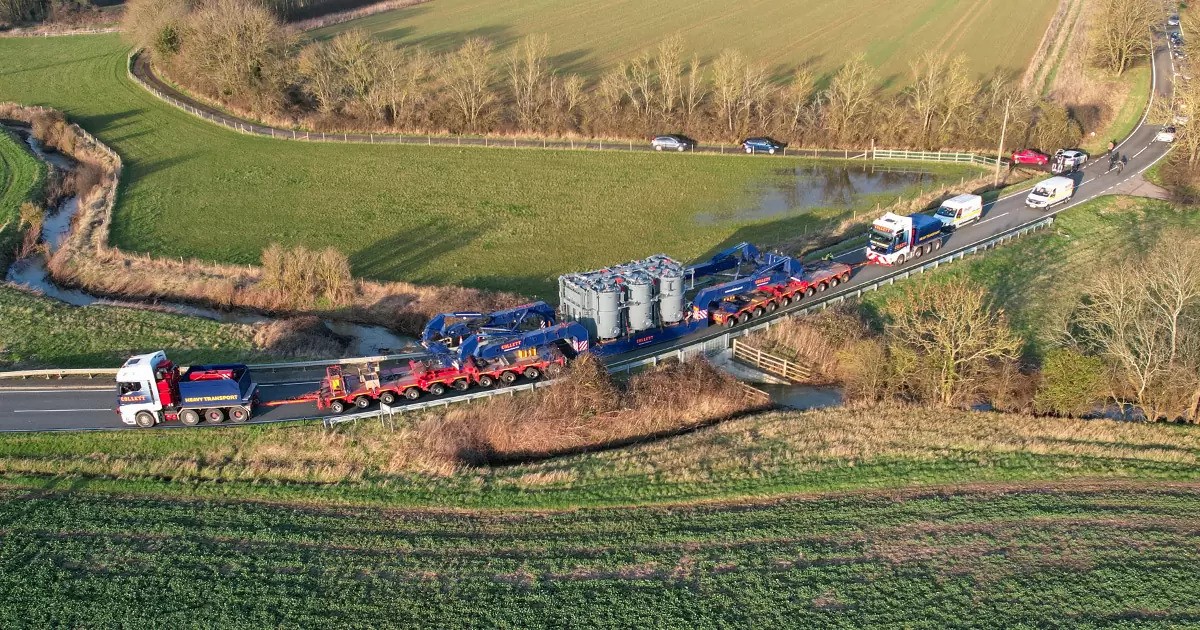
Working on behalf of Hyundai Electric UK, in conjunction with National Grid, Collett has successfully delivered two 178Te supergrid transformers from Tilbury Dock in Essex to National Grid’s Biggleswade substation in Bedfordshire.

Each transformer measured 9.0 metres long, 5.4 metres wide and 5.0 metres in height; combining with the trailer for a total vehicle length of 66 metres. Collett utilised their 250Te capacity Goldhofer girder bridge trailer to facilitate the movement of the two transformers to their final destination. The entire project took place over two weeks, with the transport occurring on two consecutive Sundays.

Collett has successfully delivered two 178Te supergrid transformers from Tilbury Dock in Essex to National Grid’s Biggleswade substation in Bedfordshire.
Image: Collett

Prior to the transport, Collett’s Projects and Consulting Departments provided comprehensive planning and site visits to strategise the route.

This included a comprehensive route survey, as well as swept path analysis reports, identifying obstructing street furniture that would require temporary removal. Collett liaised with both Cambridgeshire County Council and Central Bedfordshire Council to ensure that the movement would be successful.

With Collett having undertaken all ship chartering operations, the two transformers arrived at Tilbury Dock. Here, the first transformer was discharged from the vessel onto the girder bridge trailer where it was lowered onto stools in a secure storage area to await future transport.

The second of the two transformers was discharged directly onto the girder bridge trailer, in preparation for the first delivery to commence.

With all preparation in place, Collett began the transport.

Departing from Tilbury Dock, Collett travelled along the 76-mile route in approximately 8 hours.

The load was accompanied by Collett’s in-house escort vehicles as well as police escorts; initially being escorted by Essex police from Tilbury Dock, then handed over to Cambridgeshire Police at the county border.

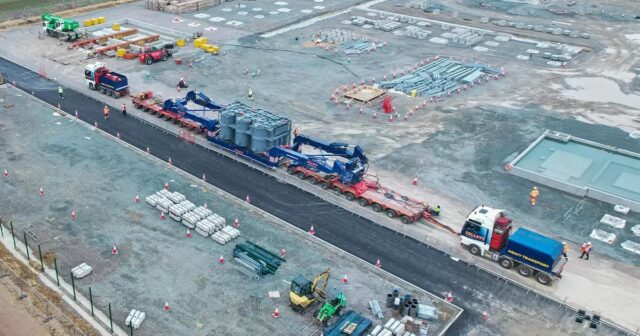
Upon arrival at the site, Collett was responsible for offloading the transformer. Having previously undertaken detailed planning, including ground bearing pressure calculations, method statements, risk assessments and installation drawings, Collett’s Heavy Lift Team utilised their heavy duty jacking and skidding equipment to skid the 178Te transformer directly from the trailer onto the final plinth.

Collett has successfully delivered two 178Te supergrid transformers from Tilbury Dock in Essex to National Grid’s Biggleswade substation in Bedfordshire.
Image: Collett

With one of the two transformers successfully delivered, the girder bridge was de-mobilised and returned back to Tilbury Dock to load the second transformer. Following the same route, the transformer was delivered to the site where it was once again offloaded onto the final plinth.

The 400kV substation includes two transformers that are needed to power the local area. The substation will initially boost power capacity by 80mW, allowing for future residential and employment growth in the Biggleswade area.

Transport for the North (TfN) has today (25 March 2024) published an ambitious plan for sustainable and inclusive economic growth in the North, enabled by transformational connectivity.

The new Strategic Transport Plan (STP) was approved at Transport for the North Board meeting in Leeds by Northern leaders. It outlines how with the right investment and policy levers, together with transformational transport infrastructure we could have a Northern economy that will be £118 billion larger by 2050.

Lord McLoughlin - Transport for the North Chair
Lord McLoughlin – Transport for the North Chair. Image: TfN

The blueprint which builds on the first plan published five years ago, sets out the case to transform the North’s transport infrastructure and services, demonstrating how better connectivity can enable economic growth, decarbonise our transport system and create more opportunities for all. The first STP enabled a step change in government funding for rail, by setting out the case for Northern Powerhouse Rail (NPR).

TfN’s new Plan is focused on the outcomes needed for people and places, seeking to better connect communities and businesses with services and opportunities. It sets out robust monitoring and evaluation to measure progress year-on-year, making sure the Plan is on track.

The new STP:

  • Sets out the North’s ambition for near zero emissions from surface transport in the region by 2045
  • Supports efforts to reduce car dependency and create the capacity required to grow patronage on our public transport networks
  • Recognises the scale of change required in accessibility needed to unlock opportunity and reduce social exclusion by one million people by 2050
  • Puts in place a long-term ambition to treble the share of freight carried by rail.

Lord McLoughlin, Chair of Transport for the North, said: “Our Strategic Transport Plan sets out Transport for the North’s statutory advice to government on how the North, speaking with one voice, can reach a sustainable, socially inclusive transport network for the future, support growth and employment opportunities.

“The STP will lay the foundations for the transport infrastructure investment for the North for decades to come. We will provide further advice to government on how the plan can be implemented, from the pan-regional investment pipeline required, to efficiencies in how transport infrastructure and services are delivered. The evidence in this STP shows how with sustained investment, the right policy levers and enabling behaviour change, we can truly transform the North.”

The revised Strategic Transport Plan can be viewed on our website

As the investigation into the Didcot Power Station demolition disaster approaches its ninth year, the pain and frustration of the affected families continue to intensify. The catastrophic incident, which occurred on February 23, 2016, during the demolition of the decommissioned power station in Oxfordshire, England, resulted in the loss of lives and left a lasting scar on the community.

The Didcot Power Station demolition was a major undertaking aimed at dismantling the iconic cooling towers that had dominated the skyline for decades. However, tragedy struck when a section of the boiler house collapsed prematurely, trapping workers beneath the rubble. Four workers lost their lives in the incident, and several others suffered injuries.

Investigation Challenges:

The aftermath of the disaster saw an immediate call for a thorough investigation to determine the causes and hold accountable those responsible. However, the complexity of the incident, coupled with legal and logistical challenges, has led to a prolonged and painstaking inquiry.

The investigation, conducted by the Health and Safety Executive (HSE) and other relevant authorities, has faced numerous hurdles. Technical intricacies, legal disputes, and the involvement of multiple stakeholders have contributed to the slow progress. The complexities in understanding the sequence of events leading to the collapse have further prolonged the inquiry.

Relatives’ Anguish:

As the investigation enters its ninth year, the anguish of the relatives of those killed in the Didcot Power Station disaster has become more palpable. The prolonged wait for answers, accountability, and closure has taken a toll on the emotional well-being of the affected families.

The uncertainty surrounding the investigation has left the families in a state of limbo, unable to find solace or move forward. The pain of losing a loved one is already profound, but the prolonged and inconclusive investigation exacerbates their grief. Many have expressed frustration and a sense of abandonment as they grapple with the protracted legal processes.

Community Impact:

The Didcot Power Station disaster not only impacted the families directly affected but also had a ripple effect on the local community. The incident raised concerns about the safety of demolition practices and the need for stringent regulations to prevent such tragedies in the future.

Community members, once proud of the iconic power station that symbolised the region’s industrial heritage, now associate it with the devastating collapse and the ensuing years of investigation. The incident has sparked conversations about the balance between progress and safety, prompting a re-evaluation of demolition procedures across the country.

Conclusion:

As the Didcot Power Station demolition disaster investigation continues into its ninth year, the need for timely resolution and closure becomes increasingly urgent. The affected families deserve answers, accountability, and the opportunity to heal. The broader community also looks to this investigation to set a precedent for ensuring the safety of such large-scale demolitions in the future.

The authorities must prioritise transparency and efficiency to bring this prolonged investigation to a conclusion that serves justice and provides a sense of closure for the grieving families and the community at large. Only then can the painful chapter of the Didcot Power Station disaster truly be put to rest, allowing for lessons learned and a safer future in the realm of industrial demolitions.

At the start of 2023, the construction industry showed positive signs of growth, with February construction output bouncing back by 2.4%. This is a welcome relief after a sluggish end to 2022. According to recent data from the Office for National Statistics (ONS), the construction sector has been steadily improving since last year, despite the ongoing challenges posed by the pandemic.

Key Highlights

  • Construction output rose by 2.4% in February 2023, following a 1.8% fall in January.
  • The three-month on three-month growth rate was 1.9%, the highest level since July 2022.
  • The private housing sector saw the strongest growth, with a 5.2% increase in output.
  • The infrastructure sector also showed significant growth, with output rising by 3.8% in February.

The increase in construction output is a positive sign for the UK economy, and the industry as a whole. The strong growth in the private housing sector is particularly encouraging, as this is an area that has been struggling in recent years due to a lack of investment and high demand. The government’s recent efforts to boost housebuilding, through initiatives such as the Help to Buy scheme and the creation of a new Housing Infrastructure Fund, are starting to have a positive impact.

Meanwhile, the growth in infrastructure output is also good news for the industry. This is an area that has been neglected in recent years, with a lack of investment leading to significant delays in major projects. However, the government’s commitment to increasing infrastructure spending is starting to pay off, with projects such as HS2 and Crossrail showing signs of progress.

Road works
Image by Stefan Schweihofer from Pixabay

Mike Hedges, director at Beard Construction, said: “Like many other key sectors, construction has been unable to avoid the challenges of the last nine months or so. However, it is positive to see the landscape beginning to improve with an increase in output and the highest monthly value seen since January 2010.

“While it’s encouraging to see a marginal increase in new work, we shouldn’t be surprised to see repair and maintenance continuing to lead the recovery effort. This could in part reflect customers being wary about committing to large new-build construction projects but could also reflect the emerging direction of trying to maximise value from existing assets, reducing waste and preserving embodied carbon.

“Looking beyond February at the three-month picture though, infrastructure new work was a key contributor to growth. This certainly mirrors the broad portfolio of projects we’re working on and the tender opportunities we’re currently seeing at Beard.

“It’s further proof that firms need to remain agile and pivot toward more resilient sectors that will continue to provide opportunities, such as specialised infrastructure projects for local and central government. This is especially true for those firms reliant on residential building or housebuilding, which continues to be challenging with higher mortgage rates and borrowing costs stifling new-build demand. It will be encouraging to see the challenges on these sectors ease later this year with the slowing of interest rate increases.”

However, despite the positive signs, the construction industry still faces significant challenges. The ongoing impact of the pandemic continues to be felt, with supply chain disruptions and a shortage of skilled workers affecting many companies. In addition, rising material costs and inflation are putting pressure on margins, making it more difficult for companies to invest in new projects.

Overall, the increase in construction output in February 2023 is a positive sign for the industry and the wider economy. While challenges remain, the government’s commitment to boosting investment in housing and infrastructure is starting to have a positive impact. Companies that are able to navigate the current challenges and position themselves for growth in these key sectors are likely to see significant benefits in the coming years.