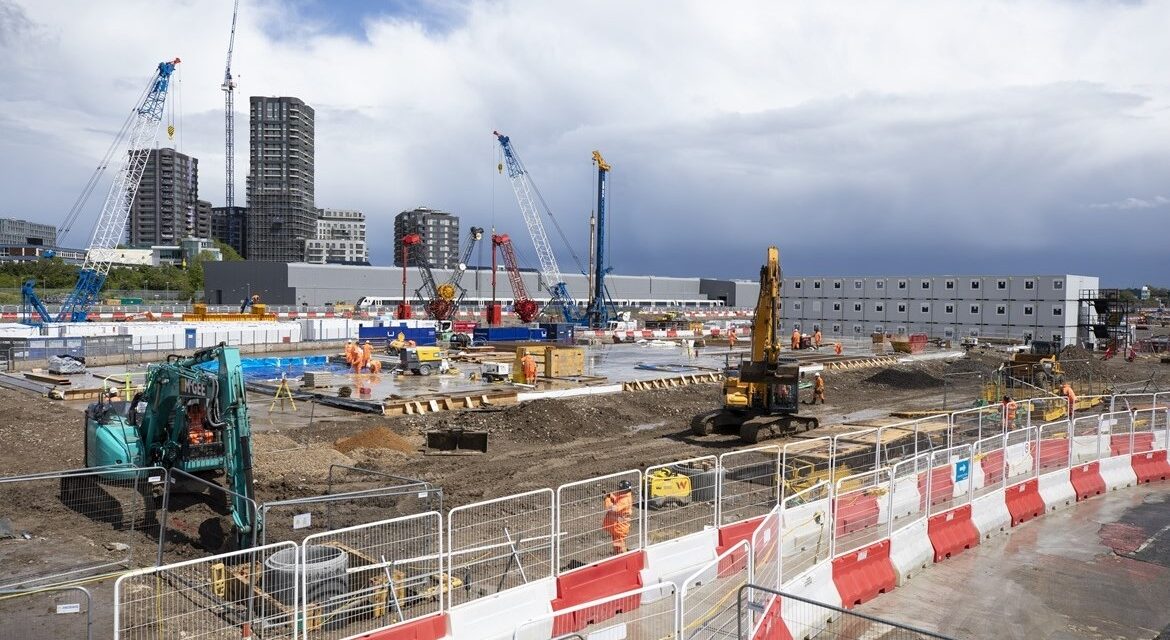
A worker has died following an accident on HS2 on Thursday at the Balfour Beatty VINCI site near Solihull in the west Midlands.
The Enquirer understands the victim, who is believed to be in his 70s, was carrying out drilling work when the accident happened causing him to suffer a cardiac arrest.
He was airlifted to hospital for treatment where he was later pronounced dead.
An HS2 Ltd spokesperson said: “We are deeply saddened to confirm that an employee working for a company in the supply chain of HS2’s contractor Balfour Beatty VINCI died today following an incident on site near Marston Green on Thursday 27 April.
“Our thoughts are with his family, friends and colleagues at this very sad time. We are working with our construction partner and the relevant authorities to understand the cause of this incident.”
At a time when the UK government is under pressure to manage the costs of its major infrastructure projects, the latest news from HS2 Euston is alarming. The costs of the project are set to double, and a full design reset is urgently needed to address the issues and risks involved.
The HS2 Euston Project: A Critical Overview
Image: HS2
HS2 Euston is a part of the High Speed Two (HS2) rail network, which is expected to provide a faster and more reliable rail service between London and the North of England. The Euston project is particularly important, as it involves the redevelopment of the Euston station in London, which is a key transportation hub for the city.
A statement from National Audit Office (NAO) into the HS2 Euston Station development warns that forecast project costs have continued to balloon despite attempts to simplify the project.
The original plans for the project, which were announced in 2017, involved the construction of a new station building and the reconfiguration of the tracks and platforms. However, it soon became clear that the plans were not feasible, as they would have required the demolition of many homes and businesses in the area.
As a result, a revised plan was developed, which involved the construction of a smaller station building and the use of a tunnel to connect the high-speed lines to the existing lines. However, this plan has also faced significant challenges, as it involves complex engineering and construction work in a densely populated and heavily built-up area.
The Challenges Facing the Project
The challenges facing the HS2 Euston project are numerous and complex. They include:
The need to build a new station building and connect it to the existing transport network
The need to construct a tunnel to connect the high-speed lines to the existing lines
The need to minimize disruption to local residents and businesses during the construction process
The need to manage the risks involved in working in a densely populated and heavily built-up area
The need to manage the costs of the project, which have already increased significantly
The Urgent Need for a Design Reset
The NAO’s report recommends the DfT works with stakeholders: Euston Partnership, HS2 Ltd, Network Rail, Lendlease and local partners to reassess the expectations for the HS2 Euston project, its budget, and the public benefits.
Gareth Davies, the head of the NAO said: “Government is once again having to revise plans for Euston HS2.
“Clearly, the 2020 reset of the station design has not succeeded.
“DfT and HS2 Ltd have not been able to develop an affordable scope that is integrated with other activity at Euston, despite their focus on costs and governance since 2020. Recent high inflation has added to the challenge.
“The March 2023 announcement by the Transport Secretary pausing new construction work should now give DfT and HS2 Ltd the necessary time to put the HS2 Euston project on a more realistic and stable footing.
“However, the deferral of spending to manage inflationary pressures will lead to additional costs and potentially a more expensive project overall, and that will need to be managed closely.”
Meg Hillier MP, Chair of the Committee of Public Accounts, added: “Attempts to reset the High Speed 2 Euston Station have failed.
“It is still unaffordable and no further forward than it was three years ago.
“Today’s NAO report shows that the redesigned station would have cost nearly double what was budgeted.
“Department for Transport and High Speed Two Ltd have wasted enough time and money. They must get Euston right next time or risk squandering what benefits remain.”
Nationwide Sureties is one of the top surety bond companies that provide construction bonds. Surety bonds are a type of financial guarantee that contractors are required to obtain for construction projects. These bonds are typically required by the owner or developer of a construction project as a form of protection against contractor default.
When looking for a surety bond company, it is important to consider the company’s financial stability and reputation. The best surety bond companies are typically those that have a strong financial rating and a long history of providing bonds for the construction industry.
One of the top surety bond companies in the industry is Nationwide Sureties. With our experienced team and financial stability, we are able to provide a wide range of bonds for the construction industry, including performance bonds, payment bonds, and bid bonds. We also provide a variety of other surety products and services to help contractors and construction companies succeed.
Another top surety bond company is XYZ Sureties, which has been providing surety bonds for over 50 years. They have a strong reputation in the industry and have a wide range of bond options for contractors and construction companies.
When choosing a surety bond company, it is important to also consider the company’s customer service and support. A good surety bond company will have a team of experts who can answer any questions you may have and provide guidance on the bond application process.
In summary, surety bonds are a critical aspect of the construction industry. They provide financial protection for both contractors and the owners/developers of construction projects. Choosing the right surety bond company is important to ensure that you have the right bond in place to protect your construction project. Consider surety bond companies with a strong financial stability, reputation, and customer service. One of the top surety bond companies in the industry is Nationwide Sureties, with our experienced team and financial stability, we are able to provide a wide range of bonds for the construction industry, including performance bonds, payment bonds, and bid bonds. Contact us today to learn more about our surety bond services and how we can help you with your next construction project.
Introduction: Construction projects can be risky ventures, with various factors such as weather, supply chain disruptions, and unforeseen events that can disrupt their completion. That’s why construction bonds are essential tools for managing risk and ensuring that projects are completed as planned. In this article, we’ll take a deep dive into construction bonds, their different types, and why they are crucial for project owners, contractors, and suppliers.
Construction bonds are contractual agreements that ensure that parties involved in construction projects fulfil their obligations. They work to protect the interests of the project owner, contractor, and suppliers by providing financial security in case one of the parties fails to fulfil their contractual obligations.
Types of Construction Bonds: There are several types of construction bonds that are used in different stages of a construction project. These include:
Bid Bonds: These are required before a contractor is awarded a contract and serve as a guarantee that the contractor will enter into a contract and provide a performance bond.
Performance Bonds: These guarantee that the contractor will complete the project as per the terms of the contract.
Payment Bonds: These ensure that subcontractors, suppliers, and laborers are paid for their services and materials.
Maintenance Bonds: These guarantee that the contractor will rectify any defects in the project after its completion.
Construction bonds work by transferring the risk of non-performance or non-payment from the project owner to the surety bond company. The surety bond company guarantees to pay a predetermined amount if the contractor fails to fulfil their obligations. In case of a claim, the surety bond company will investigate the claim and determine whether it is valid. If the claim is valid, the surety bond company will pay the claim, and the contractor will be required to reimburse the surety bond company.
Construction bonds are essential for construction projects because they provide financial security and peace of mind to project owners, contractors, and suppliers. They offer protection against non-performance, non-payment, and other risks that may arise during a construction project. Additionally, construction bonds help to ensure that contractors are qualified, experienced, and financially stable to handle the project.
FAQs:
Q: Who pays for construction bonds? A: Typically, the contractor is responsible for paying for construction bonds. However, the cost of the bond may be factored into the bid price.
Q: How much do construction bonds cost? A: The cost of construction bonds varies depending on the size and scope of the project, the contractor’s creditworthiness, and the type of bond required.
Q: Are construction bonds required for all construction projects? A: No, construction bonds are not required for all construction projects. However, they are mandatory for most public construction projects.
Conclusion:
Construction bonds are crucial tools for managing risk in construction projects. They provide financial security and peace of mind to project owners, contractors, and suppliers by ensuring that parties fulfill their contractual obligations. By understanding the different types of construction bonds and how they work, you can make informed decisions when it comes to managing risk in your construction projects.
Construction projects can be complex and risky endeavours, involving multiple parties, tight deadlines, and significant financial investments. To ensure that everyone involved is protected, it’s essential to have the right legal and financial safeguards in place. One of these safeguards is a performance bond.
In this article, we’ll take a closer look at performance bonds, including what they are, how they work, and why you need them. We’ll also answer some common questions about performance bonds and provide some tips for obtaining them.
A performance bond is a type of surety bond that guarantees that a contractor will complete a construction project according to the terms of the contract. If the contractor fails to meet their obligations, the bond ensures that the project owner will be compensated for any financial losses they incur.
Performance bonds are typically required for construction projects that involve significant financial investments and/or public funds. They are often used in government contracts, but they can also be used in private sector projects.
When a contractor is awarded a construction project, they are usually required to obtain a performance bond before work can begin. The bond is issued by a surety company, which is a third-party entity that agrees to pay the project owner if the contractor fails to meet their obligations.
The cost of the bond is typically a percentage of the total contract value, with the exact percentage depending on a variety of factors, including the contractor’s creditworthiness, the size of the project, and the level of risk involved.
If the contractor completes the project according to the terms of the contract, the bond will expire, and no further action is required. However, if the contractor fails to meet their obligations, the project owner can make a claim against the bond to recoup any financial losses they incur.
Performance bonds provide several important benefits for both project owners and contractors. Here are just a few reasons why you might need a performance bond:
Protects the project owner from financial losses: If the contractor fails to complete the project according to the terms of the contract, the performance bond ensures that the project owner will be compensated for any financial losses they incur.
Provides an incentive for the contractor to meet their obligations: Knowing that a performance bond is in place can provide an added incentive for the contractor to complete the project according to the terms of the contract.
Demonstrates the contractor’s credibility and financial stability: Obtaining a performance bond can demonstrate to the project owner that the contractor is a credible and financially stable entity, which can help build trust and confidence in the project.
FAQs:
Q: Are performance bonds required for all construction projects? A: No, performance bonds are typically only required for construction projects that involve significant financial investments and/or public funds.
Q: Who pays for the performance bond? A: The contractor is typically responsible for paying for the performance bond, although the cost is usually passed on to the project owner as part of the overall project cost.
Q: What happens if the project owner makes a claim against the bond? A: If the project owner makes a claim against the bond, the surety company will investigate the claim and determine whether the contractor has failed to meet their obligations. If the claim is found to be valid, the surety company will pay the project owner up to the full amount of the bond.
Conclusion:
Performance bonds are an essential part of many construction projects, providing important legal and financial protections for both project owners and contractors.
Nationwide Sureties is a leading provider of restoration bonds for the construction industry. Restoration bonds, also known as environmental restoration bonds, are a type of construction bond that guarantee the completion of a project according to the terms of the contract, including the restoration of any environmental damage caused by the construction work.
Restoration bonds are typically required by local or state government agencies as a form of protection against contractor default. They ensure that if the contractor fails to restore the site to its original condition, the bond can be used to compensate the agency for any costs associated with restoring the site. This can include costs for removing debris, restoring natural habitats, and other measures to bring the site back to its original condition.
At Nationwide Sureties, we understand the importance of restoration bonds in the construction industry. Our experienced team will assess the contractor’s ability to restore the site and their financial stability before issuing a bond. We also typically require collateral, such as a letter of credit or cash deposit, to ensure that the contractor has the financial resources to restore the site.
Obtaining a restoration bond can be a straightforward process, but it is important to work with a surety bond company like Nationwide Sureties that has the experience and reputation to provide the bond that contractors need to secure their project and meet the requirements set by local or state government agencies. Our team of experts will guide you through the process of obtaining a restoration bond and answer any questions you may have.
In summary, restoration bonds are a critical aspect of the construction industry. They provide financial protection for both contractors and the government agencies, ensuring that the site will be restored to its original condition in case of default. Choosing the right surety bond company is important to ensure that you have the right bond in place to protect your construction project and meet the requirements set by government agencies. Nationwide Sureties, with our experienced team and financial stability, we are able to provide restoration bonds for the construction industry. Contact us today to learn more about our restoration bond services and how we can help you with your next construction project.
Nationwide Sureties is a leading provider of performance bonds for the construction industry. A performance bond is a type of construction bond that guarantees the completion of a project according to the terms of the contract. It is typically required by the owner or developer of a construction project as a form of protection against contractor default.
When a contractor is awarded a construction project, they are often required to obtain a performance bond as a guarantee that they will complete the project according to the terms of the contract. If the contractor fails to fulfil their obligations, the bond can be used to compensate the owner or developer for any financial losses. This can include costs associated with completing the project, as well as any damages resulting from the contractor’s failure to complete the work.
Performance bonds are typically issued by surety companies, such as Nationwide Sureties. These companies assess the contractor’s financial stability and ability to complete the project before issuing a bond. They also typically require collateral, such as a letter of credit or cash deposit, to ensure that the contractor has the financial resources to complete the project.
To obtain a performance bond, contractors must typically submit an application to a surety company, along with financial statements, a list of current and past projects, and other relevant information. The surety company will then review the application and determine the contractor’s creditworthiness and ability to complete the project.
Once the bond is issued, it is typically valid for the duration of the project. If the contractor defaults on the project, the owner or developer can make a claim on the bond to cover any costs associated with completing the work or any damages resulting from the contractor’s failure to complete the project.
In summary, performance bonds play a critical role in protecting against contractor default in the construction industry. They are typically required by owners or developers as a form of protection and guarantee that the project will be completed according to the terms of the contract. To obtain a performance bond, contractors must typically apply through a surety company and provide financial information and collateral. If a contractor defaults on the project, the bond can be used to cover any costs or damages resulting from the contractor’s failure to complete the work.
If you are a contractor looking for a performance bond for your next construction project, consider Nationwide Sureties. With our experienced team and financial stability, we can provide the bond you need to secure your project and protect against contractor default. Contact us today to learn more about our performance bond services and how we can help you with your next construction project.
Nationwide Sureties is a leading provider of HMRC bonds for the construction industry. HMRC bonds, also known as Customs and Excise bonds, are a type of financial guarantee that contractors are required to obtain by the HM Revenue and Customs (HMRC) for certain types of construction projects. These bonds are typically required for projects where the imported goods and materials are subject to customs duty and VAT.
HMRC bonds serve as a guarantee to the HMRC that the importer will pay all customs duty and VAT due on the imported goods and materials. In the event that the importer fails to pay the duty and VAT, the bond can be used to cover the unpaid amount. Obtaining an HMRC bond is a requirement for importers of construction materials and goods, and it serves as a guarantee that the taxes and duties will be paid to the HMRC.
At Nationwide Sureties, our experienced team understands the importance of HMRC bonds in the construction industry. We have years of experience in providing HMRC bonds to contractors and we have built a reputation for providing high-quality service. Our team of experts will guide you through the process of obtaining an HMRC bond and answer any questions you may have.
In summary, HMRC bonds are a critical aspect of the construction industry. They provide a guarantee to the HMRC that the imported goods and materials will be subject to customs duty and VAT. Obtaining an HMRC bond is a requirement for importers of construction materials and goods. It is important to work with a surety bond company like Nationwide Sureties that has the experience and reputation to provide the bond that contractors need to secure their project and meet the requirements set by the HM Revenue and Customs. Contact us today to learn more about our HMRC bond services and how we can help you with your next construction project.
Believed to be the largest individual civil engineering project ever undertaken by Calderdale Council, Collett deliver four steel bridge sections to form the new link road across the Calder and Hebble Navigation.
Manufactured by Severfield, the UK’s leading structural steel construction experts, Collett were appointed to deliver four 48 metre structural steel bridge sections from their facility in Bolton to the A629 Salterhebble Bridge project in Halifax.
Over a two week period, each of the 56 Tonne bridge sections were loaded on site at Severfield, directly to two Faymonville 8-axle jeep dolly bogie trailers, the latest additions to Collett’s trailer fleet. These dolly combinations feature automatic steering allowing the back axles to autonomously follow the tractor unit. In addition to this, the trailers also offer the option of overriding this feature providing a manual steering offering and rear steer capabilities, this then allows the rear bogey to steer independently of the tractor unit. Their first outing for Collett, these trailers proved the perfect solution for these 48 metre cargoes, the largest pieces of steelwork to ever leave Severfield’s Bolton facility.
Across two consecutive days the first of two bridge sections, the outer paired girders, left Bolton. Travelling under Police escort and accompanied by Collett’s Code of Practice pilot cars, each of the loads made the 40 mile trip to Halifax. Following the M62 eastbound, the 48 metre bridges arrived at the junction 24 slip road, departing down the A629 bypass and arriving at the construction site. Due to the length of the bridges, and the current road layout on approach to the site, each of the loaded cargoes were required to pull past Stainland Road and reverse the final 200 metres to site.
Having safely arrived on site early evening, the first two sections were stored on trailers ahead of being lifted in to position to span the Calder and Hebble Navigation. Once clear of their 56 Tonne structures, each of the trailers returned to Severfield to load and deliver the two remaining sections, the inner paired girders, the following week.
This phase of the project, which is fully funded by the West Yorkshire Combined Authority, through the West Yorkshire-Plus Transport Fund, will see the area around the junction completely transformed. This includes the addition of a new link road, via the newly created bridge, as well as junction improvements, and is expected to be fully completed later this year.
When it comes to the bond market, it can be a complex and confusing landscape for investors. That’s why working with a bond specialist is essential for those looking to navigate the market and make informed investment decisions. A bond specialist is a professional who has a deep understanding of the bond market and the various types of bonds available. They can provide valuable insight into the latest trends, strategies, and tools to help investors make the most of their bond portfolio.
One of the key areas that a bond specialist can provide expertise in is nationwide sureties. Sureties are a type of bond that is often used in construction and other large-scale projects. They act as a guarantee that a contractor will fulfil their obligations under a contract. Nationwide sureties, in particular, are bonds that are issued by surety companies that are licensed to do business in multiple states.
When it comes to investing in nationwide sureties, a bond specialist can provide valuable guidance on the different types of bonds available and help investors evaluate the risk and potential returns. They can also provide insight into the creditworthiness of the surety company issuing the bond, as well as the underlying project that the bond is supporting.
Another key area where a bond specialist can provide value is in the area of credit rating agencies. Credit rating agencies play a crucial role in the bond market by evaluating the creditworthiness of bond issuers. A bond specialist can provide insight into how these agencies evaluate bonds and the impact their ratings can have on bond prices. This can help investors make more informed decisions about the bonds they choose to invest in.
In addition, a bond specialist can provide guidance on bond portfolio management strategies. They can help investors create a diversified bond portfolio that balances risk and return, and provide guidance on how to rebalance the portfolio as market conditions change. This can help investors achieve their long-term investment goals.
Overall, working with a bond specialist can be a valuable asset for those looking to navigate the bond market. They can provide valuable insight into the latest trends, strategies, and tools to help investors make the most of their bond portfolio. Whether you’re looking to invest in nationwide sureties, evaluate credit rating agencies, or create a bond portfolio management strategy, a bond specialist can help guide you through the process and make informed investment decisions.
In conclusion, investing in the bond market can be difficult without the right knowledge and experience. A bond specialist with knowledge of nationwide sureties, credit rating agencies, and bond portfolio management strategies can help guide you through the process and make informed investment decisions that align with your long-term investment goals. Contact a bond specialist today to start your journey to becoming a bond market expert.