HomeCategory

Civil Engineering

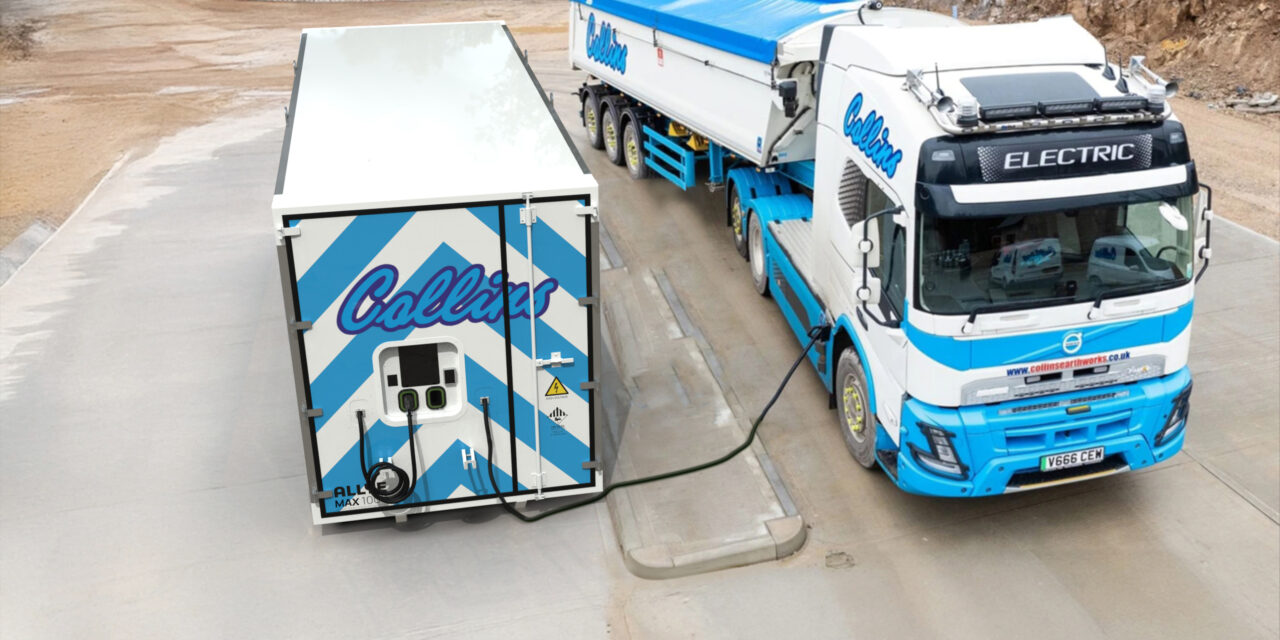
Clean-tech innovator Allye Energy has announced Collins Earthworks as the first customer for its recently launched MegaMAX battery energy storage systems. The partnership will see the deployment of a MAX1000 unit with 240kW integrated DC fast charging capabilities, specifically configured for the demanding requirements of construction sites.

Allye and Collins launch first MegaMAX BESS for construction
Image: Allye Energy

This announcement follows Allye Energy’s recent launch of its MegaMAX range, which includes both the MAX1000 (1MWh) and MAX1500 (1.5MWh) battery energy storage systems. Collins Earthworks has worked closely with Allye Energy to co-create a solution tailored to the unique challenges of construction electrification, providing valuable industry insights that shaped the mobile capabilities of the MegaMAX range.

Collins Earthworks is a pioneering company in sustainable construction practices, and are taking steps to move their fleet of trucks and earthmoving equipment to electric power. The partnership with Allye Energy addresses the critical challenge of providing high-power charging at depots, quarries, and remote locations where construction vehicles need to top up throughout the working day.

The economic benefit to Collins is substantial. Allye Energy estimates that the MegaMAX range will save operators like Collins up to £2,500 per week in diesel costs alone, with additional savings from reduced maintenance requirements and the elimination of costly grid connection upgrades for EV charging infrastructure.

David Collins, Managing Director at Collins Earthworks:

“The transition to electric construction equipment presents unique challenges in our industry, but it’s a necessary step forward that we’re committed to taking. The MAX1000 delivers exactly what we need – reliable, high-power charging capability that can be deployed at our various work sites without extensive infrastructure upgrades. It’s a practical solution that keeps our electric equipment running efficiently while helping us meet our sustainability targets. This technology allows us to maintain productivity and operational effectiveness while significantly reducing our environmental impact.”

“Drop and go” solution for Ultra-Fast Deployment

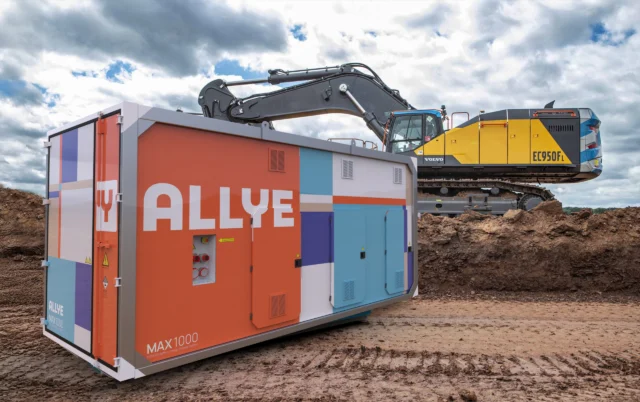
A key feature of the MegaMAX range is its custom Roll-on/Roll-off (RoRo) structure, allowing systems to be transported and deployed via standard hook loader trucks without requiring specialised lifting equipment. This engineering breakthrough enables a complete high-power, off-grid EV charging solution to be operational in under two minutes – a capability that delivers on the needs of the most demanding fleet operators.

This “drop and go” approach ensures that businesses can rapidly implement the MAX as a mobile power source, be it temporary or permanent, while delivering EV charging infrastructure at temporary sites, remote locations, or grid-constrained facilities without the lengthy planning and construction processes typically associated with such installations.

Allye and Collins launch first MegaMAX BESS for construction
Image: Allye Energy

Lightning-Fast EV Charging for Industrial applications

The MegaMAX range’s standout feature is its integrated CCS DC fast charging capability, which can be specified from 240kW up to 640kW, with higher power under development. This exceptional charging power is specifically engineered to meet the demanding requirements of construction equipment, heavy-duty trucks, and industrial vehicles that require rapid charging to maintain operational efficiency.

The first system for Collins Earthworks is a MAX1000 with 240kW DC fast charging for their initial deployment, while the MegaMAX range offers flexible charging options to meet various operational needs. The system delivers unprecedented capabilities for construction electrification, with the MAX1000 providing 1MWh and MAX1500 offering 1.5MWh of energy capacity. The charging system includes extra-long cables designed specifically for these larger industrial vehicles, enabling practical use in challenging construction environments.

Collins Earthworks operates a fleet of four Volvo FMX electric trucks, and the MAX1000 system will recharge these vehicles from 20-80% in just over an hour. With higher capacity charging configurations available in the MegaMAX range, this charge time could be reduced to as little as 25 minutes, adding over 200 km of operational range. For construction equipment, the system’s capabilities are equally impressive. The MegaMAX range can fully recharge a typical electric crawler excavator with a 260kWh battery in under 25 minutes. The larger MAX1500 variant could support complete 0-100% recharging of five large electric crawler excavators in a single day, entirely off-grid.

Alistair McNeil, COO at Allye Energy

“Our partnership with Collins Earthworks exemplifies how innovation happens when forward-thinking companies collaborate effectively. Their industry expertise has been invaluable in refining the MegaMAX range to meet real-world construction needs. By integrating our proprietary AI forecasting technology into these systems, we’ve created not just a power solution but an intelligent energy management system that anticipates usage patterns, optimises charging schedules, and adapts to the dynamic needs of any site. This predictive capability ensures maximum efficiency while minimising operational costs – functioning essentially as an ‘energy bank’ that draws power strategically during off-peak hours.”

The MegaMAX’s sophisticated engineering includes a unique control system that integrates three Allye MAX structures into a single cohesive unit, enhancing performance while providing inherent redundancy. Its fully liquid-cooled system is shared between inverters and battery packs, with innovative control systems that pre-charge battery packs and utilise latent heat from inverters to improve round-trip efficiency, lifetime, and performance in cold weather.

The MegaMAX range features Allye’s advanced AI forecasting platform from the MAX300, which continuously analyses usage patterns, weather conditions, and operational schedules to predict energy demands. This intelligent system optimises charging cycles, balances loads, and enables participation in flexibility services so additional revenue streams can be generated while ensuring power is always available when needed. Real-time integration with energy market data allows the system to charge during lower-cost periods, further reducing operational expenses.

The High Speed 2 (HS2) project represents a transformative endeavour in the United Kingdom’s transportation landscape, aiming to enhance connectivity between major cities and regions. A pivotal component of this project is the construction of the A43 bridge near Brackley, Northamptonshire. This bridge is designed to facilitate the passage of high-speed trains beneath one of the region’s most vital roadways, exemplifying modern engineering prowess and strategic planning.

The A43 serves as a critical arterial route, linking Oxford, Brackley, and Northampton. It provides essential access to the Silverstone Circuit and connects major motorways, including the M40 and M1. Ensuring the seamless operation of this route during HS2’s construction has been paramount to minimise disruption to commuters, local businesses, and event-goers.

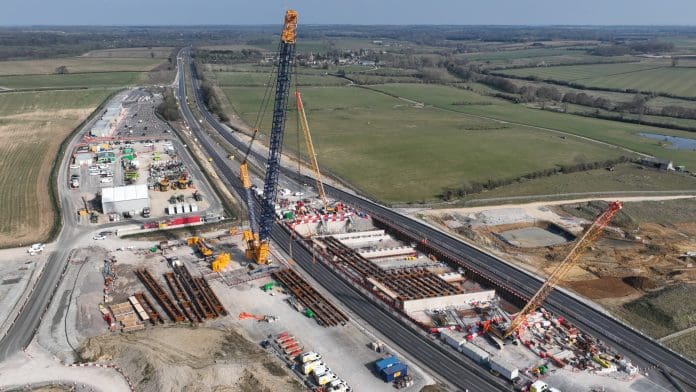
HS2's Brackley A43 Bridge
Image: HS2

In 2023, preparatory efforts commenced with the realignment of the A43 to create an ‘island’ between the carriageways, accommodating the new bridge deck. This strategic move allowed traffic to continue flowing while foundational work progressed. Engineers implemented a ‘top-down’ construction approach, installing 52-metre-deep piled foundations to support the forthcoming structure. This method not only ensured stability but also reduced the project’s environmental footprint.

A significant milestone was achieved with the installation of seven steel beams, each extending 66 metres in length. These beams form the backbone of the bridge, supporting the deck that will eventually carry the A43 over the HS2 railway. The installation process was meticulously planned over three weekend closures to minimise public inconvenience. A 750-tonne crane was employed to position these colossal beams accurately, showcasing the project’s logistical precision.

Following the successful placement of the steel beams, attention shifted to constructing the concrete deck and parapets. Once completed, traffic will be redirected onto the new bridge, allowing excavation beneath to create the railway passage. This phased approach underscores the project’s commitment to maintaining traffic flow and public safety throughout the construction period.

Collaborative Efforts and Stakeholder Engagement

The project’s success is attributed to the collaborative efforts of multiple stakeholders:

  • HS2 Ltd: Oversaw the project’s execution, ensuring alignment with national infrastructure goals.
  • EKFB: A consortium comprising Eiffage, Kier, Ferrovial Construction, and BAM Nuttall, responsible for delivering the 80-kilometre stretch of railway encompassing the A43 bridge.
  • National Highways: Worked in tandem with HS2 to devise strategies that minimised traffic disruption, including synchronising road closures with routine maintenance tasks.
  • Kier Transportation: Played a pivotal role in the beam installation process, bringing specialised expertise to the project’s critical phases.

The construction of the A43 bridge near Brackley stands as a testament to modern engineering and inter-agency collaboration. By integrating advanced construction techniques with strategic planning, the HS2 project not only advances the UK’s transportation infrastructure but also sets a benchmark for future developments. As the project progresses, it continues to embody the nation’s commitment to enhancing connectivity while prioritising public convenience and safety.

The development of Old Oak Common Station stands as a monumental project poised to redefine West London’s economic and infrastructural landscape. As a pivotal component of the High Speed 2 (HS2) initiative, this station is anticipated to catalyse substantial economic growth, urban regeneration, and enhanced connectivity across the United Kingdom.

Strategic Location and Design

Old Oak Common Station impression
Image: HS2

Situated to the north of Wormwood Scrubs and south of Willesden Junction, Old Oak Common Station occupies a historically industrial area now earmarked for transformative development. The station’s design encompasses:

  • Fourteen Platforms: Including six subterranean platforms dedicated to HS2 services and eight ground-level platforms serving the Great Western Main Line, Heathrow Express, and the Elizabeth Line.
  • Innovative Architecture: A naturally lit concourse beneath a 25,000m² atrium roof, inspired by the site’s industrial heritage, equipped with solar panels to enhance energy efficiency.
  • Advanced Passenger Facilities: Provision of 44 escalators and 52 lifts to facilitate seamless movement within the station.

Economic Impacts

The inception of Old Oak Common Station is projected to deliver significant economic benefits:

  • £10 Billion Economic Boost: Research by Arcadis, commissioned by HS2 Ltd, estimates a £10 billion uplift to the local economy over the next decade, driven by improved transport connections and subsequent investments.
  • Surge in Planning Applications: Since the station’s approval in 2017, there has been a 22% increase in planning applications within a 1.5-mile radius, with a cumulative value of £3.41 billion—a 325% rise compared to the previous seven-year period.
  • Job Creation and Housing Development: Anticipation of over 22,000 new homes and nearly 19,000 jobs, particularly in high-tech, innovation, and creative sectors, marking a shift from traditional retail and logistics industries.

Connectivity Enhancements

Old Oak Common Station is set to become the UK’s most connected station, offering:

  • Extensive Network Access: Connections to more than 100 stations nationwide, facilitating efficient travel across the country.
  • High-Speed Services: HS2 trains reaching speeds up to 220 mph, significantly reducing travel times between London and major cities like Birmingham. citeturn0news28
  • Integration with Existing Lines: Seamless links with the Great Western Main Line, Heathrow Express, and the Elizabeth Line, enhancing both local and national connectivity.

Urban Regeneration and Community Benefits

The station’s development is a catalyst for comprehensive urban regeneration:

  • Transformation of Old Oak Common Area: From a historically underdeveloped region to a vibrant hub of economic activity, attracting significant investments and development projects.
  • Infrastructure Improvements: Development of extensive outdoor parks, cycle paths, electric vehicle charging stations, and enhanced transport facilities, promoting sustainable urban living.
  • Educational and Cultural Investments: Initiatives by institutions like Imperial College and Garden Studios, fostering educational and creative industry growth in the area.

Anticipated Challenges and Mitigation Strategies

While the station’s development brings numerous benefits, it also presents challenges:

  • Construction Disruptions: Ongoing works are expected to cause significant disruptions to train services between London and the southwest over the next six years, with weekend and overnight services from Paddington being particularly affected.
  • Mitigation Measures: Strategies include diverting some services to alternative stations, adjusting timetables, and coordinating extensive upgrades on the western mainline to minimise passenger inconvenience.

Future Outlook

The completion of Old Oak Common Station is poised to:

  • Solidify London’s Position as a Global Transport Hub: Enhancing the city’s infrastructure and reinforcing its status in the global economy.
  • Stimulate Sustainable Economic Growth: Through job creation, housing development, and attraction of diverse industries, contributing to the overall prosperity of the region.
  • Set a Precedent for Transport-Led Regeneration: Demonstrating the potential of strategic infrastructure projects to drive urban renewal and economic development.

Old Oak Common Station exemplifies a transformative infrastructure project with the potential to reshape West London’s economic and social landscape. Through strategic planning, innovative design, and comprehensive connectivity, it stands as a testament to the enduring benefits of investing in modern transport infrastructure.

National Highways’ Lower Thames Crossing has today (4 February 2025) revealed a new target to reduce its construction carbon emissions by 70%; an ambition made possible thanks to the project’s Delivery Partners’ and suppliers’ commitment to making the new crossing the greenest road ever built in the UK.

The improved new target has been published in the project’s second annual sustainability report, which details the legacy the project aims to leave for the local community, environment, and the UK’s construction industry.

Lower Thames Crossing projected image
Image: National Highways

The Lower Thames Crossing is a proposed new road and tunnel under the Thames designed to tackle congestion and unlock economic growth by almost doubling road capacity across the Thames east of London and creating a reliable route that better links the north and the midlands with the ports of the south-east.

The project is a carbon pathfinder project that is aiming to set new standards for building infrastructure by pioneering and scaling up approaches to low-carbon construction. By working closely with its three Delivery Partners and supply chain the project has halved its predicted construction carbon footprint, and it became the first major project in the UK to make it a legally binding limit when it submitted it in its application for Development Consent in October 2022.

The project has now identified ways to potentially reduce that footprint further, and has set itself an ambitious new target of less than 840,000 tonnes in total – a cut of around 70% against its original prediction. This would be achieved by taking a forensic approach to reducing carbon as the design of the new road is refined, and committing to only using low-carbon steel and concrete. It also includes removing all diesel from its construction sites by 2027, by accelerating the large-scale use of electric vehicles and plant, and using hydrogen to power its heavy construction machinery – a first for a major project in the UK. The award of the contract for the supply of hydrogen is expected to take place later this year.

The project is also in the final stages of running a low-carbon footbridge contest to find a sustainable design for a bridge over the A127, which could also be used across the wider road network.

Katharina Ferguson, Supply Chain Development Director, Lower Thames Crossing said: “The Lower Thames Crossing will not only tackle congestion and unlock economic growth in the UK, with our partners and suppliers we will create a new blueprint for how we build low-carbon infrastructure and leave a legacy of jobs, skills and green spaces for the local community. With millions invested in local projects and a new community woodland at Hole Farm on track to open next year, we’re already making a difference, well before work on the new road gets underway.”

The plans to make the Lower Thames Crossing the greenest road ever built in the UK include building a tunnel rather than a bridge to avoid protected wetlands and marshes, and seven green bridges that would provide safe crossing points for people and wildlife.  The project is planting at least 1 million additional trees, creating a new community woodland at Hole Farm and new public parks in Thurrock and Gravesham. The project will also promote active travel by creating or improving almost 40 miles of pathways for walkers, cyclists and horse riders, 3 miles of path for every mile of road.

The project’s latest sustainability report highlights recent successes such as:

  • The team is ready to start construction as soon as the green light is given by government, with detailed design work to reduce local impacts well underway.
  • Local communities are already benefitting from the Lower Thames Crossing’s £250,000 Community Fund. An active travel scheme at Cyclopark in Gravesend was one of 55 local charities or not-for-profit organisations to receive money from the fund.
  • Prisoners on day release and local people seeking employment were the first to take part in the project’s Skills Hub pilot programme – designed to develop local skills and supply chains and address industry skills gaps.
  • Work got underway on the community facilities at the new Hole Farm community woodland near Brentwood, due to open in 2025 – around 80,000 trees have been planted so far, using low-carbon construction methods.

Subject to planning permission and funding, construction is expected to take six-years. The Secretary of State for Transport recently announced that the deadline for a decision on the Lower Thames Crossing’s planning application has been extended to 23 May 2025.

Introduction

The Engineering Construction Industry (ECI) in Great Britain is undergoing a period of significant transformation, characterised by changing workforce demographics and mounting recruitment challenges. The Engineering Construction Industry Training Board (ECITB) has published its 2024 Workforce Census, offering a detailed analysis of these trends. This article explores the key findings of the census, focusing on workforce growth, demographic changes, and the pressing issue of skilled labour shortages.

Workforce Growth and Sectoral Changes

Expanding Workforce

Construction workers silhouetted against an orange sky
Image by wal_172619 from Pixabay

Between 2021 and 2024, the ECI workforce grew from 83,600 to 94,680 employees, reflecting a 13.2% increase. Forecasts predict an additional 11.7% growth by 2027, underscoring the sector’s resilience and expansion.

Shifts in Sectoral Employment

  • Nuclear Sector: The nuclear industry has become the largest employer, accounting for 39.2% of the workforce in 2024, surpassing the oil and gas sector. This highlights its increasing importance within Britain’s energy strategy.
  • Renewables Sector: The renewables sector has made significant strides, nearly doubling its share of the workforce to 6.2%, driven by growth in offshore wind and biomass projects.

Geographic Distribution of the Workforce

  • England: England hosts 70.8% of the ECI workforce, with prominent hubs in the North West, Humber Estuary, and the Reading-London corridor.
  • Scotland: Scotland accounts for 17% of the workforce, concentrated in the Central Belt and Aberdeen regions.
  • Offshore Workers: Offshore projects employ 9.9% of the workforce, underlining their critical role within the industry.

Demographic Trends

Ageing Workforce

An ageing workforce remains a key concern, with 14.7% of employees aged over 60, up from 11.6% in 2021. Workers under 30 comprise just 16.8% of the workforce. Roles such as platers, welders, and pipefitters are particularly affected, raising alarm about skill gaps as retirements loom.

Gender Representation

The proportion of women in the workforce has risen to 16.9%, up from 13.8% in 2021. Despite this progress, significant gender disparities remain across certain roles and regions, necessitating further action to improve inclusivity.

Ethnic Diversity

While workforce diversity has improved, representation remains below that of the economically active UK population. Regional disparities are evident, with London showing higher levels of diversity compared to other areas.

Recruitment Challenges

Increasing Hiring Difficulties

In 2024, 71% of employers reported recruitment difficulties, a marked rise from 53% in 2021. Key challenges include:

  • Skill Shortages: A lack of candidates with the required skills and experience.
  • Expectation Mismatches: Misalignment between employer expectations and candidate preferences.
  • Geographic Barriers: Challenges in attracting talent to specific locations, with some workers reluctant to relocate.

Roles in Critical Shortage

Certain positions are particularly difficult to fill, including:

  • Pipefitters
  • Welders
  • Commissioning Engineers
  • Project Managers

These shortages highlight the urgent need for targeted training and workforce development programmes.

Strategic Recommendations

To address these challenges and secure the future of the ECI, the ECITB report outlines the following strategies:

  1. Succession Planning: Developing plans to transfer knowledge from retiring employees to younger workers.
  2. Upskilling Initiatives: Investing in training programmes to address skill shortages in high-demand roles.
  3. Diversity and Inclusion: Implementing policies to improve gender and ethnic diversity within the industry.
  4. Mobility Incentives: Encouraging workforce mobility with relocation support and other incentives.

Conclusion

The 2024 ECITB Workforce Census provides vital insights into the state of the Engineering Construction Industry in Great Britain. Addressing the skilled labour shortage is crucial to ensuring the sector’s continued growth and the successful delivery of future projects. Collaboration between industry leaders, educational institutions, and government bodies will be essential in building a skilled, diverse, and resilient workforce capable of meeting the sector’s evolving demands.

The British Standards Institution (BSI) is set to publish the revised BS 9991:2024, Fire safety in the design, management and use of residential buildings – Code of practice, on 27 November 2024. This significant update addresses key fire safety standards in residential settings, incorporating lessons from recent industry changes and heightened awareness following the Grenfell tragedy.

A building on fire
Photo by Vladimir Shipitsin: https://www.pexels.com/photo/a-burning-house-covered-with-flames-11688880/

The new version supersedes the 2015 edition, offering enhanced guidance on fire safety measures and aligning with evolving regulations across the UK. While the Grenfell Tower Inquiry’s Phase 2 report, published in September 2024, did not specifically mandate changes to BS 9991, it reaffirmed the importance of robust, evidence-based standards.

Key Updates in BS 9991:2024

The revised standard introduces critical changes to enhance occupant safety and trust among stakeholders:

  • Expanded Scope: Now includes recommendations for residential care homes, a significant addition to its coverage.
  • Evacuation Lifts: Offers updated guidance on the design and implementation of evacuation lifts.
  • Sprinkler Installation: Adjusts height thresholds for mandatory sprinkler systems.
  • Single-Stair Buildings: Revises safety considerations for these designs, addressing a recurring concern in high-rise construction.

The updates aim to harmonise fire safety practices across the UK, bridging variations in regional regulations, including England’s Approved Document B, Scotland’s Technical Handbook 2, and Northern Ireland’s Technical Booklet E.

Scott Steedman, Director-General for Standards at BSI, emphasised the importance of this update: “The Grenfell tragedy and subsequent inquiry have brought the issue of building safety into focus for the whole sector and beyond. It is critical that we ensure all standards reflect the latest evidence.”

He highlighted that BS 9991:2024 offers comprehensive guidance on fire safety systems, ensuring effective escape routes and robust measures to protect occupants. The revisions also reflect the collective input from industry experts, regulators, and Fire and Rescue Services, following a thorough public consultation that generated over 1,800 comments.

Building a Safer Future

BS 9991:2024 aims to provide a “consensus-based mid-point” for the UK’s diverse fire safety regulations, fostering trust and compliance across the construction and property sectors. It underscores BSI’s commitment to upholding high safety standards in residential buildings and mitigating risks for both occupants and neighbouring properties.

For further details, BSI has published resources on their Standards Development Portal and is expected to host further discussions on implementing the revised guidance.

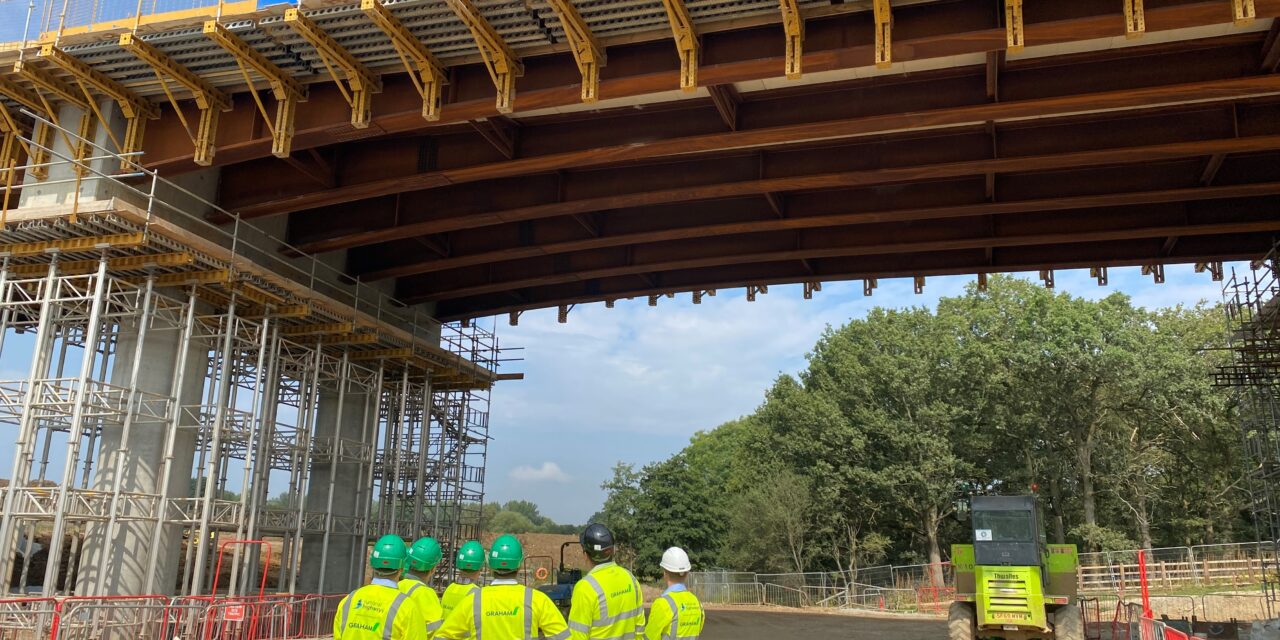
A National Highways project team recently welcomed a group of military students to a tour of one of our major schemes as part of an initiative to share experience.

The engineers of the future were given a tour of the new loop road, slip road and major structures and our Highways specialists explained the challenges of keeping traffic flowing whilst upgrading infrastructure on a busy junction.

Royal Engineers Visit Junction 28
Viewing the Maylands Bridge at the A12 off slip. Image: National Highways

The Royal Engineers, known as the Sappers, are renowned for their organisational, planning and engineering skills; with no better place to learn than from industry experts working on the M25 project, Junction 28.

National Highways Project Manager, Zachary Pepper said:It was great to be able to welcome the Royal Engineers to our construction site, which provided the students with valuable visual representation of the complexities of our major road construction project.”

Staff Sergeant, Will Wicker said: “During a recent site visit to the M25 Jct 28/ A12 upgrades I had the opportunity to lead a group of Royal Engineer Military Plant Foreman students as part of their civil engineering bachelor’s degree program. The visit was the culmination of their roads phase, providing them with a tangible connection between classroom theory and real-world application. The site visit provided valuable insights into the complexities of major road construction projects.

The group of military students visiting the site
The group of military students visiting the site. Image: National Highways

“The students were able to observe firsthand the various phases of construction, including the minimal traffic management the site required, earthworks and bridge construction. The experience offered them a practical perspective on the engineering challenges and solutions involved in large scale projects like this one. I would like to extend our sincere thanks to Grahams and National Highways for their hospitality and for providing our students with this invaluable learning opportunity. The insights gained during the visit undoubtedly enhanced their understanding and appreciation of civil engineering in practice.”

Graham Project Manager Hugh McNally said: “We were delighted to welcome the engineers to the scheme. Seeing construction work up close and personal can be a real eye-opener, hopefully this visit has helped bridge the gap between theory and practical application”.

The project will bring improved traffic flow and support proposed economic growth in the area. With most of the construction, including four bridges, being done off the road network, disruption for the travelling public is minimised as much as possible.

The UK Ready Mixed Concrete sector stands to gain significantly from the establishment of the British Concrete Transport Association (BCTA), a new not-for-profit association. The BCTA, which brings together industry experts, is poised to address crucial issues within this specialist sector, enhancing its overall performance.

The BCTA has assembled a team of familiar and highly respected industry figures, each with unique expertise. Their collective goal is to elevate industry standards through their advice, guidance, and integrity and to shape the sector’s future through collaborative effort.

BCTA Logo

Lindsey Rudd, the current Acting BCTA Chair, who previously served as the Group Sales Director of TVS Interfleet and Director of McPhee Mixers, believes that now is an opportune moment to establish a new trade organisation. Lindsey believes the new organisation can continue and amplify the work initiated during his time as Chair of the Concrete Division of the British Aggregates Association (BAA).

“Having seen firsthand some of the issues that affect the industry, especially around Concrete delivery, concrete transport and the daily challenges that drivers and operators continue to face, bringing together a group of outstanding people willing to influence change for the right reasons, and address those problems that need adequate solution

“Establishing the new association will take time but establishing a group who genuinely care about doing the right thing presents an opportunity to improve and then maintain standards for everyone.

“Leading the charge of the BCTA are Lisa Fleming, MD of Logico and previous Chair of the BAA Transport Committee, and James Dawes, MD of Dawes Highway Safety and previous CSR Officer at the BAA. Their tireless work over the past few weeks and their willingness to sacrifice their time is a testament to their dedication to our cause.

“They will be supported by Scott Bell (JMW Solicitors), Gavin Brain (EMPI Awards), Jonathan Barker (Ready Mix Group), Mark Brooks (Blue Rinse), Dan Cowan (DEK Group), Jamie Clarke (Specialist Transport Consultant) and Jonathan Goldsmith (Watery News).Each brings ingredients to create a unique blend of the experts needed to influence change, with continuous and prodigious discussions to further add to the group in progress.

“Through this combined expertise, we believe established strategic partnerships will bring positive improvements to the critical issues surrounding transport, skills, health and safety, and the environment.

“While we may not yet have the resources or member numbers of the more established industry associations, we can provide an opportunity for everyone to have a voice in an industry through shared values.

“As we continue to work in the background and prepare for some exciting announcements, the team continues to prioritise pressing industry issues and has already started work on proactive solutions.

“It is an ambitious strategy, but the support we’ve gained shows that our joint commitment will give the industry an alternative, effective and real solution to shape the sector for many years.”

If you’d like to know more about the British Concrete Transport Association, please email [email protected] or visit www.britishconcrete.org


Construction sites are dynamic environments where progress and productivity meet with inherent risks. In the United Kingdom, where the construction industry is a significant contributor to economic growth and infrastructure development, ensuring health and safety measures is paramount. From towering skyscrapers in urban landscapes to residential developments in suburban areas, every construction project demands a rigorous commitment to safeguarding the well-being of workers and the public.

Legal Framework:

The UK construction industry operates under strict regulatory frameworks designed to protect workers and mitigate potential hazards. The Health and Safety at Work Act 1974 serves as the cornerstone legislation, imposing general duties on employers, employees, and contractors to ensure the health, safety, and welfare of all individuals involved in construction activities. Additionally, the Construction (Design and Management) Regulations 2015 (CDM) provide a structured approach to managing health, safety, and welfare throughout the lifecycle of construction projects.

Risk Assessment and Management:

Before commencing any construction activity, thorough risk assessments must be conducted to identify potential hazards and implement appropriate control measures. Hazardous tasks such as working at height, excavation, and operation of heavy machinery require meticulous planning and adherence to strict safety protocols. Site managers must regularly review and update risk assessments to adapt to evolving project conditions and mitigate emerging risks.

Training and Competence:

Ensuring the competence of personnel is vital for maintaining a safe working environment. Construction workers must undergo comprehensive training programs to familiarise themselves with safety procedures, emergency protocols, and the proper use of personal protective equipment (PPE). Supervisors and managers play a crucial role in providing guidance and mentoring to workers, promoting a culture of safety and accountability across construction sites.

Personal Protective Equipment (PPE):

The provision and utilisation of appropriate PPE are essential for minimising the risk of injury and exposure to hazardous substances. Construction workers must wear suitable protective gear, including hard hats, high-visibility clothing, safety boots, gloves, and eye protection, depending on the nature of their tasks. Employers are responsible for ensuring that PPE is readily available, properly maintained, and correctly worn by all personnel at all times.

Site Organisation and Housekeeping:

Maintaining a clean and organised construction site is fundamental to preventing accidents and injuries. Proper storage of materials, clear signage, and delineation of pedestrian and vehicle routes help mitigate the risk of slips, trips, and falls. Regular inspections and housekeeping routines ensure that potential hazards such as debris, spills, and uneven surfaces are promptly addressed, fostering a safe and efficient working environment.

Collaborative Approach:

Effective communication and collaboration among stakeholders are essential for promoting health and safety on construction sites. Contractors, subcontractors, designers, and clients must work together to address safety concerns, share information, and coordinate activities to minimise conflicts and hazards. Regular site meetings provide an opportunity to review progress, discuss safety issues, and implement corrective actions in a timely manner.

Continuous Improvement:

The pursuit of excellence in health and safety requires a commitment to continuous improvement and learning. Conducting incident investigations, analysing near misses, and soliciting feedback from workers are valuable practices for identifying systemic issues and implementing preventive measures. Embracing innovations such as wearable technology, drone surveillance, and Building Information Modeling (BIM) facilitates proactive risk management and enhances the overall safety culture within the construction industry.

Conclusion:

In conclusion, ensuring health and safety on UK construction sites is not merely a legal obligation but a moral imperative. By prioritising risk assessment, training, PPE provision, site organisation, and collaboration, stakeholders can create an environment where workers can thrive without compromising their well-being. As the construction industry continues to evolve and expand, a steadfast commitment to safety remains the foundation for sustainable growth and prosperity.

By adhering to stringent regulations, adopting best practices, and fostering a culture of safety, the UK construction sector can pave the way for safer, healthier, and more resilient communities for generations to come.

Transport for the North (TfN) has today (25 March 2024) published an ambitious plan for sustainable and inclusive economic growth in the North, enabled by transformational connectivity.

The new Strategic Transport Plan (STP) was approved at Transport for the North Board meeting in Leeds by Northern leaders. It outlines how with the right investment and policy levers, together with transformational transport infrastructure we could have a Northern economy that will be £118 billion larger by 2050.

Lord McLoughlin - Transport for the North Chair
Lord McLoughlin – Transport for the North Chair. Image: TfN

The blueprint which builds on the first plan published five years ago, sets out the case to transform the North’s transport infrastructure and services, demonstrating how better connectivity can enable economic growth, decarbonise our transport system and create more opportunities for all. The first STP enabled a step change in government funding for rail, by setting out the case for Northern Powerhouse Rail (NPR).

TfN’s new Plan is focused on the outcomes needed for people and places, seeking to better connect communities and businesses with services and opportunities. It sets out robust monitoring and evaluation to measure progress year-on-year, making sure the Plan is on track.

The new STP:

  • Sets out the North’s ambition for near zero emissions from surface transport in the region by 2045
  • Supports efforts to reduce car dependency and create the capacity required to grow patronage on our public transport networks
  • Recognises the scale of change required in accessibility needed to unlock opportunity and reduce social exclusion by one million people by 2050
  • Puts in place a long-term ambition to treble the share of freight carried by rail.

Lord McLoughlin, Chair of Transport for the North, said: “Our Strategic Transport Plan sets out Transport for the North’s statutory advice to government on how the North, speaking with one voice, can reach a sustainable, socially inclusive transport network for the future, support growth and employment opportunities.

“The STP will lay the foundations for the transport infrastructure investment for the North for decades to come. We will provide further advice to government on how the plan can be implemented, from the pan-regional investment pipeline required, to efficiencies in how transport infrastructure and services are delivered. The evidence in this STP shows how with sustained investment, the right policy levers and enabling behaviour change, we can truly transform the North.”

The revised Strategic Transport Plan can be viewed on our website