

A hard-hitting new report from Parliament’s Culture, Media and Sport (CMS) Committee has warned that the UK’s approach to protecting its built heritage is “failing miserably”, as leaking roofs, crumbling brickwork and vacant premises continue to blight historic buildings across the country.
Published on 13 July 2026, Protecting Built Heritage is the result of an 18-month inquiry into the funding, planning and workforce challenges facing the UK’s historic environment, from listed buildings and places of worship to industrial heritage and conservation areas. The committee received 113 written submissions and held five oral evidence sessions with heritage charity leaders, architects, church officials, local authorities and government ministers.
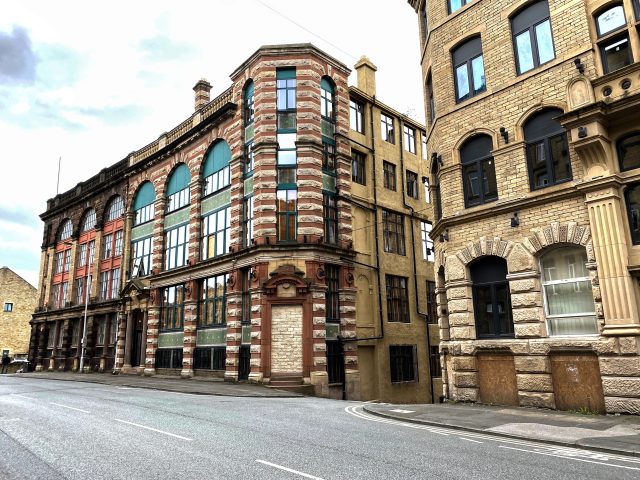
The report’s headline finding is stark: Historic England estimates that up to 670,000 homes could be delivered by bringing vacant or under-used historic buildings back into residential use, equivalent to almost half the government’s target of 1.5 million new homes by 2029. Yet the committee found this potential remains largely untapped, with reuse still treated as an afterthought rather than a priority in housing and planning policy.
“A Deep Complacency”: The Chair’s Verdict
Dame Caroline Dinenage MP, Chair of the CMS Committee, did not mince her words when the report was published. “Old buildings and other pieces of our past play a vital economic, social and cultural role in our communities, but the sight of leaking roofs, crumbling brickwork and vacant premises illustrates how the current policy approach to heritage is failing miserably to support either its protection or potential,” she said.
She went further, criticising the government’s ambition on housing: “Historic England says that there is potential to create a whopping 670,000 new homes and yet the government’s approach reveals a deep complacency, is devoid of ambition, and shows a complete lack of imagination.”
She called for a fundamental shift in mindset, arguing that “‘reuse first’ should be the guiding principle, with a heritage to housing scheme offering a clear win-win by preserving our historic buildings and helping to meet the pressing need for new homes.” She also pressed ministers to address funding gaps and the skills shortage that is undermining the sector’s ability to carry out repairs.
Dame Caroline reserved particular criticism for double standards in how public and private heritage assets are treated, noting that “it also shouldn’t be right that private owners face significant obligations to protect historic buildings, while government departments are able to allow heritage assets to rot at public expense.” She warned that continued deterioration risked “not just links to our past but… opportunities for economic growth and regeneration in our communities.”
Learning from Italy’s €1 Homes Scheme
Among the report’s central recommendations is a call for a UK “heritage-to-housing” scheme modelled partly on international examples, most notably Italy’s much-publicised €1 homes initiative, which sells historic properties cheaply on condition that new owners restore them.
Tanya Szendeffy, Senior Conservation and Design Officer for Lewes and Eastbourne Councils, told the inquiry that a similar approach could be adapted for British conditions, suggesting “a company could be formed between local government and the developer which would ideally be the local community who can then rent etc to whomever they wish.” The committee acknowledged the Italian scheme has not been without problems, including heavy renovation costs and speculative purchases, and recommended any UK version include strong safeguards for genuine long-term occupation.
Industry Voices: “The Greenest Architecture Is the Building That Exists”
Witnesses were united in stressing that active use, not preservation in aspic, is the best safeguard for historic buildings. Ben Cowell, Director General of Historic Houses, told the committee “the best protection for a building in the long term is for it to be occupied, used, utilised, lived in and loved.” Camilla Finlay, Director of Clews Architects, made a similar point, observing “our greenest architecture is the building that exists.”
The report also flagged deep concern about the specialist skills pipeline. Emma Squire, co-Chief Executive of Historic England, warned that “76% of heritage construction organisations cannot find people with relevant skills when they go out to market and one in six are turning down work due to skills shortages,” adding that the sector faces an additional 105,000 jobs a year in demand through to 2050 it currently cannot fill.
On funding, the Heritage Alliance told the inquiry that 81 per cent of heritage organisations it surveyed cited a lack of funding as a major concern, with a third ending the last financial year in deficit. Reverend Paula Griffiths, a retired Church of England priest, criticised the closure of the Listed Places of Worship Grant Scheme, arguing “without it, the cost of all repair schemes will increase by 20%, whether or not the parish are successful in any grant application.”
VAT, Planning and the Public Estate
The report is also sharply critical of the current VAT regime, which charges 20 per cent on repairs and alterations to listed buildings while new-build construction is largely zero-rated. Witnesses described this as a “catastrophic” burden on major restoration projects, and the committee has urged the Department for Culture, Media and Sport to open formal talks with the Treasury on targeted relief.
MPs were equally scathing about the government’s own record as a custodian of heritage. Responsibility for publicly owned buildings, including former Ministry of Defence sites, is spread across departments with weak oversight and no mechanism to enforce standards, leaving public assets to fall into avoidable disrepair.
On planning, the committee welcomed reforms recognising reuse of vacant buildings as a public benefit, but warned changes may not go far enough to tackle the delays discouraging investment in historic buildings.
What Happens Next
The government is now expected to respond formally to the committee’s recommendations, which include a national dataset on the condition of heritage assets, protected training pathways for endangered heritage crafts, and embedding heritage considerations within the One Public Estate programme. The committee’s message is unambiguous: without urgent reform, the UK risks losing not only irreplaceable pieces of its past, but a substantial opportunity to tackle the housing crisis and drive local economic growth.
